Most audience segmentation advice starts with the wrong promise: define a few personas, load them into your campaign tool, and move on. That approach produces tidy labels, but it doesn't produce reliable decisions. A segment that isn't refreshed, owned, validated, and connected to an activation can become a stale list with a polished name.
That matters even more when the activation is physical. A generic hoodie sent to everyone wastes budget and creates little insight. A region-specific onboarding kit, a session-based event drop, or a creator product offered to highly engaged fans can create a useful exchange: the recipient gets something relevant, and the team learns more through an explicit claim, preference, purchase, or delivery choice.
Table of Contents
- Rethinking Audience Segmentation for Modern Brands
- Core Segmentation Methods and Signal Layers
- Building and Governing Your Segmentation Model
- Targeted Use Cases for Enterprise and Creators
- Integrating Segmentation with Merch Platforms
- Measuring Success and Segment Health
- Your Segmentation and Merch Launch Checklist
Rethinking Audience Segmentation for Modern Brands
Audience segmentation means dividing people or accounts into groups that share meaningful similarities, then treating those groups differently in marketing, sales, service, or product activity. The important word is meaningful. A segment should change what you do, not merely describe who someone is.
The practice has deeper roots than digital advertising. Historical summaries trace the formal marketing concept to 1956, when Wendell R. Smith published Product Differentiation and Market Segmentation as Alternative Marketing Strategies in the Journal of Marketing. Earlier researchers had already used census data, tax registers, and directories to classify audiences by income, education, and occupation, as outlined in this history of marketing segmentation. The discipline has since moved from basic demographic sorting toward behavioral, intent, community, and predictive signals.
The popular persona exercise still has a place. It helps creative and sales teams build empathy. But a persona is an interpretation, while a segment is an operating object. Someone may fit a “global power user” persona, yet qualify for a campaign only if they recently attended an event, selected a product preference, or showed intent around a category.
Static labels fail under changing signal quality
Teams now work with less dependable observation. Cookie deprecation, Apple's App Tracking Transparency framework, GDPR, and weaker platform transparency have reduced the granularity available from third-party and platform data. Recent industry coverage also describes a shift toward zero-party data, AI-supported modeling, and synthetic audience methods as brands try to preserve useful reach, with independent commentary warning that some marketers could lose 30% to 50% of addressable retargeting and lookalike audiences without a zero-party foundation (DailyStory).
The practical response isn't to create more micro-segments. Mainstream guidance warns that too many segments become difficult to manage, while outdated data quickly makes them irrelevant. The American Marketing Association argues that modern segmentation should clarify use cases, look beyond the current market, and help create new behaviors, rather than merely generate new learnings (AMA).
Operating principle: A segment earns its place when a named team can use it, measure it, and explain when it should change.
For merch and events, that means governance starts before design. Define the decision the segment will drive, the data required to qualify someone, the product or experience they'll receive, and the signal you'll capture afterward. The segment isn't finished when the CRM field is populated. It's finished when the team can activate it responsibly and keep it useful.
Core Segmentation Methods and Signal Layers
Four familiar methods remain useful, but none is sufficient on its own.
Demographic segmentation uses attributes such as age, education, occupation, or household context. It's useful for questions involving fit, accessibility, language, or broad creative direction. It becomes weak when marketers assume demographic similarity implies similar intent.
Behavioral segmentation groups people by observed actions, including purchases, content engagement, event attendance, product usage, and merch claims. For physical activation, behavior often reveals more than profile data. Someone who watched a product demonstration, attended a workshop, and clicked a creator's product link has given you a clearer activation signal than a broad age bracket.
Psychographic segmentation looks at values, interests, lifestyles, and motivations. It can help teams decide whether a drop should emphasize sustainability, technical performance, community belonging, or exclusivity. Psychographic inputs need care, because inferred motivations can easily become stereotypes unless validated through surveys, preference centers, or direct interaction.
Firmographic segmentation is especially important in B2B. Company size, industry, growth stage, technology environment, and operating model can shape procurement, onboarding, and event needs. B2B systems commonly add intent-based attributes, which identify accounts actively researching a category, alongside firmographic, technographic, and behavioral signals (Bombora).
Layer signals instead of trusting one field
Enterprise-grade programs combine social conversation, owned analytics, surveys, and identity-resolved third-party data. Community detection from public conversation is becoming a separate technical discipline alongside demographic and behavioral analysis, according to coverage of audience segmentation tools and signal layers. The value comes from triangulation. A person's stated interest, observed action, and context should reinforce one another before you make a high-cost physical activation.
Consumer and creator teams often prioritize behavior and psychographics. A creator might separate fans who repeatedly engage with behind-the-scenes content from fans who only watch launch videos. An enterprise People team may combine region, role, team, onboarding cohort, and shipping constraints. Neither team needs every possible attribute. Each needs the smallest set of signals that changes the product, message, timing, or fulfillment path.
Technical systems can also qualify audiences as data arrives. Streaming and edge segmentation supports real-time decisions, including same-page personalization and on-device qualification. Monitoring profile count, audience size, and trends helps teams determine whether a segment is large and stable enough to activate (Bombora). For a live event, that could mean moving an attendee into a post-session merch audience immediately after a check-in or track selection.
Teams that need a practical starting point can review how to segment customers with PlatformDTC, then map those concepts to their own CRM, event, and fulfillment data. For background on the profile layer, see this guide to audience demographics.
This short walkthrough provides a visual reference for connecting objectives, signals, modeling, validation, and governance:
Building and Governing Your Segmentation Model
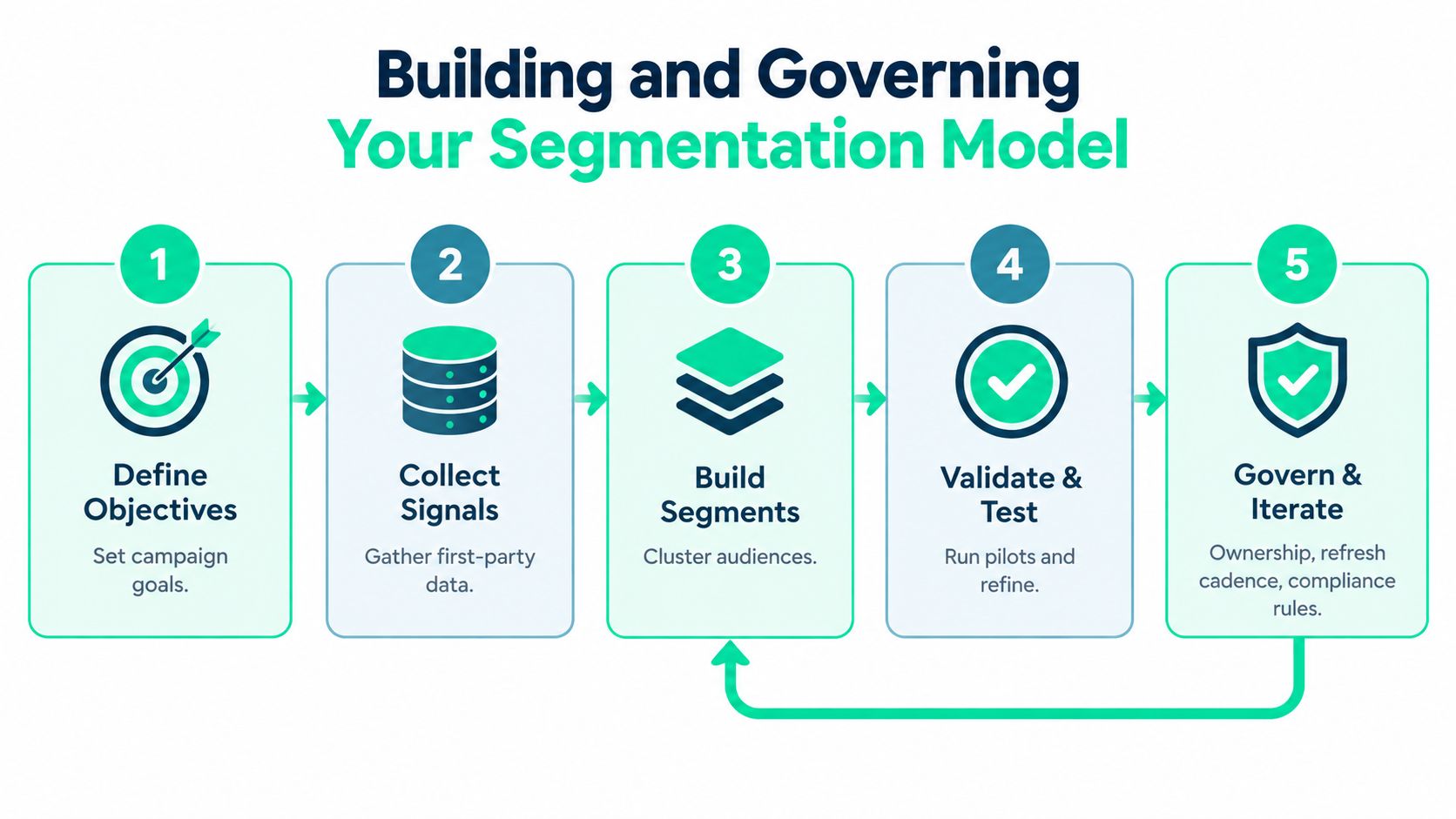
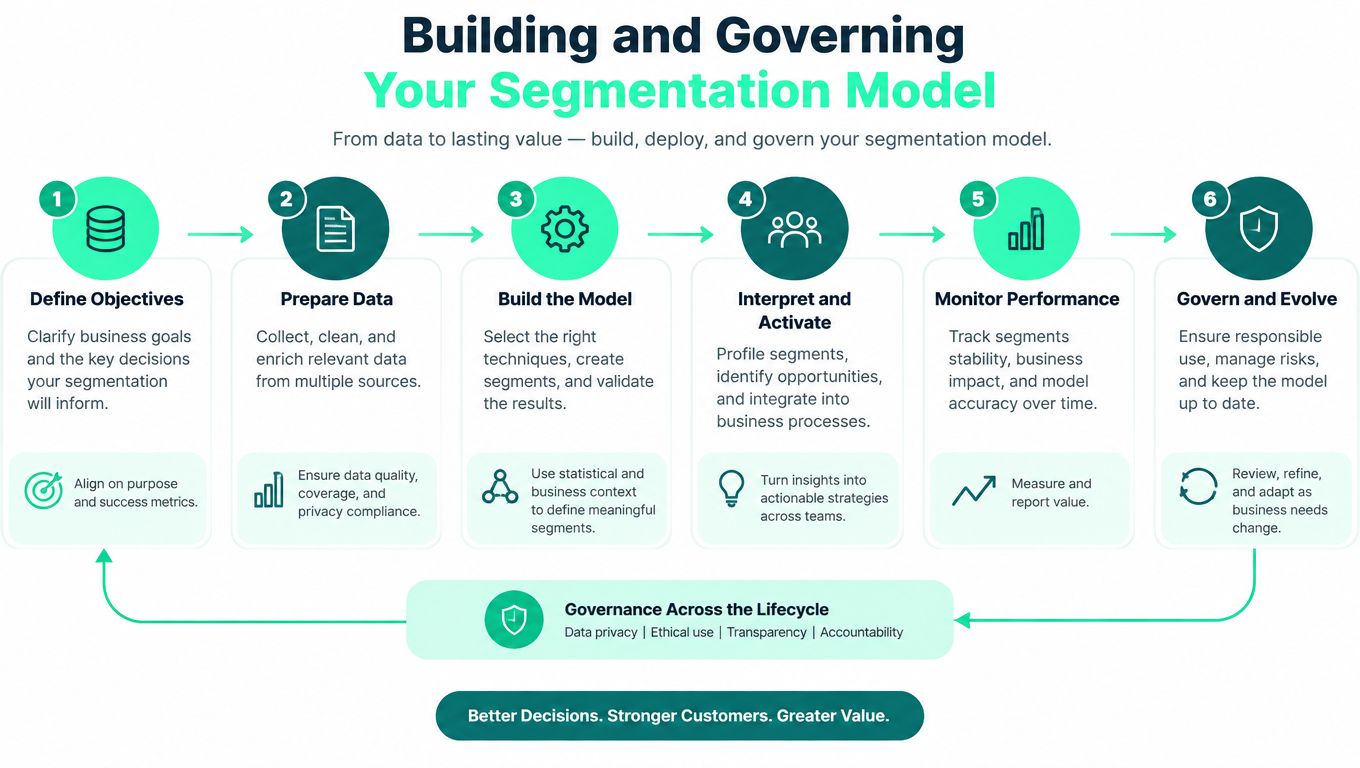
A workable model begins with an operational question, not a demographic spreadsheet. “Who likes our brand?” is too broad. “Which attendees should receive a technical workshop kit after the event?” gives the team a decision, an audience, a time window, and a physical outcome.
Start with the activation
Write the use case in one sentence. Specify the audience, action, channel, and intended experience. For example, a global People team might need to route new hires into localized welcome kits based on region and role. An events team might need to identify attendees who joined a particular session and opted into follow-up.
Next, list the minimum signals. Separate them into required, useful, and prohibited fields. Required data might include event attendance and shipping country. Useful data could include session track or product interest. Prohibited fields might include sensitive information that isn't necessary for the activation.
Build a segment your team can operate
Create a segment definition that another operator can understand without asking the original analyst for help. Include:
- Eligibility rules: State the conditions that place someone in the segment.
- Exclusions: Remove people who already received the item, opted out, or lack a valid fulfillment path.
- Owner: Name the team responsible for quality, activation, and review.
- Action: Document the exact merch, message, workflow, or event treatment.
- Exit rule: Define what causes someone to leave the segment.
- Refresh rule: Record when the data is checked and when the model is rebuilt.
Don't create a separate audience for every possible combination of attributes. A regional onboarding kit may need country, language, role, and cohort. It probably doesn't need a unique segment for every job title if the same kit and workflow apply.
Validate before you scale
Validation asks whether the segment is distinct, reachable, stable, and actionable. Compare the proposed group with a broader audience using the behavior that matters to the activation. If two groups claim the same product, attend the same sessions, and respond to the same offer, splitting them may add administrative work without improving relevance.
Pilot the physical experience before committing to a wide rollout. Check whether people select the correct size, whether shipping data is complete, whether the design matches regional expectations, and whether the recipient understands why they received the item. A merch pilot exposes operational flaws that a dashboard won't show.
Governance also needs a review calendar. The cadence should match how quickly the underlying behavior changes. Event audiences may need review during each event cycle. Employee onboarding segments may change when roles, regions, or HR data structures change. Creator fan segments may require checks whenever a new content format or product line changes engagement patterns.
Practical rule: Retire a segment when its definition no longer changes an action, its data cannot be refreshed reliably, or its activation creates more confusion than relevance.
Keep an archive of retired definitions rather than reusing them by default. That gives reporting continuity and prevents a new campaign from inheriting old exclusions, stale consent assumptions, or outdated fulfillment logic.
Targeted Use Cases for Enterprise and Creators
Physical products make segmentation decisions visible. A recipient can tell whether a kit reflects their role, whether an event gift relates to their session, and whether a creator drop feels connected to the content that earned their attention.
Enterprise People Ops
A global People team can segment new hires by region, role, and onboarding cohort. The first layer determines shipping and localization. The second determines practical relevance. A developer might receive technical team merchandise and setup guidance, while a field employee receives items designed for travel or customer-facing work. The cohort adds timing, so the team can coordinate delivery with the first onboarding moment instead of sending a generic package long after the person starts.
The governance question is simple: who owns the employee attributes, and how quickly does the merch workflow receive updates? HR owns the source context, while People Ops or an assigned program manager should own activation rules, exclusions, and fulfillment exceptions. The team should also record whether the employee claimed a choice, selected a size, or requested a different item. Those actions create explicit preference data for future recognition moments.
Global marketing and events
An event team can combine attendance, session track, engagement tier, and region. Someone who attended a technical workshop may receive a product-specific follow-up item. Someone who joined a community session may receive a different design tied to shared identity. A high-engagement attendee might qualify for an early-access drop, while a registrant who never checked in should stay out of the fulfillment audience.
The product should reinforce the experience, not compensate for an irrelevant one. If the team can't explain why a person qualifies, the segment probably needs refinement. The same logic applies to shipping. Country and delivery constraints belong in the activation model, not as a last-minute spreadsheet fix.
Creators
Creators can segment fans by purchase history, content engagement, and explicit interest. A repeat buyer may qualify for a limited design. A viewer who consistently engages with a particular content theme may receive an offer connected to that theme. A fan who claims a product and chooses a size gives the creator stronger zero-party data than a passive impression ever could.
The creator shouldn't manufacture inventory before understanding demand. A zero-inventory drop lets the audience signal interest first, then connects the approved design to production and fulfillment. The creative still needs a reason to exist. A product should feel like an extension of the creator's world, not a logo applied to a blank garment.
| Team | Primary Segment Signals | Merch Activation Example |
|---|---|---|
| People Ops | Region, role, team, onboarding cohort | Localized welcome kit with role-relevant choices |
| Marketing and events | Attendance, session track, engagement, region | Post-event drop tied to the attendee's session |
| Creators | Purchase history, content engagement, stated preference | Limited, zero-inventory product drop |
| Community teams | Participation, contribution type, lifecycle stage | Recognition item matched to contribution |
The operating model behind these examples resembles personalization at scale. The team doesn't personalize every object from scratch. It defines a manageable set of meaningful treatments, then routes the right people to each one.
Integrating Segmentation with Merch Platforms
Digital segmentation often ends at an audience ID. Physical activation starts with a person, a product choice, a shipping destination, a production decision, and a service obligation. The handoff between those systems is where many programs break.
A useful merch workflow should accept the signals the team already governs, then add explicit inputs through the exchange. A targeted drop can ask for size, color, region, or product preference. A claim page can capture consent and delivery details. A creator storefront can connect purchase intent to a specific content context. Those inputs are more direct than an inferred interest from a third-party platform.
Treat merch as a data exchange
This doesn't mean collecting every possible field. It means designing a clear value exchange. The recipient receives an item or choice that feels relevant. The team receives information the recipient deliberately provides, such as a preferred size, shipping country, product interest, or event association.
That exchange also creates a quality checkpoint. If people ignore a supposedly high-intent drop, the issue may be the segment, the creative, the timing, or the offer. If many people claim an item but abandon the delivery step, the fulfillment experience may be the problem. Physical activation gives the team feedback across both marketing relevance and operational execution.
Connect approval to fulfillment
For enterprise teams, a managed workflow needs more than design generation. It needs curation, brand safety, quality assurance, budgeting, logistics, reporting, international shipping, customer service, and returns. The segmentation model should pass approved attributes into that workflow without exposing unnecessary personal data to every operator.
FLYP LTD is one option for this operating layer. Its platform turns prompts, URLs, videos, images, or briefs into on-brand, garment-accurate designs across 600+ premium blanks, then supports enterprise onboarding kits, recognition moments, event drops, employee-choice stores, and creator storefronts through managed production and fulfillment. That capability is relevant when a team wants to move from a governed audience definition to a physical product without holding inventory.
Smaller teams may also benefit from lightweight creation and workflow tools before adopting a larger operating model. For example, the LunaBloom AI entry-level app can serve as a simple starting point for teams testing how creative inputs become repeatable campaign assets.
The strongest integration preserves the boundary between inferred and explicit data. A behavioral audience can identify who should see an offer. The claim or purchase should determine what the person actually wants. Store that distinction in the data model, because inferred interest and stated preference shouldn't be treated as interchangeable.
Measuring Success and Segment Health
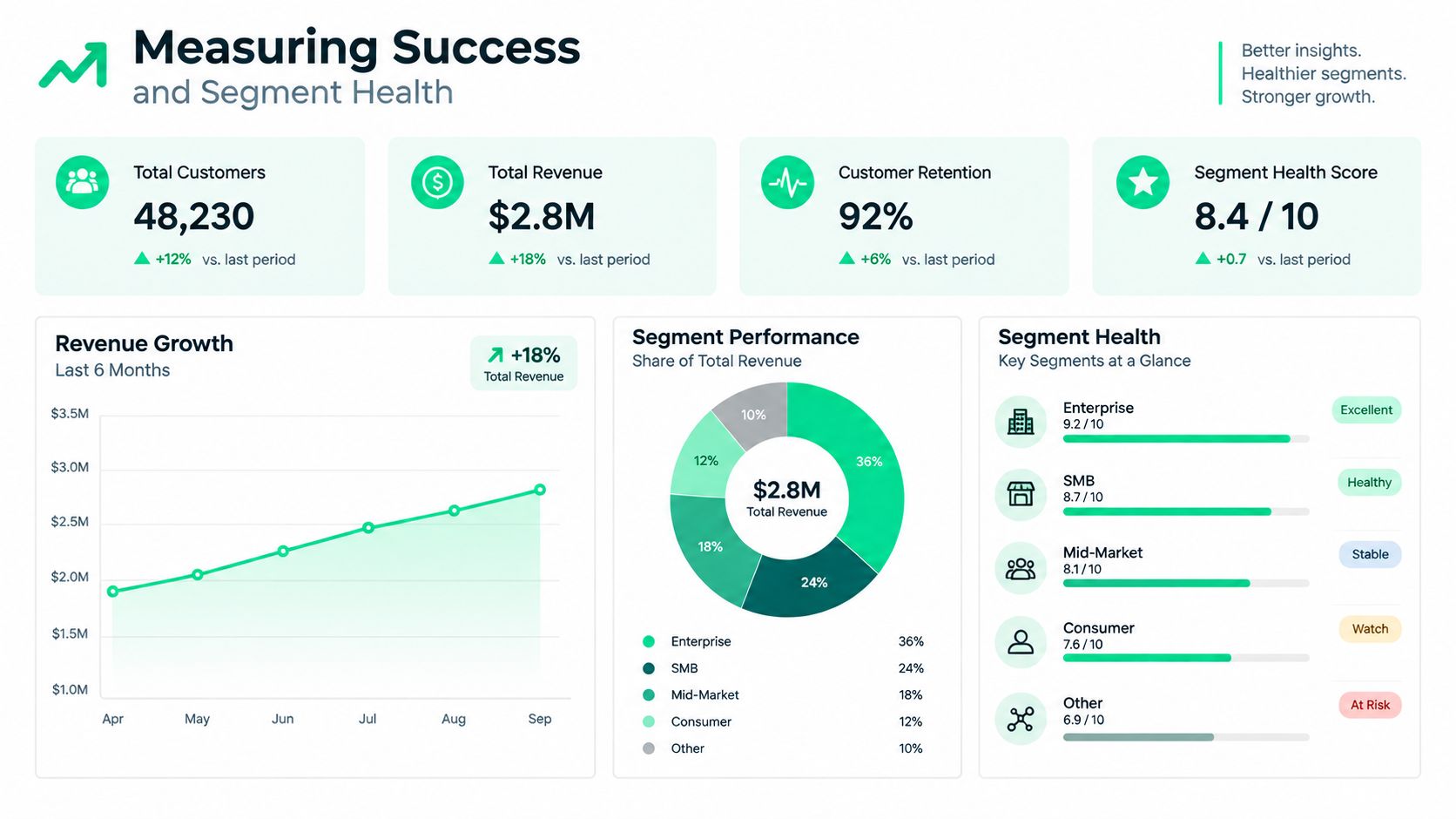
A segment can look complex and still fail in practice. Measure both the audience response and the system's ability to keep the audience accurate.
Start with activation outcomes. For a merch or event program, useful measures include claim rate, product selection rate, conversion from invitation to purchase, repeat purchase velocity, fulfillment completion, return reasons, and zero-party data capture rate. Break each measure down by segment and treatment. A high claim rate with poor repeat engagement may indicate novelty rather than lasting relevance.
Track health, not just campaign performance
Governance metrics reveal whether the segment deserves continued investment:
- Data freshness: How recently the key qualifying fields changed or were verified.
- Segment overlap: How often the same people qualify for multiple treatments.
- Reachability: Whether eligible people have a valid consented channel or fulfillment path.
- Activation frequency: Whether the segment receives enough relevant treatment to learn, but not so much that it creates fatigue.
- Exception volume: How often operators manually correct eligibility, addresses, product choices, or exclusions.
A segment with strong engagement but frequent manual exceptions isn't healthy. Neither is a large audience that rarely qualifies for a distinct action. The owner should review these signals alongside campaign results, not after a failed shipment or an unhappy event attendee.
Decide when to merge or retire
Merge segments when they receive the same product, message, timing, and service treatment. Retire a segment when its data source has degraded, its owner has disappeared, or its distinction no longer changes an action. Keep a record of why the decision was made, so teams don't recreate the same audience under a new label.
Use engagement tracking to connect digital behavior with physical outcomes. The dashboard should show not only who received a drop, but who claimed it, what they selected, whether fulfillment succeeded, and what subsequent behavior justified keeping the segment active.
Measurement rule: Don't call a segment successful because it produced a response. Call it successful when it produces a distinct response, supports a repeatable action, and remains trustworthy after the campaign ends.
Your Segmentation and Merch Launch Checklist
Use this sequence for the first governed merch activation:
- Audit the source data. Identify CRM, HR, event, commerce, creator, and fulfillment fields. Mark which values are first-party, inferred, stale, optional, or restricted.
- Choose three high-value segments. Start with audiences that have a clear need and a distinct physical treatment. Avoid building a taxonomy for every possible attribute.
- Write the activation rules. Document eligibility, exclusions, owner, product, timing, consent, shipping requirements, and exit conditions.
- Design the exchange. Decide what the recipient receives and what explicit preference or claim data the team will collect in return.
- Pilot the drop. Test creative relevance, sizing, localization, address quality, fulfillment, and support before expanding.
- Connect outcomes to segment health. Track claims, choices, purchases, exceptions, repeat behavior, overlap, and data freshness.
- Schedule governance. Set a named review date, define the refresh trigger, and record the conditions for merging or retiring the segment.
Don't wait for perfect data. Start with a small model that a real team can operate, then improve it with every claim, choice, shipment, and conversation.
FLYP LTD turns prompts, briefs, URLs, videos, and images into garment-accurate merch designs, then supports global production, fulfillment, stores, and reporting for enterprise and creator programs. Visit FLYP LTD to connect governed audience segments with physical drops people can choose, claim, and wear.