You've got a budget approved, a hiring wave or event on the calendar, and a spreadsheet full of hoodies, bottles, and tote bags that all look fine on a vendor mockup. The hard part isn't finding corporate gifts with logo options. It's picking the few your people will still wear, carry, and refill six months from now, without your logo turning a decent product into walking advertising.
Table of Contents
- Why Logo Gifts Still Earn a Place in the Budget
- Which Gift Types Carry a Logo Best
- Where to Place a Logo So People Keep Using the Item
- Choosing Between Uniform Gifts and Employee Choice
- How to Check Quality Before You Approve a Sample
- Vendor and Fulfillment Terms Worth Comparing
- Sustainability Claims That Hold Up Under Scrutiny
- Brief a Pilot Order Before Committing the Budget
Why Logo Gifts Still Earn a Place in the Budget
Say a People team sends the same navy hoodie to 300 new hires. A year later, some hoodies are in daily rotation. Others sit folded in drawers because the fit was wrong, the fabric pilled, or the giant chest print felt too loud for a coffee run.
That's the right way to judge the spend. A logo gift is paid for in its afterlife, the months a recipient keeps using it, not on delivery day. When the item fits someone's routine, the mark gets seen without extra effort from you.
There's a belonging effect too. In the 2025 Snappy survey of U.S. employees, 85% of U.S. employees surveyed by Snappy said wearing company-branded swag with their organization's logo made them feel proud of the organization's mission. That only works if they'd choose to wear it in the first place.
The Two Ways Programs Fail
Most waste comes from two mistakes. You buy an item nobody wanted, or you brand a wanted item so heavily that recipients stop using it in public. Both failures look good in a proof and disappoint in real life.
Work in this order: pick the product, place the mark, choose uniform or choice, test quality, compare vendors, check sustainability evidence, then pilot. If you're building a broader recognition moment rather than a single drop, these employee recognition gift ideas help you match the gift to the occasion instead of defaulting to apparel.
For a smaller, premium gesture where a large logo would cheapen the item, it's also worth looking at unbranded or lightly branded options such as cashmere accessories for workplace gifting, where the card and packaging can carry your identity. You'll leave with a product shortlist, placement rules, a sample checklist, and vendor questions you can drop straight into a brief.
Which Gift Types Carry a Logo Best
Start with frequency of use, not novelty. A plain bottle that sits on a desk five days a week will outperform a clever gadget that gets opened once, even if the gadget has more printable surface.
| Gift type | Best logo method | Typical use life | Cost tier | Main watch-out |
|---|---|---|---|---|
| Premium hoodie or sweatshirt | Embroidery or small puff print | Years, if washed well | High | Size range and fit consistency |
| Crew tee | Screen print or direct-to-garment | One to two years | Low to medium | Print cracking after repeated washes |
| Insulated drinkware | Laser engraving or pad print | Daily use for years | Medium | Print wearing off in the dishwasher |
| Canvas or recycled tote | Screen print on a large mark | Frequent reuse | Low | Handle strength under heavy loads |
| Notebook or journal | Foil stamp or deboss | Months of daily use | Low | Cover material and page quality |
| Desk or tech accessory | Laser engraving or woven label | Daily use | Medium to high | Electronics compliance and certifications |
| Onboarding kit box | Printed sleeve or sticker | One opening, then display | Medium | Shipping damage to the print |
How to Read the Shortlist
Don't treat the table as a shopping list for one giant kit. I would pick one product for one job. Onboarding needs a welcome signal and something useful in week one. Recognition should feel earned and personal. Event merch needs to be spotted across a room and carried home without hassle.
Use three filters to cut the list down:
- Daily context: Where will this live, at a desk, on a commute, in a gym bag, or at home? If you can't name the routine, don't buy it.
- Decoration durability: Will the mark survive washing, dishwashers, abrasion from bag straps, and sunlight without cracking or fading?
- Cost per month of use: Divide the fully delivered cost by realistic months of active use, not by units ordered. A higher unit price often wins here.
That third filter changes decisions fast. Say a 500-person onboarding program is choosing between a branded tote and an insulated bottle at a similar budget. The tote may be used for groceries on weekends. The bottle is more likely to sit next to a laptop every workday, join calls, and travel between home and office. Same order size, very different exposure.
A logo doesn't create usefulness. It borrows usefulness from a product people already reach for.
Decoration Method Drives Minimums and Price
Your minimum order quantity and unit cost will shift with the decoration method, blank, number of colors, and number of placements. Screen print usually gets efficient once you have volume and a limited color count. Direct-to-garment suits smaller runs and detailed artwork, but you need to check wash performance on the exact fabric.
Embroidery and laser engraving usually cost more per piece at low volume. They're often worth it when you want a smaller, longer lasting mark on a premium hoodie, cap, bottle, or tech accessory. Foil stamp and deboss work well on notebooks because they read as part of the object, not as a sticker applied later.
Don't compare products on the vendor's headline unit price. Request quotes at your target volume from two or three vendors, on the same blank quality tier where possible, with decoration, packing, shipping, and replacements included. Then compare cost per month of active use across your shortlist before you commit.
One practical caution: kit boxes photograph beautifully, but the box itself has a short life. Put your serious money into the item inside that will be kept. Let the sleeve, card, and tissue do the first impression work, and don't let fancy packaging hide a weak hoodie or a notebook with thin, bleeding pages.
Where to Place a Logo So People Keep Using the Item
A useful item stays in someone's environment and repeatedly pairs your identifier with practical value. That repetition is why restraint works. In a PPAI consumer study of more than 1,000 recipients, 83% recalled at least one brand without prompting. When respondents received brand options, approximately 90% correctly recalled the branding and about 80% recalled messaging characteristics.
You don't need to cover every surface to be remembered. You need the item to stay in use and the mark to be legible when it appears.
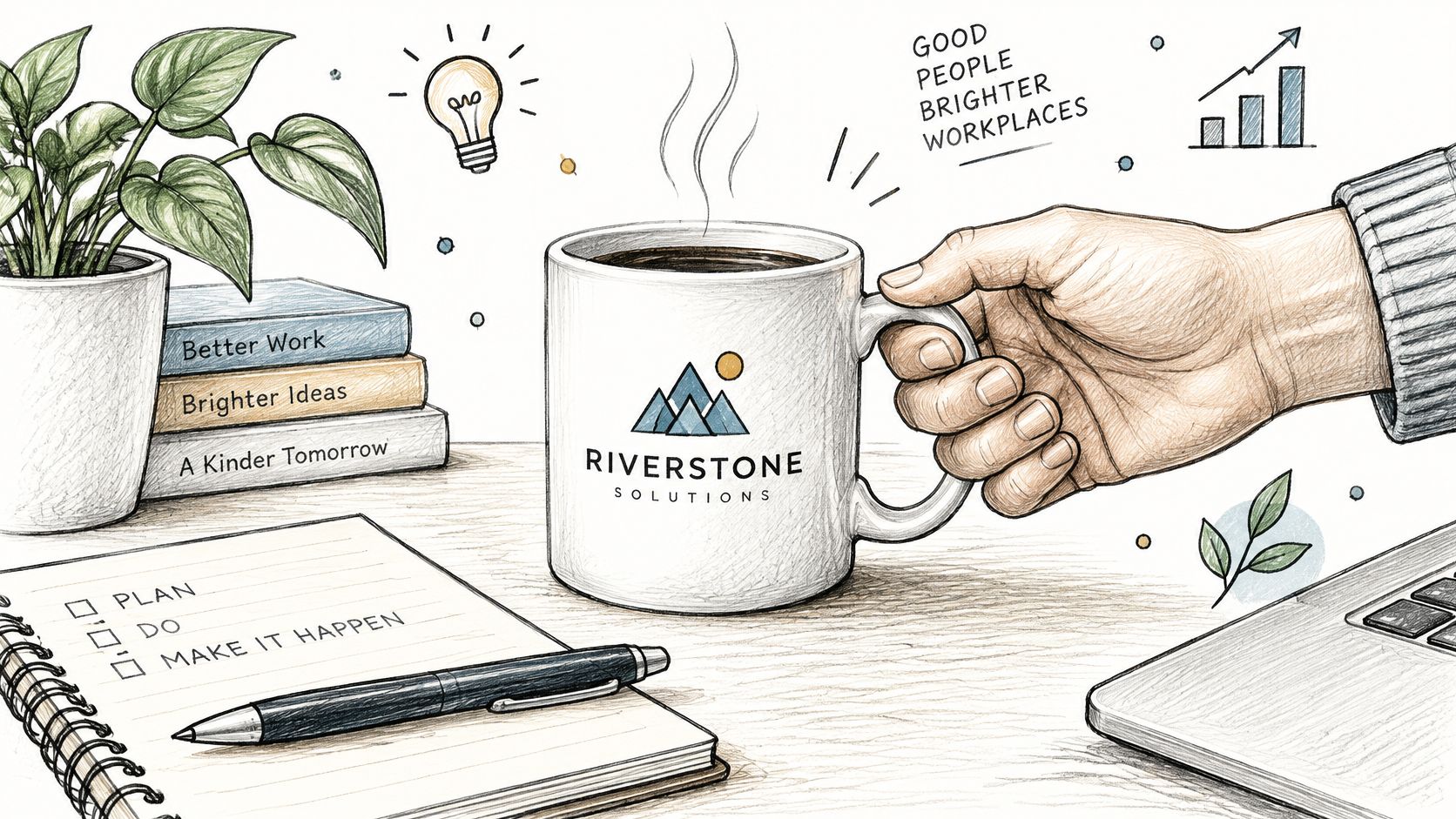
The desk setup below shows the principle well, with a branded mug earning repeat exposure because it's part of a normal work routine.
| Placement zone | Visibility | Best use | Trade-off |
|---|---|---|---|
| Interior label or inside collar | Very low | Belonging without advertising | Hard to notice from a distance |
| Left chest or sleeve | Medium | Recognition apparel for employees | Must stay small and centred to look premium |
| Drinkware lid or side | Medium | Daily-use bottles and mugs | Avoid areas that conflict with grip or handles |
| Front centre of a tote | High | Event and conference merch | Crowds the design if combined with other marks |
| Full back print | High | Team drops and external events | Too loud for everyday workplace wear |
Placement Rules That Protect Wearability
Keep one dominant logo or identity system per item. Preserve clear space around it, check contrast against the blank color, and don't stack a logo, tagline, event name, sponsor marks, and social handles onto one chest panel.
Add a short URL or QR code only when you need a measurable action, such as event registration or a feedback form. If there's no action, the extra element just makes the gift feel like a flyer. If you're torn between thread and ink for apparel, this guide to embroidery versus print for company apparel breaks down durability, detail, and feel by garment type.
Separate your audiences. Employee recognition usually suits a subtle chest, sleeve, tonal, or interior mark. External event merchandise can carry a bold front print because visibility is the job that day.
Test Recall, Don't Guess
Measure aided and unaided recall separately. Unaided recall tests spontaneous memory, so it's the stricter measure. Aided recall tells you whether people recognize the mark when they see it.
If you want evidence before a large run, A/B test two decoration treatments on the same blank. That isolates whether a gain came from the logo treatment or just because people liked the product itself.
Choosing Between Uniform Gifts and Employee Choice
A single item is simple to buy, pack, and explain. It also runs straight into reality: different sizes, climates, dress codes, and tastes. The hoodie that works in a cold office may be useless for a remote employee in a warm region, and a fitted tee will miss a large share of any workforce.
Choice fixes fit, but adds operational work. In a recent employee survey reported by Yahoo Finance, 52% of employees preferred selecting from several gift options instead of receiving the same item as colleagues, while 82% valued personalization. Treat that as a warning against assuming one gift fits a whole company.
| Model | Main strength | Main risk | Best fit |
|---|---|---|---|
| Single uniform item | Simplest logistics and fastest rollout | Wrong size or style for many recipients | Small teams with one dress code |
| Curated choice menu | Three to five options raise satisfaction | More SKUs and inventory to manage | Global or hybrid teams |
| Employee-choice store | Recipients control their own selection | Budget and redemption need reporting | Recognition programs at scale |
| Pick-your-blank | Logo sits on the style the recipient chose | Per-item production is more complex | Premium gifts for leaders |
How Each Model Behaves in Practice
A single uniform item works for a team photo, a launch day, or a small group that shares a dress code. Keep it for moments where sameness is the point. Don't force it onto a global onboarding program.
A curated choice menu is the middle path I'd recommend most often. Offer three to five products at a similar cost, such as a hoodie, crew tee, bottle, and notebook, with inclusive sizing and a non-apparel option. You control brand and budget while recipients control fit and usefulness.
An employee-choice store with a budget or points suits recurring recognition. People can wait, combine, or pick something seasonal. The catch is governance: you need expiry rules, budget controls, address handling, and clear reporting from day one.
Pick-your-blank goes further. The recipient chooses the style, color, or fit, and your logo is applied to that selection. It feels premium, especially for leaders or long service awards, but production and proofing are more complex per item.
Decision rule: Choose the fewest options that cover your audience's sizing, climate, and style spread.
Keep one universal item in reserve for teams that need a fast, uniform kit, such as a bottle or notebook that doesn't depend on sizing. Whatever model you choose, set up redemption, inventory, and unclaimed gift tracking before launch. Choice without reporting becomes a budget leak you discover at quarter end.
How to Check Quality Before You Approve a Sample
A sample can look sharp under office lights and still fail after regular use. A logo that cracks, peels, or fades after two washes makes the item less useful and reflects poorly on the brand. Judge quality across the item's working life, not by its first impression.
Usefulness helps determine whether a recipient keeps an item in circulation. In a recent PPAI consumer study, 55% of recipients keep branded merchandise because they find it useful in daily life, 21% cite high quality, and nearly 90% report keeping branded merchandise regularly or occasionally. Earlier PPAI research also found that eight in ten recipients pass promotional products along rather than discard them. A durable item may therefore remain useful to a second recipient.
Use the inspection sequence below to check the item, its decoration, and its packaging before approving production.
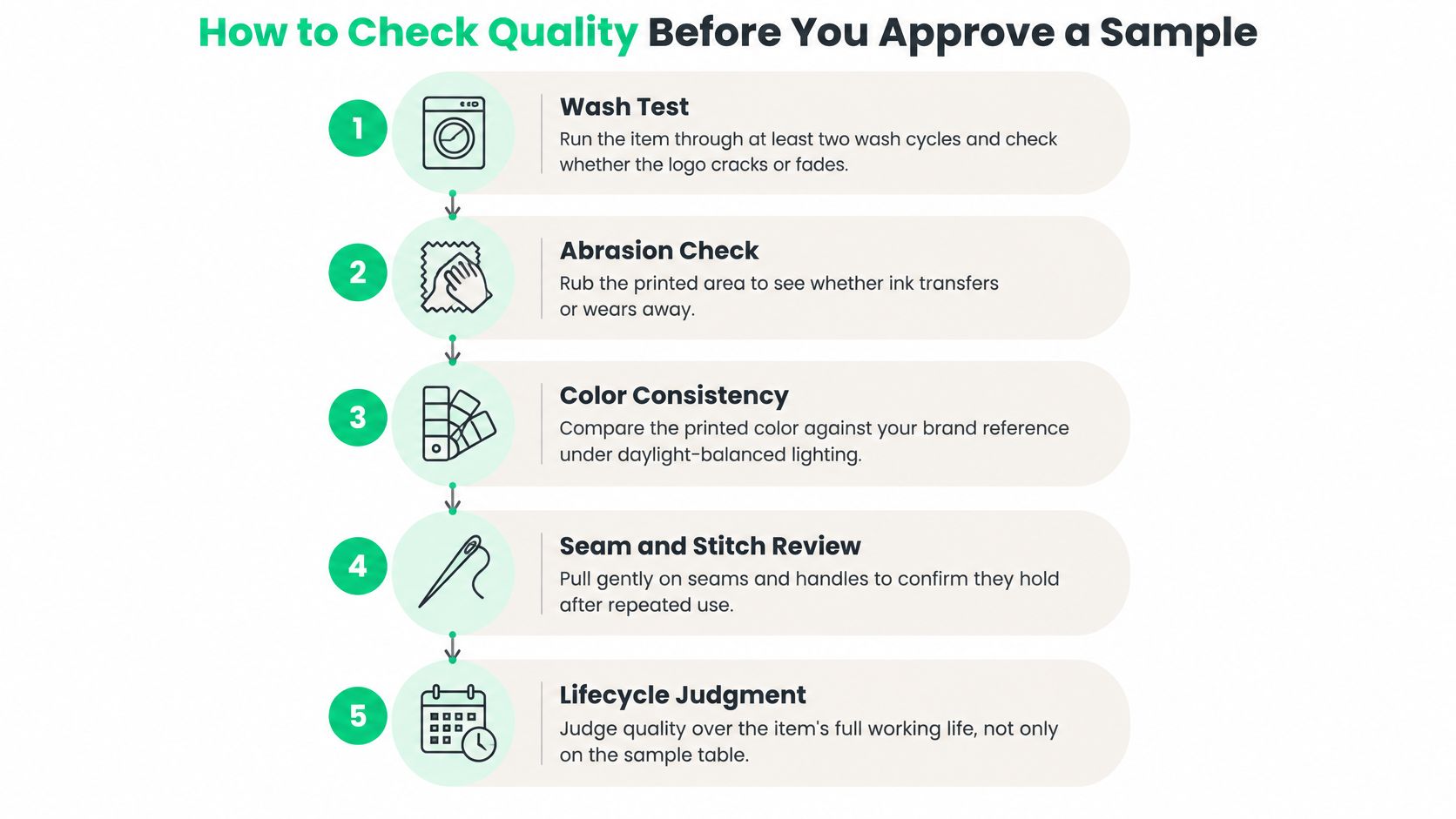
Sample Approval Procedure
Work through these checks in order. A digital mockup alone is not enough for production approval.
- Write the brief: State the target number of expected uses, regional climate, inclusive sizing, care expectations, and packaging requirements for preventing transit damage.
- Check the artwork file: Confirm the required vector format, minimum dimensions, clear space, and contrast against every blank color, not only the primary choice.
- Request a production blank sample: Check the decoration on the actual garment or product, in the color and placement intended for shipment.
- Test the decoration: Wash apparel according to its care label, rub the mark to check abrasion, gently stretch printed fabric, and look for color loss or distortion.
- Check fit and construction: Compare key measurements with the sizing chart, pull seams and handles, test zips and lids, and use the product as intended.
- Drop-test the packaging: Ship or drop a packed unit and check that the print, foil, bottle finish, or box sleeve arrives without scuffs.
- Approve in writing: Sign off only after the sample passes every check. State that production must match the approved sample or be replaced.
For apparel, check fiber composition, stretch, colorfastness, and care instructions alongside the decoration. Dense embroidery can pucker a light tee, while a large print can crack across stretch fabric. A flat proof will not reliably reveal either problem.
Use Cost Per Retained Recipient-Month
Unit price alone favors items that cost less upfront, even if they stop being useful quickly. Compare cost per retained recipient-month, calculated as total delivered cost divided by the number of months recipients actively use the item. This measures what the logo costs over the item's working life.
For example, one bottle costs more but stays on desks for two years, while a cheaper bottle leaks and ends up in a drawer after a month. The expensive bottle is the better brand medium, because its cost per retained recipient-month is lower. Assess retention through pilot surveys, reorders, replacement requests, and redemption data, rather than counting every shipped unit as continuing impact.
Record failures by cause as well as by product. If returns cluster around sizing, revise the chart or product choice. If prints fade, change the decoration method. If boxes arrive crushed, update the packaging specification before blaming the carrier.
Vendor and Fulfillment Terms Worth Comparing
Digital ordering is now a normal part of procurement, but a slick storefront doesn't prove a vendor can run your program. In 2024, online transactions through promotional-product distributors and their online stores totaled approximately $6.83 billion in the United States, representing 25.5% of the industry's $26.78 billion total, according to PPAI reporting on 2024 online sales. In the same year, 84% of large distributors reported engaging in online sales.
| Sourcing model | What the buyer handles | Typical fit | Main risk |
|---|---|---|---|
| Local promotional distributor | Brief, proof approval and one-off delivery | Small one-off orders | Slow reorders and uneven quality control |
| Online storefront | Self-serve ordering while the vendor prints and ships | Repeat orders by department | Limited control over quality checks |
| Managed service, such as FLYP | Curation, QA, logistics and reporting handled end to end | Global, recurring programs | Fee structure and dependence on one provider |
Terms to Put Side by Side
Ask every vendor to answer the same questions in writing:
- Minimums by method: What's the minimum order quantity for embroidery, screen print, engraving, and reorders, and can sizes or colors be mixed?
- Samples and proofs: How long does a sample on the actual blank take, who pays for it, and how many proof revisions are included?
- Artwork ownership: Who owns and stores the final artwork, embroidery files, and color references if you switch vendors?
- Damage and returns: What counts as a defect, how fast are replacements shipped, and who pays for return or reshipment?
- International delivery: Who handles duties, taxes, address errors, and local delivery failures in each country?
- Reporting: Can you see orders, redemption, inventory, spend by team, replacements, and unshipped items without asking for a manual export?
If you're shipping across borders, work through these steps for sending employee merch globally before you promise delivery dates to regional teams. Duties and last mile problems are where neat timelines usually break.
Watch for three red flags: no sample on the real blank, unclear responsibility for fulfillment after payment, and no written damage policy. Any one of those means your team will become the help desk when gifts arrive late, wrong, or scuffed.
Compare total program cost, not just product margin. Your internal time spent chasing addresses, approving one-off proofs, and replacing bad sizes is a real cost, even if it never appears on the vendor invoice.
Sustainability Claims That Hold Up Under Scrutiny
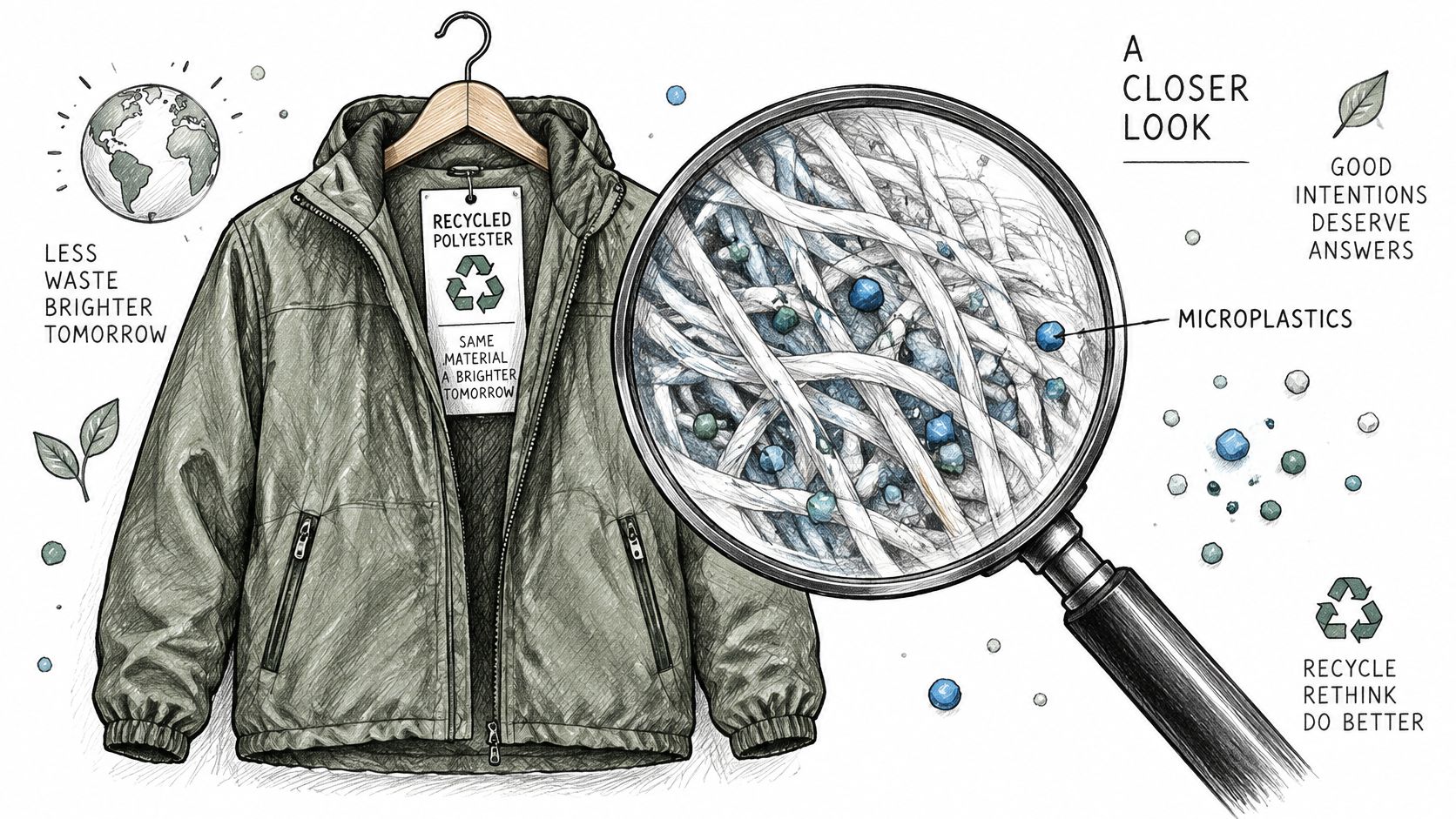
Don't put a sustainability claim beside your logo just because a catalog says recycled. Laboratory testing reported that recycled polyester garments released 55% more microplastic particles during washing on average than virgin polyester, a trade-off summarized in the IRF industry outlook for 2025 event gifting. That doesn't make recycled polyester always wrong. It makes the simple label insufficient.
This illustration captures the scrutiny your claim needs before it travels on a garment.
Ask for Lifecycle Evidence
A claim that holds up should cover the full life of the product, not one material input. Request this evidence before approval:
- Fiber and material content: Exact composition, recycled percentage, and any coatings or blends that affect washing, repair, or disposal.
- Certifications and standards: Named certifications, factory standards, and labor standards that apply to the actual production site.
- Expected lifespan: Target uses, wash guidance, repairability, spare parts for bottles or tech, and what usually fails first.
- Packaging and shipping: Packaging material, pack size, production location, shipping distance, and whether regional fulfillment is possible.
- End of life: Take-back, recycling route, donation path for unused stock, and disposal limits for blended materials.
Separate recycled content from lower impact in use. A recycled item that's washed often, sheds heavily, and gets discarded quickly can be a weaker choice than a durable product with a longer service life. A frequently worn garment with modest branding can be more responsible than a greener sounding giveaway nobody keeps.
The video below is useful background for discussing how product choices and washing habits shape the footprint after delivery.
Report Use, Not Just Materials
Your reporting should track redemption, wear or reorder rates, unused inventory, returns, and fulfillment geography. If a large share of gifts is never claimed or never worn, the material story doesn't rescue the program.
I would rather defend a smaller run of durable, chosen items with strong retention than a large order justified by a recycled label. Unused inventory is waste with your logo on it, and it's usually created by uniform buying, weak sizing data, and ordering before a pilot.
Brief a Pilot Order Before Committing the Budget
A pilot turns vendor promises into your own usage evidence. Keep it small, specific, and tied to one audience and one job, so the results tell you what to scale and what to kill.
Six Step Pilot Sequence
Run the pilot in this order:
- Pick one product: Match it to a single job, onboarding, recognition, or event, and name the daily routine it's meant to enter.
- Choose one placement: Keep one dominant logo, confirm clear space and contrast, and skip extra URLs unless you need a tracked action.
- Set the model: Decide uniform or choice based on sizing, climate, and style spread, with a non-apparel fallback where fit is risky.
- Sample two or three vendors: Run wash, abrasion, fit, construction, and packaging checks on the actual blank from each supplier.
- Compare full proposals: Score minimums, sample turnaround, damage policy, shipping and duties, artwork ownership, and reporting side by side.
- Order a small batch: Track redemption, active use, retention, replacements, and cost per retained recipient-month for one to three months.
Give recipients a short feedback route that asks only what you'll act on: fit, quality, how often they're using it, and whether the logo size feels right. Long surveys get ignored. A few direct questions, sent while the gift is still new, will tell you whether the problem is product, placement, sizing, or delivery.
Go or no-go rule: Scale only when pilot items are used and retained at a cost per month you can defend.
Hold or stop if redemption or wear stays low after the first month. Don't fix a weak pilot by ordering more of it in new colors. Change the product, reduce the branding, or switch to choice, then test again with the same discipline.
Your best corporate gifts with logo won't be the ones with the largest mark. They'll be the ones recipients keep within reach, month after month, because the product earned its place first.
If you're ready to run your next pilot without juggling blank sourcing, proofs, QA, and global shipping yourself, FLYP LTD can help your team turn a brief into on-brand corporate gifts with logo treatments your recipients will keep using. Visit us to plan a tested onboarding, recognition, or event drop, compare options before you commit the full budget, and track what happens after delivery.