Most creators assume the bio link is becoming obsolete as platforms add native shopping. The more useful conclusion is the opposite: link in bio products are becoming more strategic, but only when they do more than display a pile of buttons. A 2025 market report found that 31 million Instagram users used a link-in-bio tool across 62 products, with Linktree accounting for 24.7 million users and 79.95% market share (ReferralCandy's market coverage). The category is large because creators still need a controlled place to route attention, capture demand, and sell beyond a single platform.
The mistake is treating every click as equal. Native product tagging can shorten the path to a purchase, while an external storefront can combine merch, digital products, email capture, affiliate offers, and community access. Revenue grows when you decide which path fits the visitor's intent instead of forcing every visitor through the same link.
Table of Contents
- What Link in Bio Products Actually Are
- Best Product Types for Creator Stores
- Pricing and Fulfillment Strategies
- Optimizing Traffic Between Native and External Links
- Driving Conversions Through Tagging and Promotions
- Building a Sustainable Creator Economy Business
What Link in Bio Products Actually Are
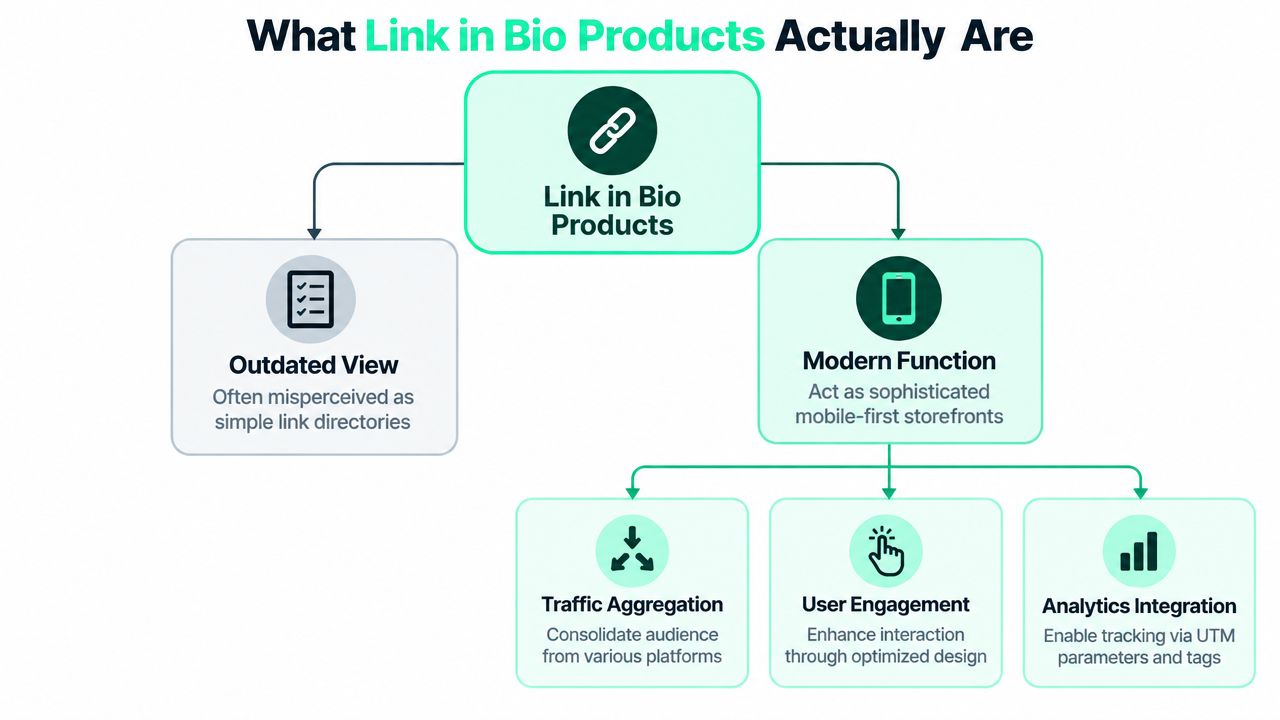
A bio link can function as a storefront, not merely a directory. The old format collected links to a website, store, newsletter, YouTube channel, and campaign, then left visitors to decide where to go. It solved the one-link constraint, but gave creators little control over attention, offers, or the order of action.
Modern link in bio products turn one profile URL into a mobile-first destination for presenting products, collecting leads, publishing exclusive content, promoting events, and directing visitors toward a defined next step. Independent social commerce guidance describes these tools as landing pages that connect followers with products, stores, newsletters, content, and events, especially on Instagram and TikTok (Creator Flow's guide to link-in-bio tools).
The strategic choice is deciding when that external storefront should carry the sale and when a native platform tool should do it. YouTube Shopping, for example, can keep a purchase close to a video viewer's existing intent. A link-in-bio storefront gives you room to combine merch, digital offers, email capture, affiliate links, and community access. Use the native path for a focused product action. Use the storefront when the visitor needs a broader commercial route.
A creator might publish a short video about a new hoodie, a paid workshop, and a free editing checklist in the same week. A weak bio page gives each destination identical visual weight. A useful storefront puts the hoodie first while the drop is active, places the checklist below it for undecided visitors, and keeps the workshop available for people who already trust the creator's expertise.
From link list to business hub
Social attention arrives in fragments. Someone may discover you through a Reel, return through a TikTok, and finally click from a YouTube description. Your bio storefront gives that scattered attention one recognizable destination, while keeping the commercial layer of your brand in one place. A clear explanation of the Instagram bio link shows why that profile URL remains a useful routing point.
A practical page usually has three levels of intent:
- Immediate action: A product drop, booking page, checkout, or paid offer.
- Trust building: A portfolio, customer proof, useful free resource, or sample content.
- Longer-term relationship: An email signup, community, newsletter, or content archive.
That hierarchy matters more than decorative templates. A polished page can still waste demand if visitors cannot tell what deserves attention first.
Practical rule: Your bio page should answer one question immediately, “What can this visitor do next?”
The page also creates a measurement layer. Track page views, total clicks, and per-button click-through rate, then add UTM parameters so downstream analytics can connect traffic with purchases or signups (UniLink's analytics explanation). This shows whether a campaign attracts visitors, whether the page sends them to the intended destination, and whether that destination produces a business outcome.
The strongest page is not the one with the most destinations. It makes the next step obvious, preserves brand context, and shows which offers deserve more attention.
Best Product Types for Creator Stores
A storefront doesn't become profitable because it can display products. It becomes profitable when the product matches the audience's relationship with the creator, the buying moment, and the operational capacity behind the sale.
Digital products usually offer the cleanest starting point. Templates, guides, presets, paid downloads, and educational resources don't require physical inventory or shipping coordination. They also let a creator turn existing expertise into a product that can sit beside free content. The risk is commoditization. If the offer feels like a generic download, a polished bio page won't create enough urgency to overcome hesitation.
Physical merch works when it carries identity. A shirt, cap, poster, or accessory gives followers a way to signal belonging, but the design needs to feel specific to the creator's community. A generic logo often performs worse than a visual reference, phrase, inside joke, or recurring theme that fans already recognize. Limited releases can create a reason to act now, provided the deadline and availability are real.
Match the product to audience intent
Different audiences arrive ready for different levels of commitment. A new visitor may want a free resource or a low-friction product. A returning fan may be willing to buy a premium garment or join a paid community. A professional audience may care more about a consultation, workshop, or toolkit than apparel.
Use the page to reflect those differences rather than placing every offer in one undifferentiated catalog:
- For discovery traffic: Lead with a useful free item, an entry-level digital product, or a clear introduction to your work.
- For loyal fans: Feature branded merch, signed or limited items, bundles, and products tied to shared community language.
- For expertise-led creators: Put courses, coaching, templates, and workshops ahead of general merchandise.
- For affiliate-focused creators: Organize recommendations by a clear use case, not by the order in which you received links.
Social shopping setup can create another route to the same products. If Instagram is a major discovery channel, this practical resource on setting up Instagram shopping can help you evaluate native product visibility alongside your external store.
A product should also fit your production reality. Print-on-demand can make sense when demand is uncertain, designs are changing, or you want to test a collection without holding stock. Inventory can offer more control over packaging, availability, and per-unit economics, but it introduces storage, forecasting, and unsold-stock risk. The right choice depends less on what looks impressive in a product catalog and more on whether you can deliver the promised experience consistently.
Build a focused catalog
Too many products create the same problem as too many links. Visitors spend their attention comparing options instead of deciding. Start with a small set of offers that represent distinct reasons to buy, then remove products that attract views without meaningful action.
Use product pages to answer practical questions quickly:
- What is the item?
- Who is it for?
- Why does it connect to the creator's work?
- What does the buyer receive?
- What happens after checkout?
The strongest storefronts don't merely mirror a social feed. They translate the creator's content into clear buying decisions. A cooking creator might sell a recipe collection and an apron, while a gaming creator might lead with a themed drop and a setup guide. The product category matters, but relevance matters more than variety.
Pricing and Fulfillment Strategies
Pricing starts with the promise, not the production cost. A low price won't rescue a product that feels vague, and a premium price needs a clear reason to exist. Buyers should understand the value before they start calculating whether the item is cheap or expensive.
For digital products, define the outcome first. A template that saves research time, a guide that organizes a workflow, or a preset that solves a specific creative problem gives the buyer a concrete reason to purchase. For merch, value comes from design, quality, connection, and the confidence that the item will arrive as presented.
Protect the margin before launch
Write down the full cost of each order:
- Production: Include the blank item, printing, packaging, and any setup charge.
- Transaction costs: Account for payment processing and platform deductions.
- Fulfillment: Separate domestic and international shipping assumptions.
- Support: Allow for replacement orders, address corrections, and customer-service time.
- Promotion: Include creator collaborations, samples, discounts, or paid distribution.
Then choose a price that leaves room for ordinary problems. A price that only works when every order is perfect will become a liability as soon as a parcel is delayed or a customer requests a replacement.
Print-on-demand is useful when you want production to follow demand rather than precede it. This overview of what print-on-demand is explains the model in more detail. Its trade-off is less control over the manufacturing process and, depending on the supplier, possible variation in delivery times, garment feel, or print finish. Traditional inventory gives you more control, but you carry the risk before the customer has committed.
Make the post-purchase experience part of the product
A checkout is only one moment in the customer relationship. Your fulfillment workflow should make delivery expectations visible, provide a reliable confirmation message, and give customers a clear route to support. Don't hide regional restrictions until the last payment step. State where you ship, how returns work, and what happens if an item arrives damaged.
For international buyers, localization goes beyond translating a button. Payment preferences, currency presentation, shipping costs, delivery expectations, and return instructions all influence trust. A page built only around US assumptions can create friction for audiences in other markets. Industry coverage has also reported growing support for right-to-left languages including Arabic, Hebrew, Persian, and Urdu, a sign that multilingual user experience is becoming an operational requirement rather than a cosmetic feature (MarketIntelo's link-in-bio market coverage).
Keep fulfillment boring and predictable. Use a documented order process, define who handles customer questions, and review failed or returned orders regularly. Creators often focus on the launch because launches are visible. Customers remember whether the product arrived accurately, on time, and with a clear resolution when something went wrong.
Optimizing Traffic Between Native and External Links
Native shopping and external storefronts aren't competing religions. They're different routes for different jobs.
Native tools win when the visitor has already shown product intent. A product tag inside a Reel or another shopping surface can connect content with the item being discussed, reducing the number of decisions between discovery and purchase. Recent coverage of Instagram product tagging in Reels shows how platforms are moving commerce closer to the content itself (Sprout Social's analysis of link-in-bio strategy).
An external bio storefront wins when the visitor needs choice, context, or a relationship beyond one product. It can present merch alongside a newsletter, affiliate recommendations, a community, a booking page, and exclusive content. It also gives you a destination you can update without rebuilding every social post.
Use native paths for focused intent
Tag a product natively when the video clearly demonstrates or discusses that product. A creator reviewing a camera accessory, wearing a new garment, or showing a product tutorial shouldn't force viewers to search through a general storefront if the platform offers a direct product path.
Keep the native experience narrow. Sending a visitor from a product-focused video to a crowded page creates unnecessary work. The tag should lead to the relevant item, while the bio hub can carry broader discovery traffic.
Use the external page when:
- The visitor needs comparison: Show a collection, bundle, or related products together.
- The offer is broader than commerce: Promote email capture, bookings, content, and community access.
- The product isn't supported natively: Route to a compatible checkout or affiliate destination.
- You need a campaign hub: Give a launch, event, or giveaway one controlled destination.
- You want to own the relationship: Capture permission-based contact information instead of relying only on platform reach.
Native commerce shortens the path. An external storefront expands the relationship.
Cross-drive rather than split attention
A creator can mention the bio storefront in a native shopping video when the broader collection matters, then use product tags for individual items in content where the product is the clear subject. The two paths reinforce each other. Native content creates immediate purchase opportunities, while the external hub catches visitors who want to browse, subscribe, or understand the wider business.
This system also protects you from platform dependency. Features change, accounts encounter restrictions, and audiences behave differently across channels. A bio storefront gives you a stable routing layer, but it shouldn't become an excuse to ignore native features that reduce friction.
Creators working across several video and social channels can also review how to integrate platforms with Revid.ai, particularly when content distribution and destination management need to work together.
Driving Conversions Through Tagging and Promotions
A promotion converts when the promise in the content matches the page visitors reach. If a video introduces a new hoodie but the bio storefront opens with an email signup, the visitor must search for the product. That extra decision can cost the sale.
Build a campaign-specific destination before publishing the promotion. Give it one primary offer, one concise explanation, and only a few secondary routes. Repeat the product name, visual style, and promise across the content, profile, and landing page. Consistency helps visitors confirm they are in the right place.
Build a measurable campaign path
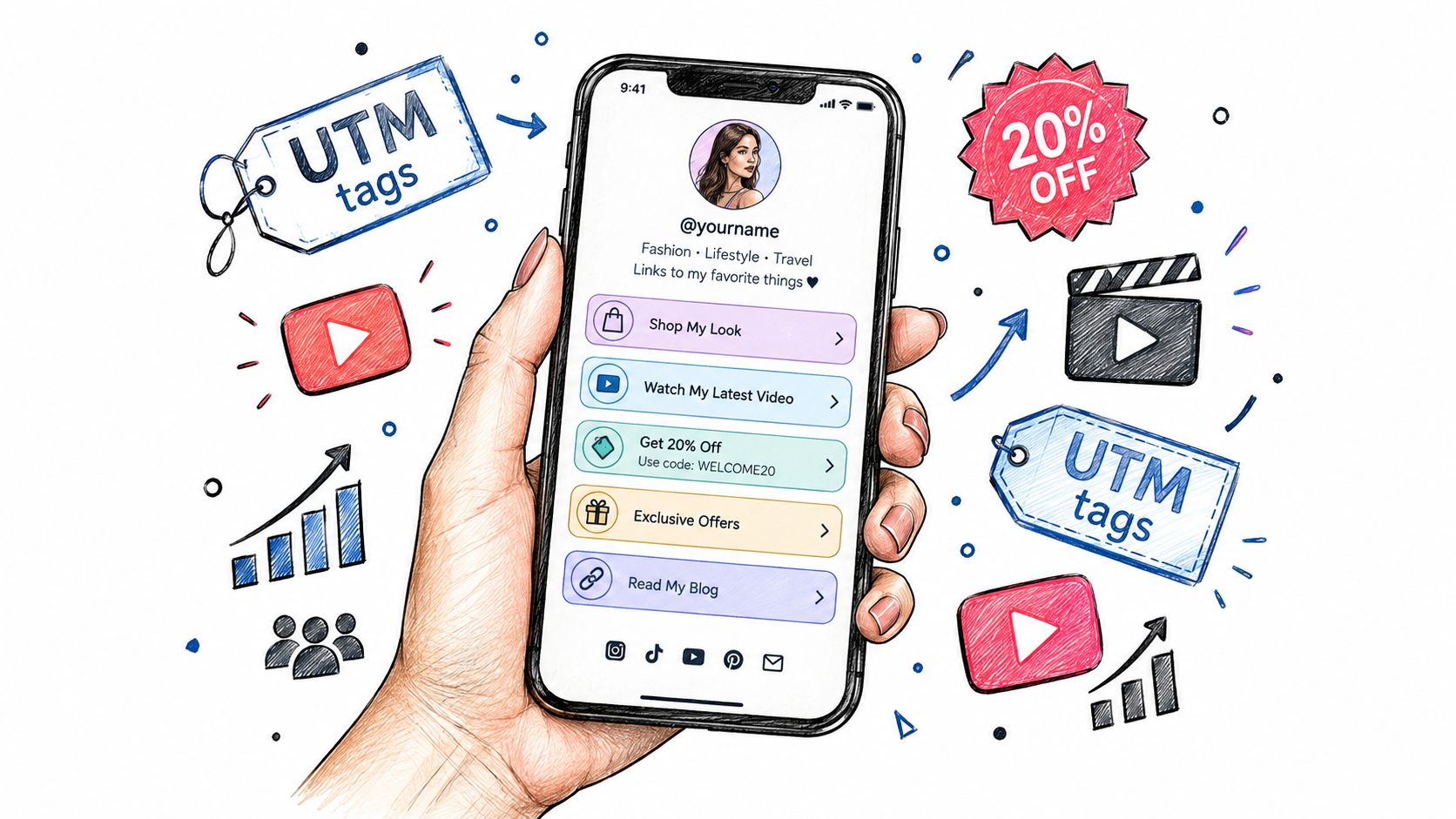
Add UTM parameters so downstream analytics can separate traffic sources and campaigns. Your bio page should track visits and button clicks, while the destination should show whether those clicks lead to purchases, signups, or another defined outcome. Review page views, total clicks, and each button's CTR together. A single headline metric can hide a weak step in the path.
A practical promotion sequence looks like this:
- Tease: Show the design, problem, or desired outcome without asking for an immediate purchase.
- Reveal: Publish the product and explain who it serves.
- Demonstrate: Show the item in use, answer objections, and send viewers to the relevant destination.
- Remind: Repeat the deadline or availability condition while it remains accurate.
- Close: Update the storefront when the campaign ends so late visitors do not reach an expired offer.
Promotions work best when the incentive reinforces the product's value. A bundle, bonus, early-access opportunity, or limited design can give people a clear reason to act. False scarcity damages trust, particularly when the audience expects an ongoing relationship.
Market context also matters when setting campaign expectations. A 2025 market report found that 49% of link-in-bio users were in the United States, while women represented 64% and men 36% of users (ReferralCandy's market coverage). Those figures do not define your audience, but they place creator storefronts within a substantial social commerce category. Use your own conversion data to decide whether a native platform product tag or an external storefront deserves the stronger call to action.
Use this video as a practical prompt for reviewing how your content and destination work together:
After each promotion, inspect the path instead of only the sales total. High views with few page visits suggest a weak call to action or poor profile routing. Strong page visits with weak button CTR point to unclear hierarchy, unappealing copy, or a mismatch between the offer and the content. Strong clicks with weak purchases move the investigation downstream to checkout, pricing, shipping, or product fit.
Building a Sustainable Creator Economy Business
A sustainable creator business doesn't choose between native shopping and a bio storefront once. It assigns each channel a job and reviews that assignment as the audience and product mix change.
Native shopping is the direct-response layer. Use it for a product that appears clearly in a video, a focused recommendation, or a timely demonstration. The platform keeps the buying context close to the content, which helps visitors who already know what they want.
The external storefront is the portfolio layer. Use it to combine products, email capture, affiliate recommendations, services, content, and community. It gives visitors room to explore and gives you a controlled place to adjust priorities.
Build revenue around more than one offer
Merch can strengthen identity, digital products can package expertise, affiliate recommendations can monetize useful discovery, and email can create a channel you control more directly. The mix should feel coherent. A creator known for home workouts might sell branded apparel, recommend equipment, offer a training plan, and invite followers into a private community. Each offer serves a different level of commitment without making the business feel random.
For creators developing affiliate income, this ViralRef affiliate marketing guide provides useful background on structuring recommendations for an audience. The important operational question is whether each recommendation has a clear reason to exist and whether the page explains that reason before sending visitors away.
Review the business on a recurring basis:
- Which content sends qualified visitors?
- Which page actions attract attention?
- Which products create repeat interest?
- Where do customers abandon the journey?
- Which offers fit the brand well enough to promote again?
A focused system is easier to improve than a crowded one. If you want a broader view of the tools creators use to turn attention into income, explore this guide to a creator monetization platform.
FLYP LTD offers creators AI-generated merch drops, zero-inventory production, link-in-bio storefronts, and native YouTube Shopping so fans can discover products through either route. Visit FLYP LTD to see how you can connect content, merch, fulfillment, and customer support in one creator commerce workflow.