Most advice about creative swag ideas starts with whatever looks clever in a photo. I start somewhere else. Novelty fails when the item is not kept, cannot clear customs, or puts the brand next to a joke you cannot defend. Three filters decide every piece below. Will recipients keep it. Can the program ship globally without pain. Does it stay safely on-brand.
The range runs from sticker kits that cost cents to AI-powered limited drops you do not warehouse. Pins, plush, welcome boxes, totes, repairable apparel, experience kits, laptop gear, and QR-linked pieces sit in between. A startup onboarding ten people and a People team covering forty countries can use the same test, just at different volumes.
This is a large market, not a craft hobby. An Oxford Economics study commissioned by the Promotional Products Association International estimated that global branded-merchandise spending reached $338.3 billion in 2025, and that the industry supported $472.3 billion in global GDP, according to PPAI's landmark economic study. Treat kept physical products as a brand and workforce investment. Then pick items people still use after the unboxing post.
Table of Contents
- 1. Mascot Plush and Collectible Figures
- 2. Collectible Enamel Pins with Trading Culture
- 3. Custom Sticker Kits
- 4. AI-Personalized Limited Apparel Drops
- 5. Branded New-Hire Welcome Kit
- 6. Premium Reusable Tote or Bag
- 7. Sustainable Upcycled or Repair-Based Apparel
- 8. Experience-Based Swag Boxes
- 9. Phone and Laptop Accessories with Utility
- 10. Digitally Linked Physical Swag
- 10 Creative Swag Ideas at a Glance
- Building a Swag Program That Scales
1. Mascot Plush and Collectible Figures
A mascot plush earns its desk space when the character is recognizable and well made. GitHub's Octocat plush and Mozilla's Firefox dragon plush give their brands a physical character people can keep or pass along.
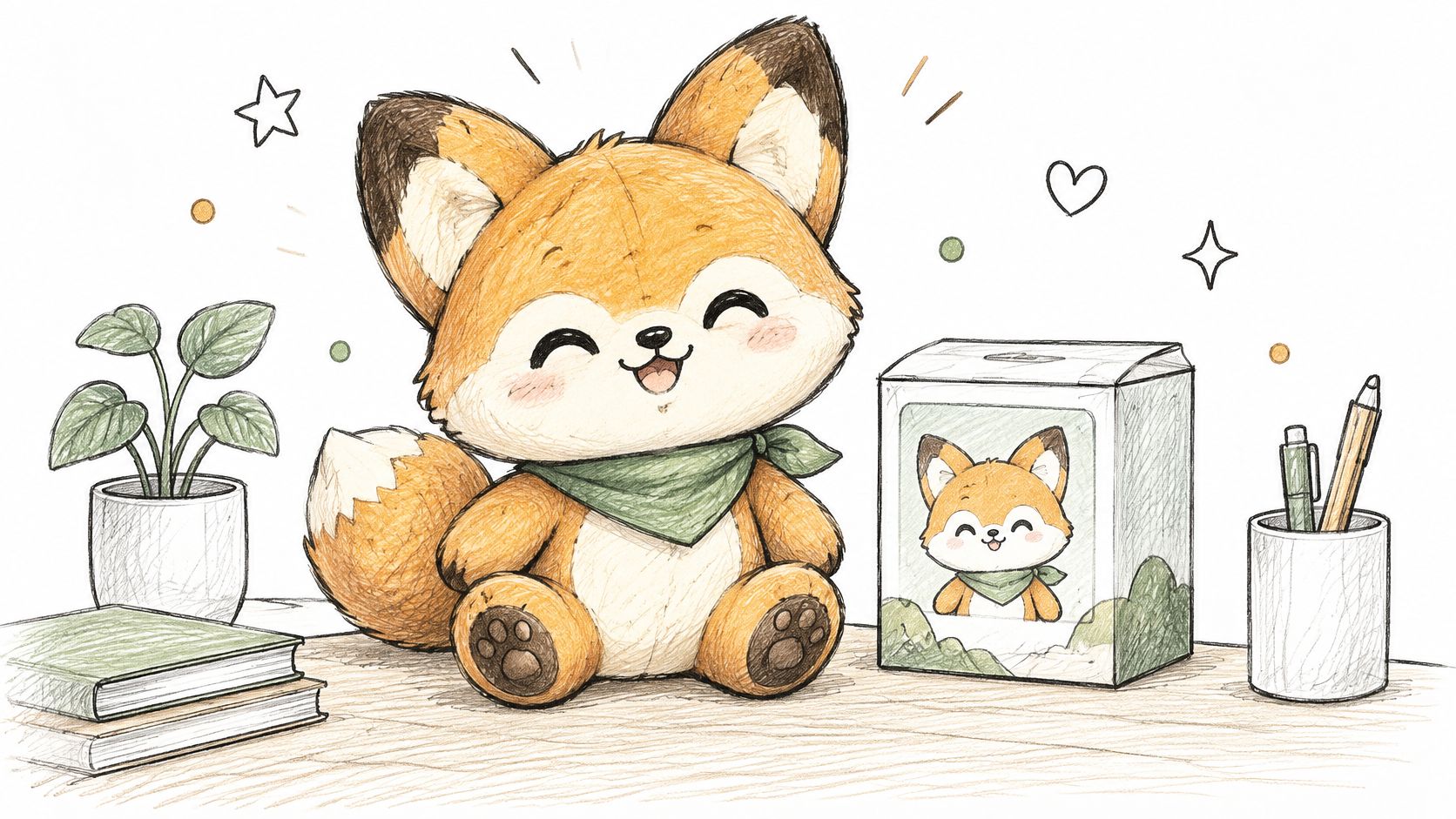
Retention depends on size, consistency, and a design that fits on a desk. Scalability is the trade-off: plush takes more shipping and storage space than a pin, so it suits anniversaries or limited creator drops better than a large conference giveaway. Brand safety starts with a production-ready design brief. Specify the character's shape, colors, and expression so the finished figure stays on-brand.
Practical rule: Choose one recognizable character, limit the colorways, and give recipients a clear reason to receive it.
Employer rewards and recognition can help people feel valued. A year-five plush can mark an employee milestone more meaningfully than another identical bottle. For example, a 400-person company could reserve 80 figures for long-tenured employees and community moderators. The limited quantity keeps the gift tied to recognition and avoids storing a surplus of plush.
2. Collectible Enamel Pins with Trading Culture
Pins turn a giveaway into a social habit. People hunt, trade, and pin them to lanyards, jackets, and bags. Disney's park pin trades and the swap tables at game conventions prove the ritual. Your conference, team, or creator drop can run a smaller version of the same game.
In 2024, 91% of working Americans said they wanted their company to recognize contributions with tokens of appreciation such as gifts or shoutouts, according to Snappy's workforce study. A sequenced pin set is that token, with almost none of the freight pain of apparel.
What I spec before I approve a pin
- Series, not a one-off: A visible year or chapter makes people want the next one.
- A backing card: Event, team, or short story raises perceived value for a few grams of metal.
- Soft enamel for color, die-struck for a premium edge: Pick one finish and stay with it so the set matches.
- Ship flat: Pins clear most borders without batteries, liquids, or size charts.
Brand safety is the artwork. Skip inside jokes that age badly on a jacket in a client meeting. Say your events team drops four pins a year. Employees who complete the set get a fifth "closer" pin at their anniversary. You measure keep rate by how many show up on lanyards at the next offsite, not by how many left the booth bowl.
3. Custom Sticker Kits
Stickers are the workhorse of creative swag ideas when the brief is reach, not ceremony. Developer tools toss them into conference bags. Open-source projects hand them out at meetups. Laptops, bottles, and phone cases do the media buy for you.
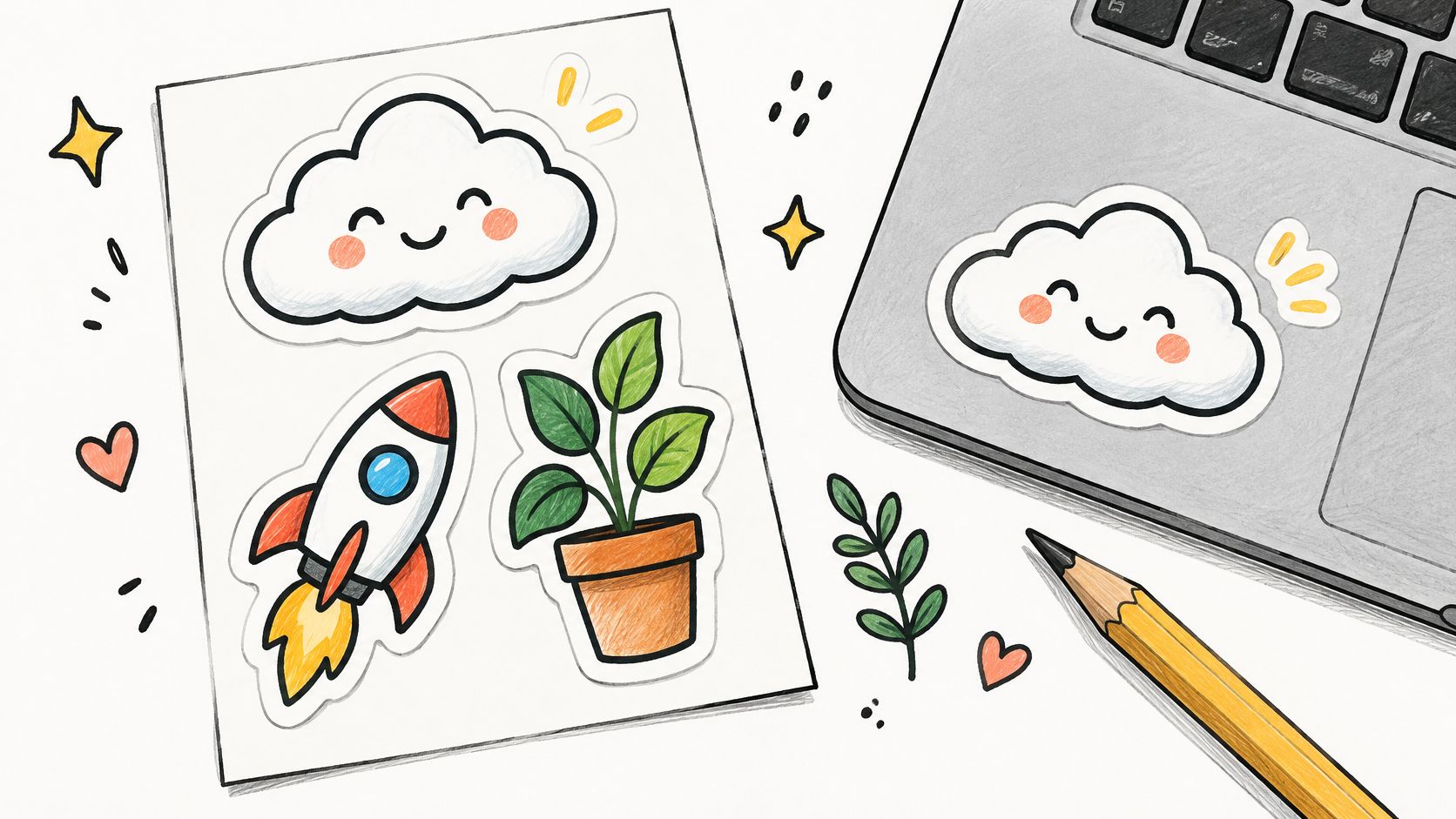
Design for the lid, not the logo wall
A giant wordmark on vinyl gets peeled off. A small illustration people want to show off stays. I use a sheet of several designs so the recipient chooses, which cuts the "I hate this one" waste. Vinyl beats paper for water bottles. Die-cut shapes photograph better than a rectangle of text.
Scalability is why stickers win global programs. They are light, cheap, and legal almost everywhere. Tuck one sheet into every shipment and every onboarding box so the brand shows up without a separate pick-pack project. Brand safety is still real. No unlicensed characters, no slogans legal has not seen, and no designs that only make sense in one office's Slack.
Say you support 2,000 remote hires a year. A six-sticker sheet in each kit costs less than a postcard mailer and sits on hardware you do not own. Track which designs come back in employee photos, then kill the ones nobody peels.
4. AI-Personalized Limited Apparel Drops
A limited apparel drop is a way to test demand without committing to a closet of unsold hoodies. Generate or adapt a design from a prompt, URL, or campaign brief, then release a short run for a launch, premiere, or conference. Creators can tie a drop to a video; enterprises can limit a capsule to a single week.
In 2024, online promotional-product sales totaled $6.83 billion, or 25.5% of U.S. industry sales, according to PPAI's sales volume estimate. Online ordering suits limited drops better than buying a pallet and hoping to clear it by year-end.
The garment still has to earn a place in someone's wardrobe. Retention depends on blank quality, fit, and a design people will wear beyond the campaign. Scalability improves when production follows orders, reducing the need to guess sizes across regions. Teams using enterprise workflows for fashion teams still need a human review gate: check trademarks, tone, and artwork placement before anything goes live. That review protects the brand while letting the drop stay limited.
For a launch requiring 300 tees across three regions, offer two fits, collect sizes with the RSVP, and track sell-through before reprinting. If one size sells out while another remains, use that pattern to shape the next run. Short runs limit leftover stock, but a narrow size range or weak garment quality can still leave recipients with something they will not keep.
5. Branded New-Hire Welcome Kit
The first week is the moment swag can still feel like a gift. A tight kit, apparel that fits, a bottle, a notebook, and a note from the team, tells a new hire the company prepared for them. Startups often ship it before day one. Global enterprises split the kit by region so you are not forcing a US-only snack or a plug that does not fit.
In a 2024 survey of 1,064 U.S. employees at companies with more than 50 workers, 94% of people receiving branded gifts at least monthly said they were very satisfied with their employer, against 33% among those receiving swag less than annually, according to Custom Ink's company swag survey. A welcome kit is the start of that cadence, not the whole recognition program. Build the ongoing version the same way you would a new hire welcome package, with sizes captured at offer stage.
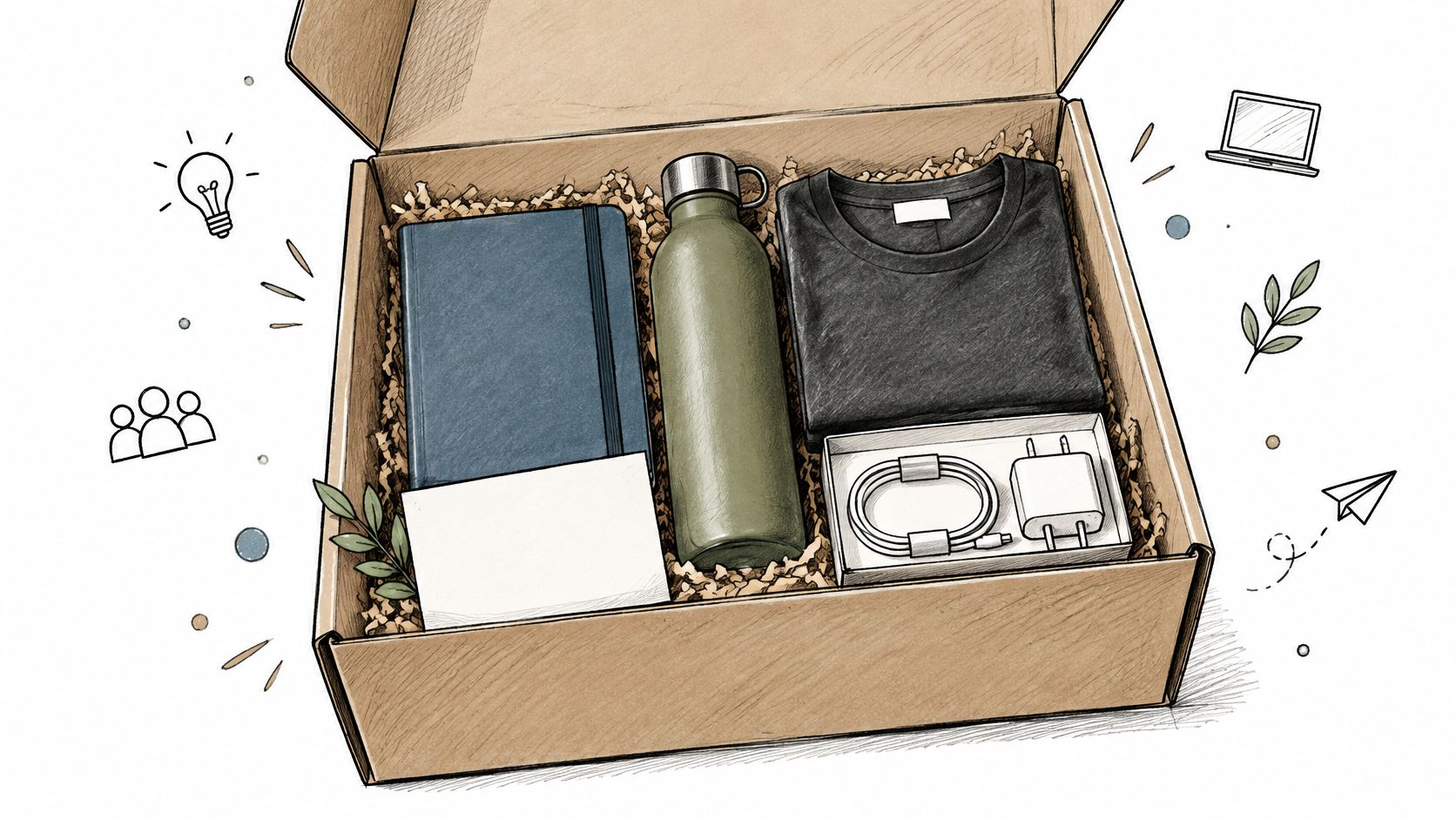
I run three tiers, standard, leadership, and remote, so finance can see the cost before recruiting spikes. Personal notes scale if managers record a line in the HR system and you print it, rather than hoping handwriting survives 400 hires. Skip fragile glass and anything with a battery unless you enjoy brokerage calls. Say a scaleup hires 40 people in one month across four countries. Preferences collected at offer, regional blanks, and a Friday ship cut the "my hoodie is a youth medium" failure that poisons the first impression.
6. Premium Reusable Tote or Bag
A good bag is still in rotation years after the conference lanyard hits the bin. Conference totes that attendees carry, and anniversary duffels that replace a beaten gym bag, earn the logo. Neutral cloth and a small mark outlast a full-bleed event graphic nobody wants on a Saturday.
The 2026 ASI Global Advertising Impressions Study, as reported by the Tri-City Herald, used a branded tote as a concrete case. A $6 tote generated about 5,000 impressions over time, about $0.001 per impression. That math only works if the bag is strong enough to be reused. Cheap nonwoven that splits in a week is an ad you paid to throw away.
I keep totes as an optional upgrade inside the catalog, not a forced insert. People who already own six event bags will not thank you for a seventh. Recycled or organic cloth belongs here when you can document it, which is the same standard I use for custom tote bags in a global store. Watch strap length, base weight, and whether the print cracks after a wash. Say your user conference gives a simple charcoal tote with an inside pocket for a laptop. You will see it in airports the next quarter. That is retention you can photograph without asking anyone to pose.
7. Sustainable Upcycled or Repair-Based Apparel
"Plant-based" on a hangtag is not a sustainability program. A durable tee people repair and rewear often beats a novelty item that composts in a drawer after one photo. Outdoor brands figured this out with repair counters. Employee catalogs can do a quieter version with recycled-content blanks, spare buttons, and a care card.
More than 90% of surveyed consumers consider sustainability important when choosing promotional products, while 25% call it extremely important, and 65% of mid-sized promotional-product suppliers reportedly conduct environmental or social audits, according to PPAI Magazine's 2025 industry coverage. Your job is to ask for those audits, not to repeat the hangtag.
A recycled label without a certificate is a procurement risk, not a brand story.
Verify fiber claims before anyone writes "sustainable" on the product page. Ship care instructions. Tell the sourcing story in one short card. Local or regional blanks can beat a "greener" fiber that flies halfway around the world for a single event. I walk buyers through that trade-off the same way a guide to sustainable company swag should, with documents, not adjectives. Say your climate team wants Earth Day tees. Offer a repairable heavier-weight shirt in the store year-round instead, and measure repeat wear, not how many units you pushed in April.
8. Experience-Based Swag Boxes
A shared moment outperforms a tenth mug when the team is remote. Coffee and snacks before a virtual all-hands, or a small craft kit tied to a creator release, get opened together. The unboxing is the meeting, not a leftover on a shelf.
Where these boxes fail
- Food and alcohol rules: A chocolate that is fine in Austin can stall in another country. I keep a non-food swap, a card deck or a simple kit, for dietary needs and banned ingredients.
- Timing: If the box lands three days after the call, you bought a late snack, not an experience.
- Overpacking: Five branded extras bury the one item people came for.
Retention here is memory plus one keeper, often the mug or the game, not the snacks. Scalability means a short bill of materials a 3PL can kit without a chef. Brand safety covers allergen labels, alcohol policy, and cultural fit. A spirits kit is a poor default for a global People team.
Say 120 people join a product retrospective. You ship coffee, a biscuit alternative, and a two-player card game to arrive the Tuesday before Thursday's call. Dietary holds get the game and a tea option. You ask one question afterward. Did you use this during the meeting? If the answer is no, simplify the box.
9. Phone and Laptop Accessories with Utility
Sleeves, cable organizers, and a simple stand earn a spot in a work bag. Branded phone cases do the same for a creator store if you only offer sizes people own. These pieces suit onboarding for technical hires and gifts for teams who live in front of a screen.
I avoid gadgets that need radio certification, lithium paperwork, or a manual in nine languages unless the audience wants that device. A sleeve does not get detained the way a power bank does. Offer two or three popular laptop sizes and stop. A "universal" sleeve that fits nothing well comes back as a return, and returns destroy the margin on a welcome kit.
Pair the item with a one-line note that names the role. "For the commute" lands differently than a logo and silence. Say your developer kit includes a recycled-fabric 14-inch sleeve and a leather-free cable tie. You skip the wireless charger this quarter because three regions flagged battery shipments last time. Utility without a customs story is the version that scales.
10. Digitally Linked Physical Swag
A pin, badge, or card with a QR code, NFC tag, or unique code connects the object to something worth opening. Session notes, a members video, a community, or a private offer. Event teams get a response count. Creator shops get a path from merch to the next piece of work.
Nearly 45% of respondents prefer promotional products that connect to digital content or apps, according to PPAI's coverage of generational merch preferences. The code is useless if the reward is vague or the page dies after the conference.
Make the scan obvious
Print the reward in one sentence beside the code. Use a unique code per event, or per person when you need individual response data. Keep the destination short, mobile, and owned by someone after the event ends. I have watched beautiful NFC cards point at a 404 because the campaign site was shut down on Monday.
Brand safety includes where that link sends people. No surprise data grabs, no login walls you did not mention, no third-party trackers your privacy team has not approved. Say your summit badge grants access to slides and a networking profile. You publish the redemption rate the next week and kill any code path under a clear threshold. Physical swag that cannot report anything is harder to defend in the next budget cycle.
10 Creative Swag Ideas at a Glance
A strong swag choice has to do more than look distinctive. It should be kept, ship at the intended scale, and stay within brand guidelines. The table compares each idea on those practical constraints as well as cost.
| Item | Best For | Relative Cost | Shipping & Scale | Key Trade-Off |
|---|---|---|---|---|
| Mascot Plush and Collectible Figures | Milestones, creator communities, and character-led brands | Higher | Bulky to ship; limited runs suit collectible releases | High emotional value, but needs a recognizable character and longer lead times |
| Collectible Enamel Pins with Trading Culture | Conferences, employee recognition, and fan communities | Low per unit | Lightweight and easy to ship globally | Encourages trading, but requires ongoing designs and reliable supplier quality |
| Custom Sticker Kits | Large events, onboarding kits, and broad audiences | Very low per unit | Lightweight and easy to scale internationally | Affordable and visible, but can feel disposable or generic |
| AI-Personalized Limited Apparel Drops | Timely creator releases, launches, and event campaigns | Higher per item than bulk orders | Made to order or in small batches, with minimal inventory | Creates urgency and reduces inventory risk, but needs brand review and reliable fulfillment |
| Branded New-Hire Welcome Kit | Employee onboarding and distributed teams | Moderate to high, depending on kit tiers and regional shipping | Can ship to remote and office-based employees; global logistics are complex | Creates a strong first impression, but sizing and regional shipping need coordination |
| Premium Reusable Tote or Bag | Conferences, employee gifts, and everyday brand visibility | Higher than stickers or pins | Bulky to ship and store; practical for repeat use | Long-lasting utility, but cost and design restraint matter |
| Sustainable Upcycled or Repair-Based Apparel | Brands emphasizing environmental responsibility | Higher | Supply may be less consistent; size and color options can be limited | Supports sustainability messaging, but claims need verification |
| Experience-Based Swag Boxes | Remote events, team recognition, and community rewards | Low to moderate, depending on contents | Bulk ordering is possible; global shipping can be complex | Creates shared engagement, but timing, preferences, and restrictions need attention |
| Phone and Laptop Accessories with Utility | Tech audiences, employee gifts, and onboarding | Low to moderate; sleeves are cheaper than certified devices | Shipping scale depends on device compatibility and product type | Useful in daily routines, but compatibility and certification may limit fit |
| Digitally Linked Physical Swag | Event marketing, creator communities, and measurable engagement | Moderate, depending on the code or tag and hosted page | Physical distribution can scale; digital destinations require maintenance | Adds trackable digital value, but needs clear rewards and careful data handling |
Building a Swag Program That Scales
Treat the list as a ladder, not a shopping spree. Stickers ride along in every shipment because they are light and people place them where others look. Pins and a mascot plush mark tenure, launches, and community status, in small quantities, so they stay special. Limited apparel drops cover a moment, then stop, which protects you from dead inventory. Welcome kits handle day one. A tote or a sleeve covers the days after. An experience box is for a shared call. A code on the object tells you whether anyone cared.
Run the three filters again before anything gets a SKU. If they will not keep it, do not make it. If you cannot ship it to the next country without a bespoke exception, it is not a global program. If legal, brand, or a supplier claim cannot survive a screenshot, it is not safe.
Quality is the gap buyers already feel. PPAI's 2024 end-buyer study reports that only 38% are satisfied with the quality of products from their primary source, while 45% prefer online purchasing platforms for convenience. I would rather run a smaller catalog with proofs, decoration specs, and a defect score than a novelty aisle nobody reorders.
Operate it like a product line. Collect size and preference before you produce. Offer a regional alternate when a blank or a food item will not clear. Score each piece on selection rate, repeat use, returns, and delivery time. Retention and intent-to-stay belong in a short pulse, next to compensation and manager quality, not instead of them.
Platforms like FLYP LTD take that operating load. Design generation, brand safety, manufacturing, and global fulfillment sit in one flow, so a People team or a creator can run kits, recognition, and drops without staffing a warehouse. I still would not switch a whole catalog at once. Pick one idea, pilot it with a small cohort, and measure whether people keep it. Expand only the pieces that pass.
FLYP LTD turns a prompt, a URL, or a brand guide into on-brand merch, then handles proofs, production, and international delivery for onboarding kits, recognition gifts, and creator drops. If you want creative swag ideas that survive the three filters, start with one pilot instead of a warehouse full of guesses. Visit FLYP LTD and set up the first run with sizes, a brand check, and a keep-rate you can read.