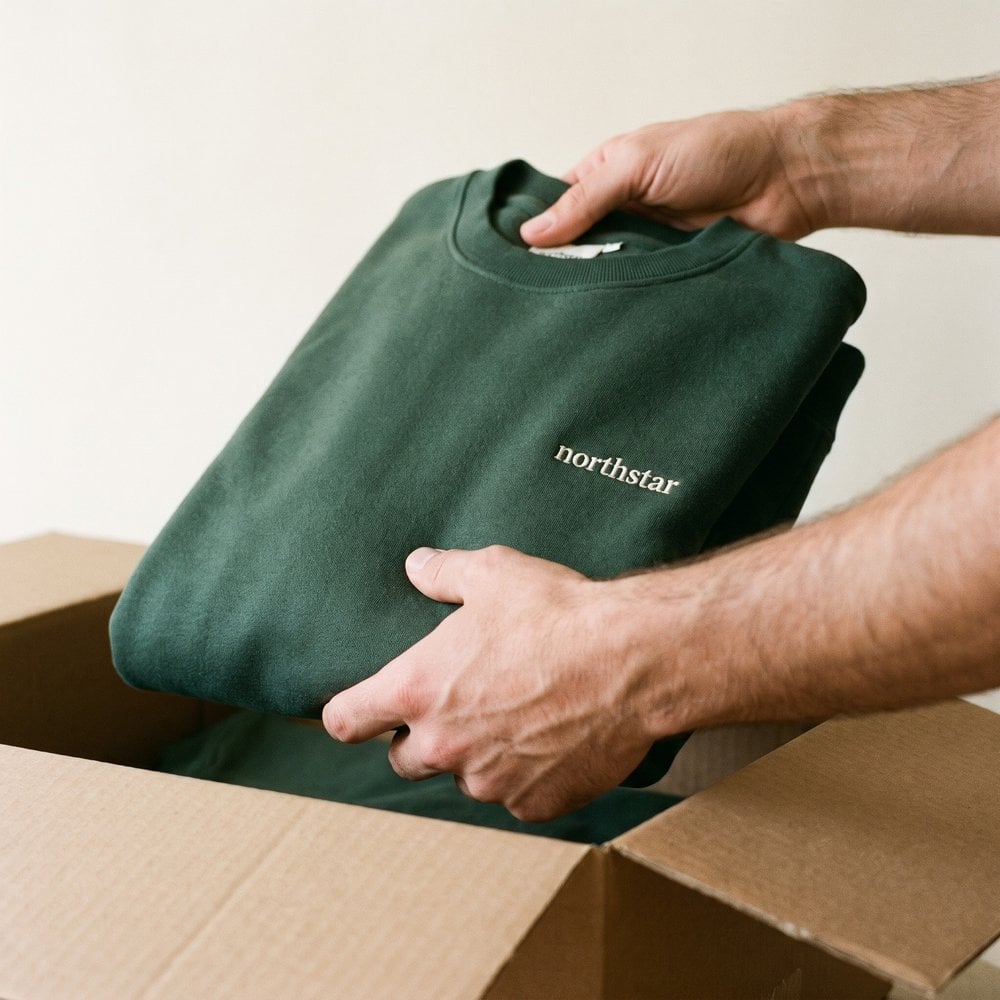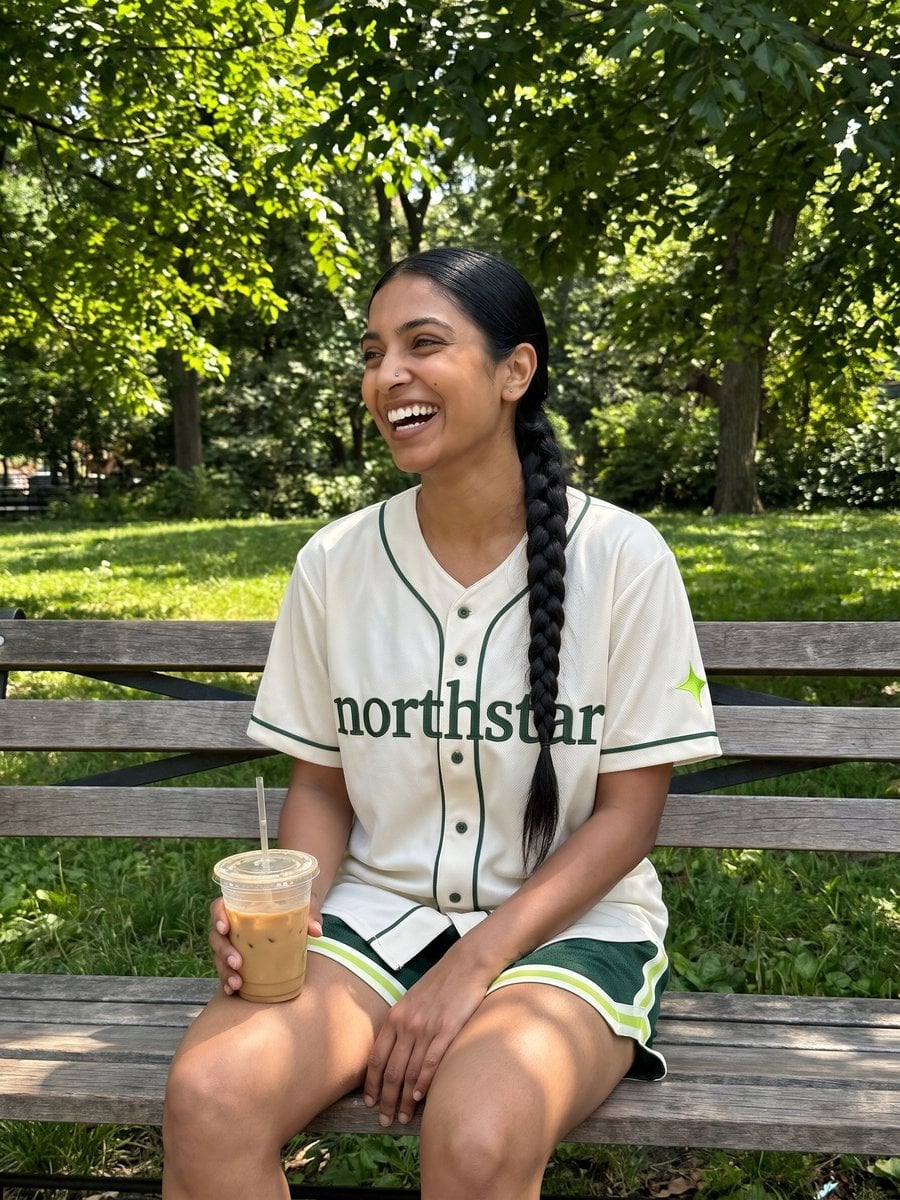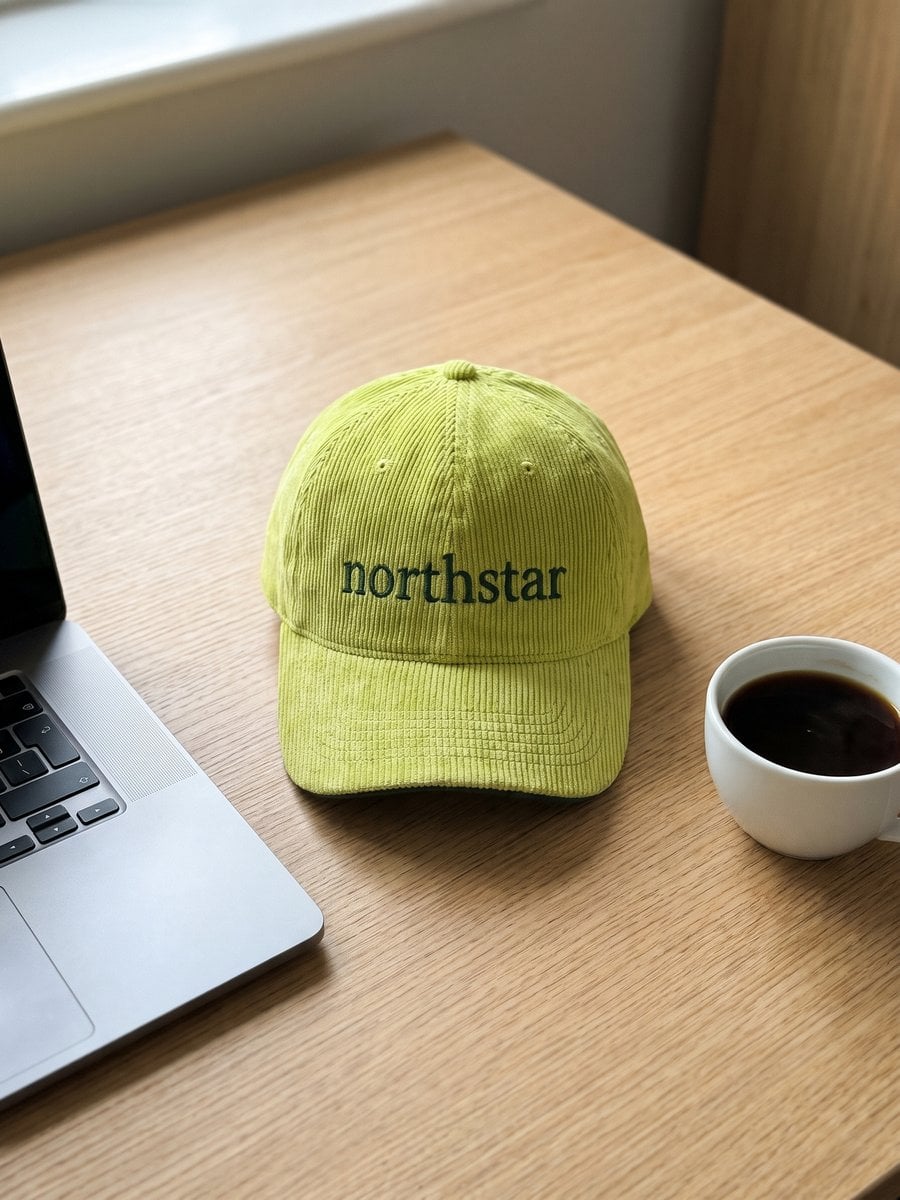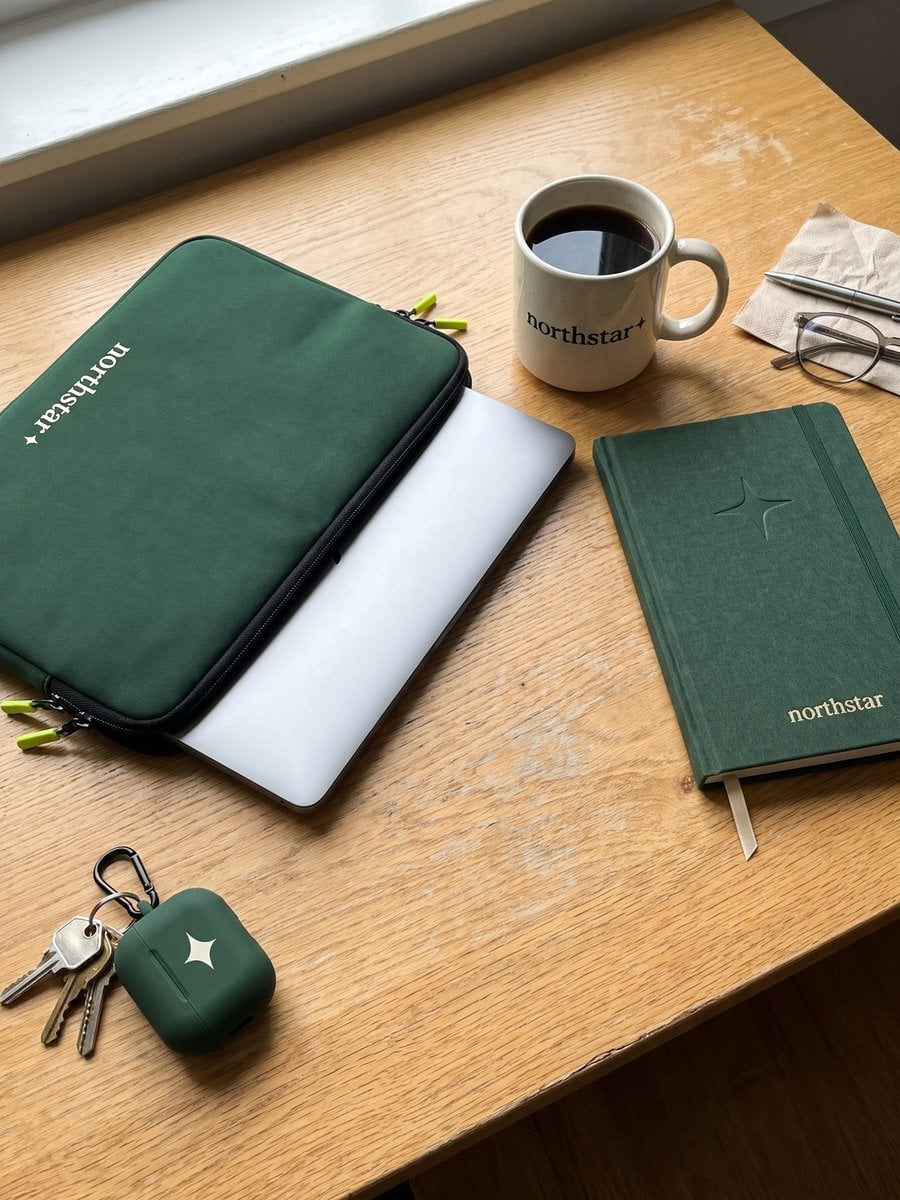
If your company distributes branded hoodies but nobody chooses to wear them, has it built the brand or just bought inventory? The gap between merch vs brand is the gap between what an organization wants to communicate and what people choose to carry into their lives.
For People Ops, marketing and procurement teams, that distinction changes the buying decision. The useful question isn't how many products can carry a logo. It's whether those products create a worthwhile encounter with the organization, and whether you can measure that encounter without confusing distribution with success.
Table of Contents
- Merch vs Brand at a Glance
- How Merch Builds Recall and Identity
- Measuring Whether Merch Strengthens the Brand
- Where Merch Fits Each Brand Use Case
- Keeping Merch From Diluting the Brand
- Decide Whether Merch Should Carry Your Brand
Merch vs Brand at a Glance
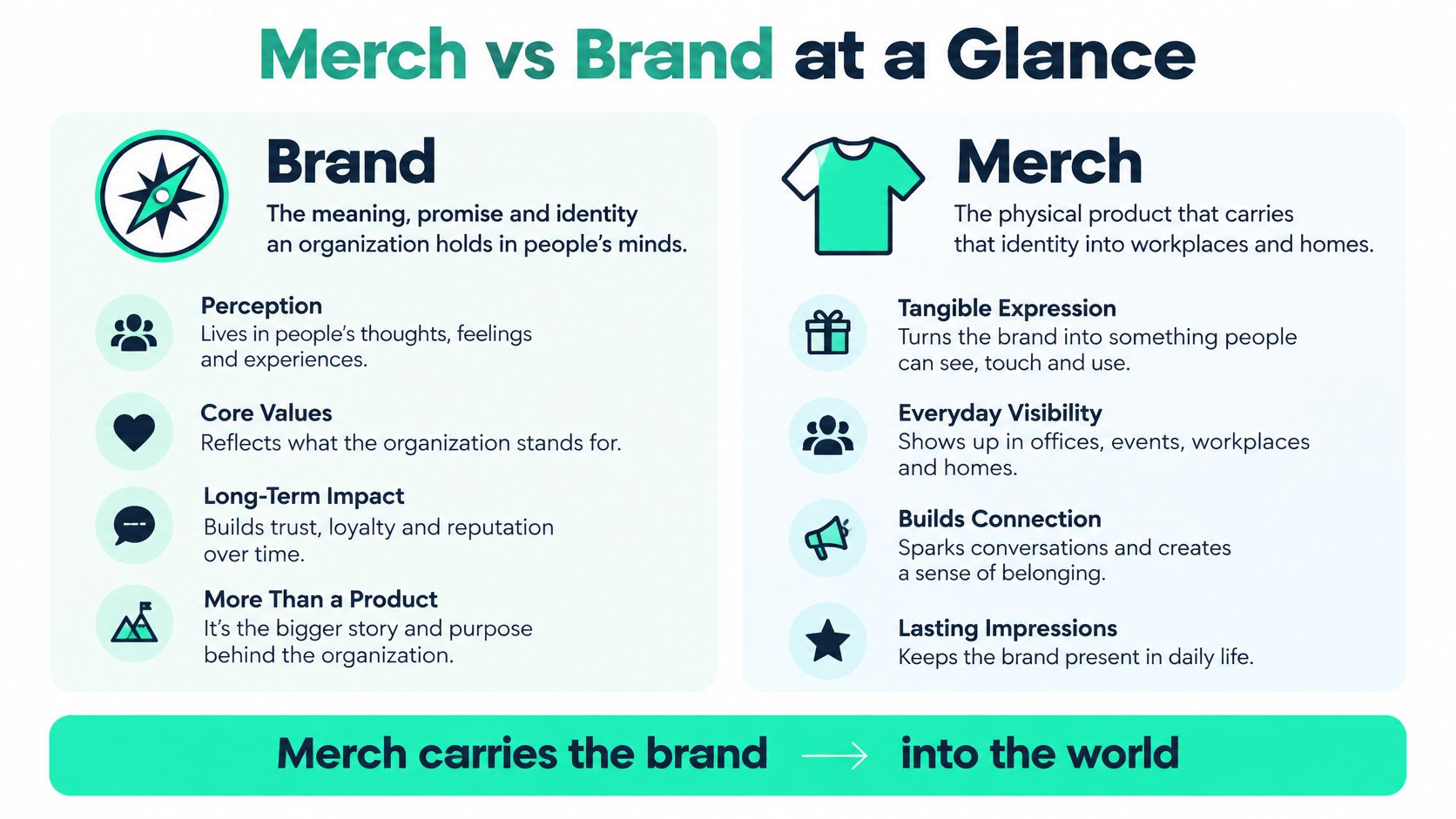
A brand is the meaning, promise and identity people associate with an organization, while merch is the physical product that carries that identity into workplaces, homes, events and public spaces.
Brand versus merch on the same criteria
| Dimension | Brand | Merch |
|---|---|---|
| What it is | The meaning, promise and identity people associate with an organization | Physical products that carry that identity into daily life |
| Where it lives | Across every touchpoint: messaging, service, culture and product | Wardrobes, desks, events, homes and public spaces |
| Who controls it | Leadership, marketing and every employee who represents the organization | Procurement, design and the people who decide what is made and distributed |
| How it is judged | Trust, preference and consistency over time | Recall, wear rate, retention and voluntary use |
| Typical failure | An inconsistent promise or an identity nobody can describe | Unused inventory, off-brand design or disposable logo advertising |
| Cost pattern | Ongoing investment with returns that are hard to isolate | Per-unit cost that only pays off when the item is used |
Merch can't create a credible brand on its own: a welcome hoodie doesn't compensate for a confusing onboarding experience, and a premium notebook doesn't make an unreliable service trustworthy. But merchandise can contradict an otherwise strong identity when the product feels cheap, careless or disposable.
Different owners, different decisions
A People Ops lead planning onboarding kits needs an item that helps employees feel included. A marketing lead running event swag needs something relevant to the audience and the occasion. A founder outsourcing company apparel needs someone to translate brand decisions into garments without creating a separate procurement job.
These aren't competing definitions of merch. They're different assignments for the same physical medium, and each needs a distinct reason to exist.
The category is substantial: U.S. promotional-products sales reached $26.78 billion in 2024, according to the PPAI Sales Volume Report. That scale establishes merchandise as an established organizational expenditure, not proof that any particular purchase is worthwhile.
Before approving products, write down:
- The identity: What should someone understand about the organization when they encounter the item?
- The recipient: Who would choose to wear or use it, in what setting?
- The success criterion: What observable behavior would justify the expense?
A product brief that answers those questions gives designers and purchasing teams a shared decision rule. A brief that only specifies logo placement leaves them optimizing decoration rather than the experience.
How Merch Builds Recall and Identity
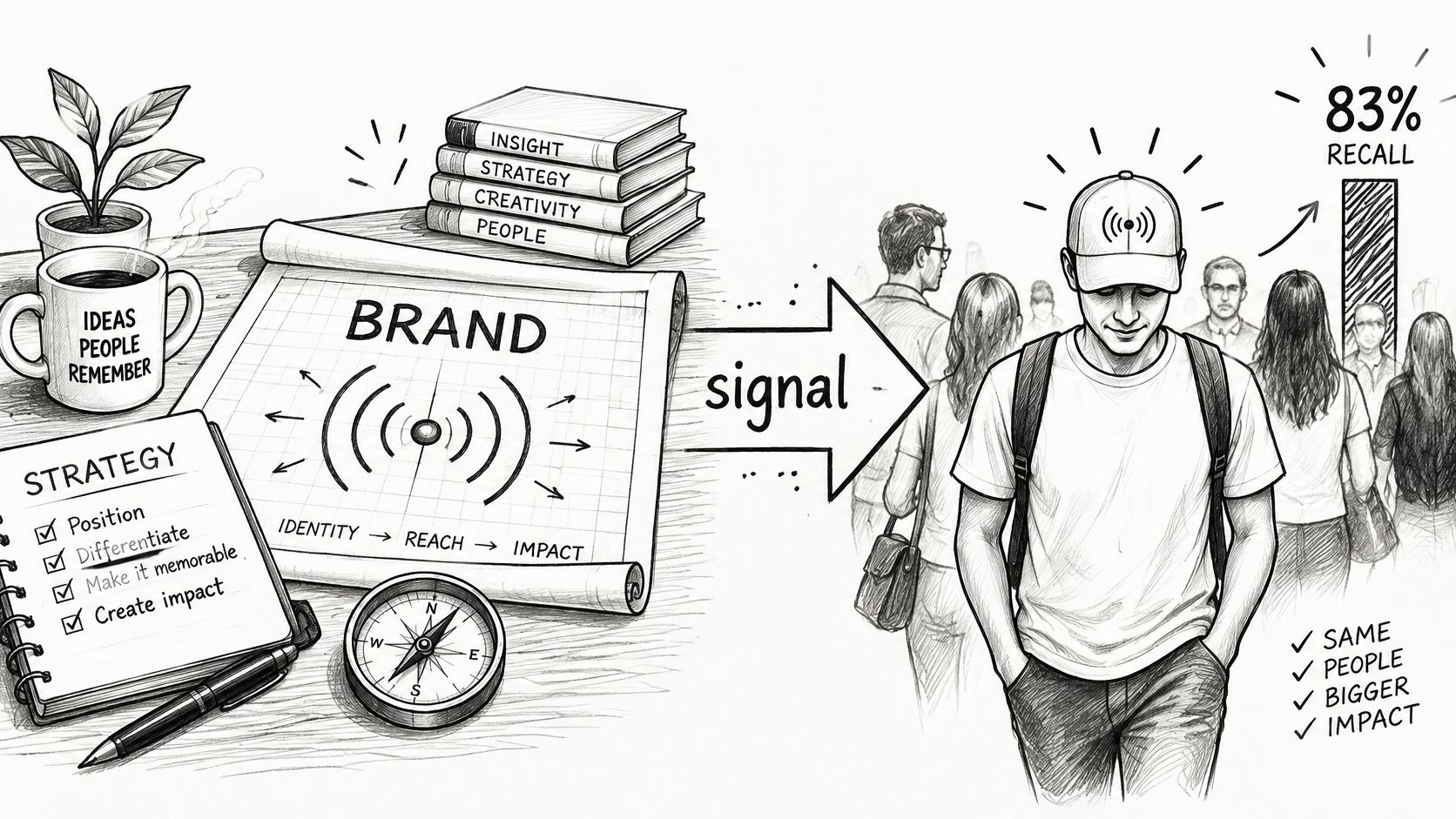
Brand strategy defines the visual and behavioral signal. Merchandise gives people a physical way to encounter that signal repeatedly, provided they keep using the product.
The distinction matters because recognition isn't the same as preference. Someone can remember the advertiser on a shirt without liking the shirt, trusting the organization or wanting to become a customer.
What recall evidence actually supports
Research summarized by SellersCommerce reports that 83% of people could recall the brand on a promotional product they had received, while a cited apparel study found 85% of recipients remembered the advertiser associated with a shirt or hat. Those findings support merchandise's potential to make an identity memorable, not a guarantee of equivalent results for a new enterprise program.
A separate summary from MarketSplash describes a 2023 Advertising Specialty Institute study covering nearly 25,000 U.S. consumers that reported 85% advertiser recall. These are industry-reported recall findings, so they shouldn't be treated as independent forecasts of employee engagement or incremental revenue.
For practical design decisions, connect the item to the identity rather than treating the logo as the whole identity. The principles behind image branding help frame choices about color, visual language and consistency, but garment construction and fit still determine whether the design is wearable.
Model use before claiming impressions
A useful planning equation is:
Estimated branded-use occasions = recipients × expected uses per month × retention months
Calling the result use occasions is more defensible than calling it verified impressions. Wearing a hoodie at home and wearing it at a conference don't expose the brand to the same audience. Neither calculation tells you whether an observer noticed or understood the mark.
You can divide total program cost by estimated use occasions to compare candidate products. Include decoration, packaging, delivery, support and unusable stock in the numerator, not just the blank garment's purchase price.
An exposure estimate is a planning assumption until you observe use. It isn't evidence that someone noticed, remembered or preferred the brand.
Test the assumptions with samples before committing to a collection. Compare garment blanks, decoration methods and size coverage in the settings where recipients will use them.
- Check the blank: Ask recipients about fit, fabric feel and comfort after washing.
- Check the decoration: Inspect embroidery backing, print flexibility and whether the placement interferes with normal wear.
- Check the context: Separate feedback from new hires, event attendees and employees receiving recognition.
- Check the signal: Ask what the design communicates before explaining the intended meaning.
Oversized logos aren't automatically wrong. They may suit a fan community that actively wants visible affiliation, while feeling intrusive on employee clothing intended for everyday use.
Likewise, a subtle mark isn't automatically effective if nobody can connect it to the organization. The decision is a balance between legibility and willingness to wear, not a universal preference for small branding.
The final sample review should answer a concrete question: Would the intended recipient choose this outside the distribution moment, and does it say something true about the organization?
Measuring Whether Merch Strengthens the Brand
Units distributed measure activity, not brand benefit. A fulfilled shipment establishes that a product reached someone. It doesn't establish that they wanted it, kept it or acted differently because of it.
Start with the intended outcome, then choose a metric that can detect it. An onboarding program shouldn't inherit an event team's website-conversion target just because both distribute apparel.
Metrics that show whether merch strengthens the brand
| Metric | What It Shows | How to Capture It |
|---|---|---|
| Wear or use rate | Whether recipients voluntarily use the item | Pulse survey or observed wear at events |
| Downstream digital action | Whether recipients take a trackable action after receiving the item | Unique short URL, QR code or campaign landing page |
| Recall | Whether people remember the brand on the item | One recall question in an onboarding or event survey |
| Kit retention | Whether recipients keep onboarding items past the first month | Follow-up survey asking which items they still have and use |
| Advocacy | Whether recipients recommend the brand to others | Referral codes or share tracking |
| Cost per meaningful interaction | Spend divided by tracked uses or actions, not by units | Total program cost divided by verified interactions |
Distinguish association from incremental impact
ANZ research among 399 promotional-product recipients found that 81% could recall the brand on an item and 66% subsequently visited the brand's website or social media, according to the Australasian Promotional Products Association. These findings make recall and downstream digital action sensible measures, but they don't establish what recipients would have done without the merchandise.
Use a campaign-specific QR code or short URL to identify a response. Put the activation on an insert or useful product tag when printing it prominently would compromise the design.
Where feasible, compare recipients with a similar non-recipient group. Keep the invitation, timing and surrounding communications comparable, and document differences that could explain the result.
For onboarding, avoid withholding a standard welcome experience just to create an experiment. You can instead compare suitable product options, use staggered rollouts or measure changes against a documented baseline.
- Define the window: Choose a follow-up period that matches the program rather than attributing every later action to the gift.
- Record the denominator: Report responses against recipients or eligible participants, not an unspecified audience.
- Separate actions: Don't add website visits, survey responses and garment wears into a single total without identifying what each means.
- Respect privacy: Use proportionate, voluntary feedback rather than monitoring employees' clothing choices.
A practical engagement-tracking approach should connect campaign identifiers, recipient groups and relevant actions without pretending every interaction has equal value.
Give finance an outcome view
Define a meaningful interaction before calculating its cost. For an event, it might be a qualified follow-up registration; for an internal program, it might be reported continued use. Don't compare those costs as though they represent identical outcomes.
In our merch wallet, finance can see exactly what's funded, redeemed and left. Pair that spending view with acceptance, use and outcome measures so the conversation moves beyond whether the budget was spent to whether the program deserved funding.
Where Merch Fits Each Brand Use Case
The same garment can serve as a welcome, a thank-you, an event uniform or a product for sale. Choose its format according to the relationship, not the available print area.
Merch role and format by brand situation
| Situation | Merch Role | Main Brand Risk | Format That Works |
|---|---|---|---|
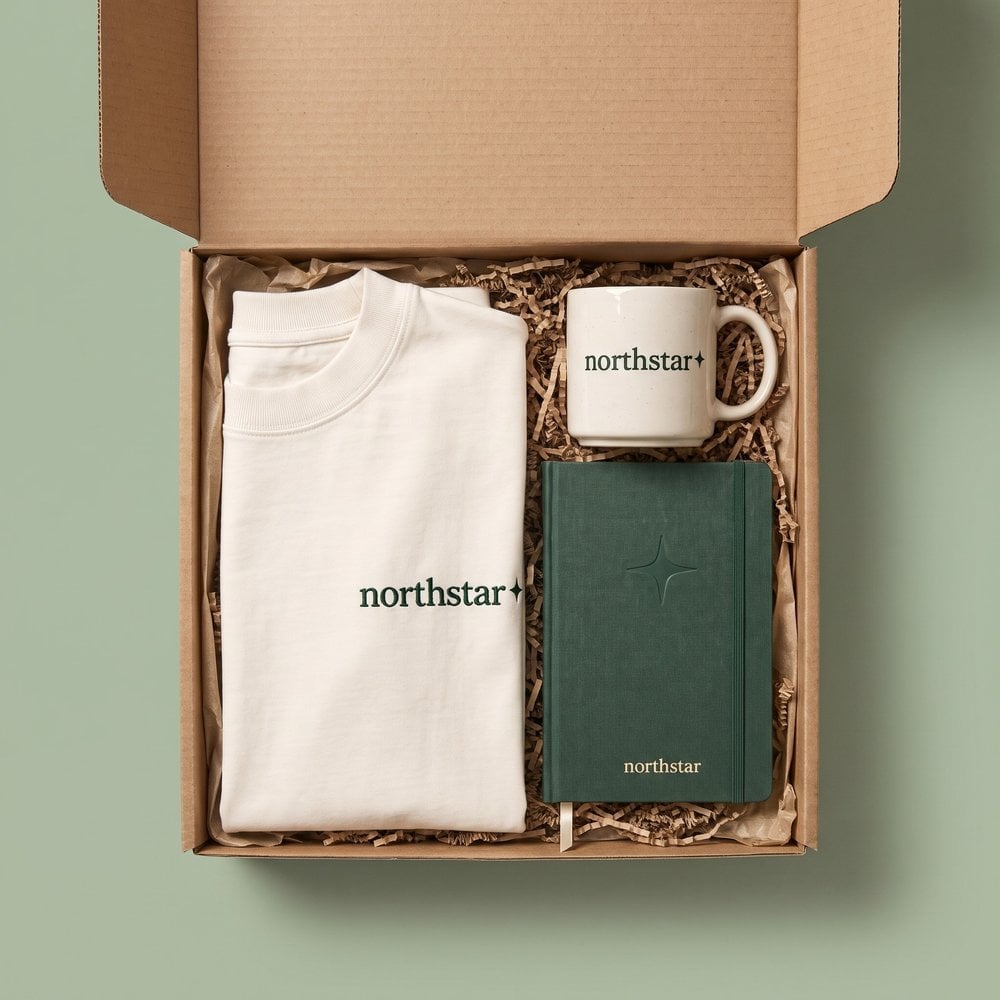
| Employee onboarding | Belonging and daily wear | Generic items nobody wears | Apparel and a notebook, chosen by staff |
| Recognition moments | Emotional value and advocacy | Overt logos that feel like ads | Tee or hoodie with a subtle mark |
| Events and offsites | Public visibility and conversation | Excess distribution and poor fit | Heavyweight blanks for cold cities, lighter blanks for hot ones |
| Creator drops | Identity and community | Merch that reads as fan memorabilia only | Limited drop built on a recurring idea |
| Global programs | Consistent identity across cultures | Sizing and climate mismatches | Curated catalog with local fit and size choice |
Employee belonging and recognition
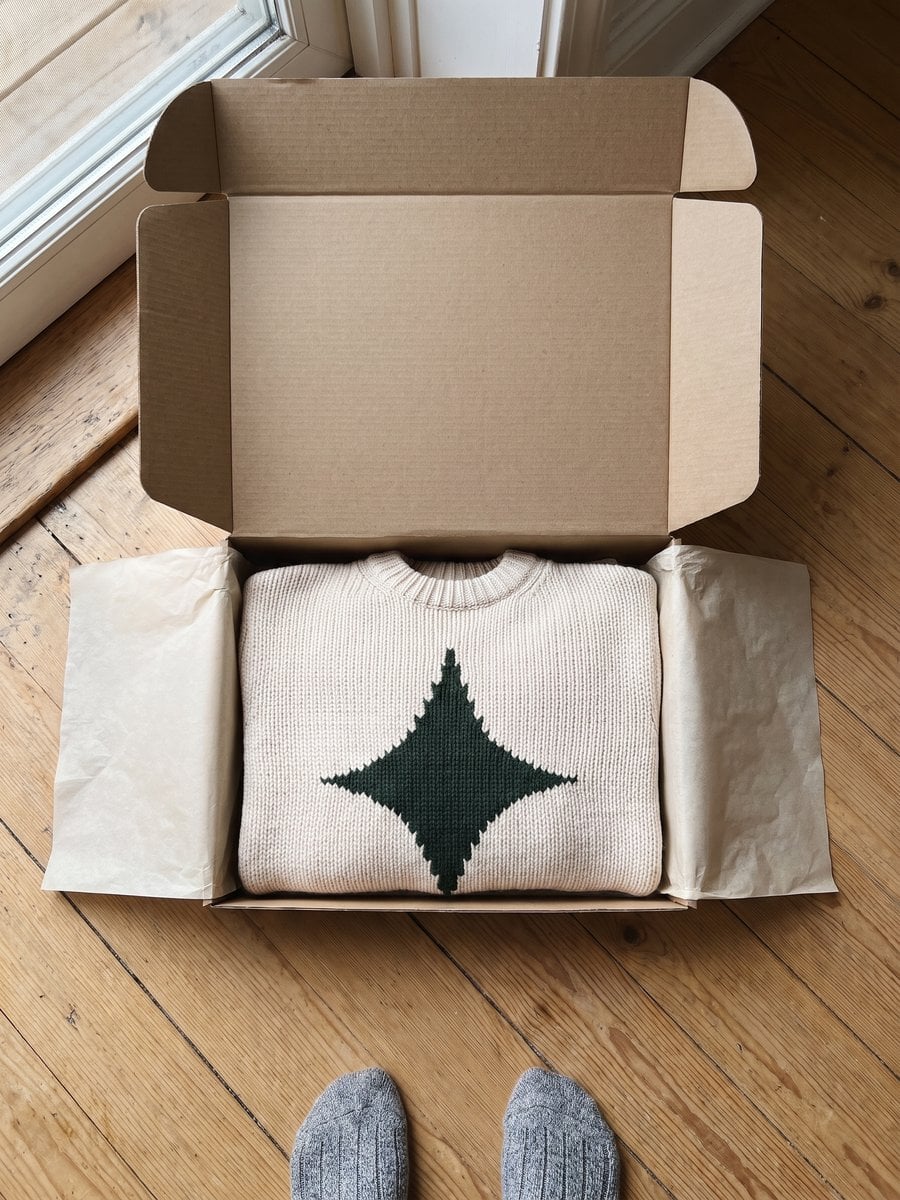
For onboarding, the assignment is to make joining feel considered rather than automated. Offer a useful starting collection, explain the choices and let the employee select clothing they're comfortable wearing.
In a 2024 Custom Ink survey, 93% of surveyed U.S. employees said they'd be more likely to stay with their employer for another year if they received a favorite piece of company swag, according to Custom Ink. The wording matters: this is stated likelihood concerning a favorite item, not evidence that distributing merchandise reduces actual turnover.
With our employee-choice approach, staff pick fit, size and style from a brand-safe catalog the company curates. The employer controls the identity; the employee controls the personal choice.
Recognition needs a different emphasis. Tie the item to a specific contribution and include a clear explanation of why the person is being recognized. A discreetly branded hoodie can accompany that acknowledgment, but it shouldn't substitute for it.
Events, creators and distributed teams
At an offsite, consider the journey as well as the group photograph. Bulky products create packing problems, and an unsuitable garment may remain in the hotel room rather than becoming part of the event experience.
A single offsite across multiple regions can use region-specific bundles: heavyweight garments for cold cities and lighter blanks for hot ones, with the same brand and kit. Consistency doesn't require identical fabric weight.
For creators, distinguish identity merch, utility-led products and limited community drops. A catchphrase tee expresses affiliation; a useful product must also solve a practical problem; a community drop marks a shared occasion.
OohYeah's resource on direct-to-fan sales for touring bands is relevant when planning around live audiences rather than treating every follower as an interchangeable online shopper. The product, buying moment and fulfillment arrangement should suit that relationship.
For global employee programs, approve regional options within a common visual system. Review size charts, local clothing expectations and delivery requirements before opening selection, rather than asking recipients to solve those mismatches afterward.
The same logo can mean belonging in one setting and advertising in another. The relationship determines which reading is plausible.
Keeping Merch From Diluting the Brand
More branded items can weaken the intended message. If the organization claims to value care and quality, approving flimsy products solely because they're inexpensive creates a contradiction recipients can hold in their hands.
The risk isn't limited to manufacturing defects. Generic artwork makes the product interchangeable, while excessive distribution asks people to accept items they never wanted.
Make durability a buying requirement
A 2026 survey of more than 1,000 corporate merchandise buyers found that 45% identified durability as the most important feature and 74% cited team unity and belonging as a primary goal, as described in the Cottage Grove Journal's syndicated report. These buyer priorities support evaluating lasting usefulness and social purpose, although they don't prove that premium products always deliver better outcomes.
Translate durability into sample checks. Inspect seams, test zippers, wash decorated garments according to their care instructions and examine notebooks for binding quality. Check whether a water bottle is comfortable to carry and straightforward to clean.
Don't equate a heavier garment with a better garment for every recipient. The right anchor piece must suit the setting, not merely feel substantial on a procurement desk.
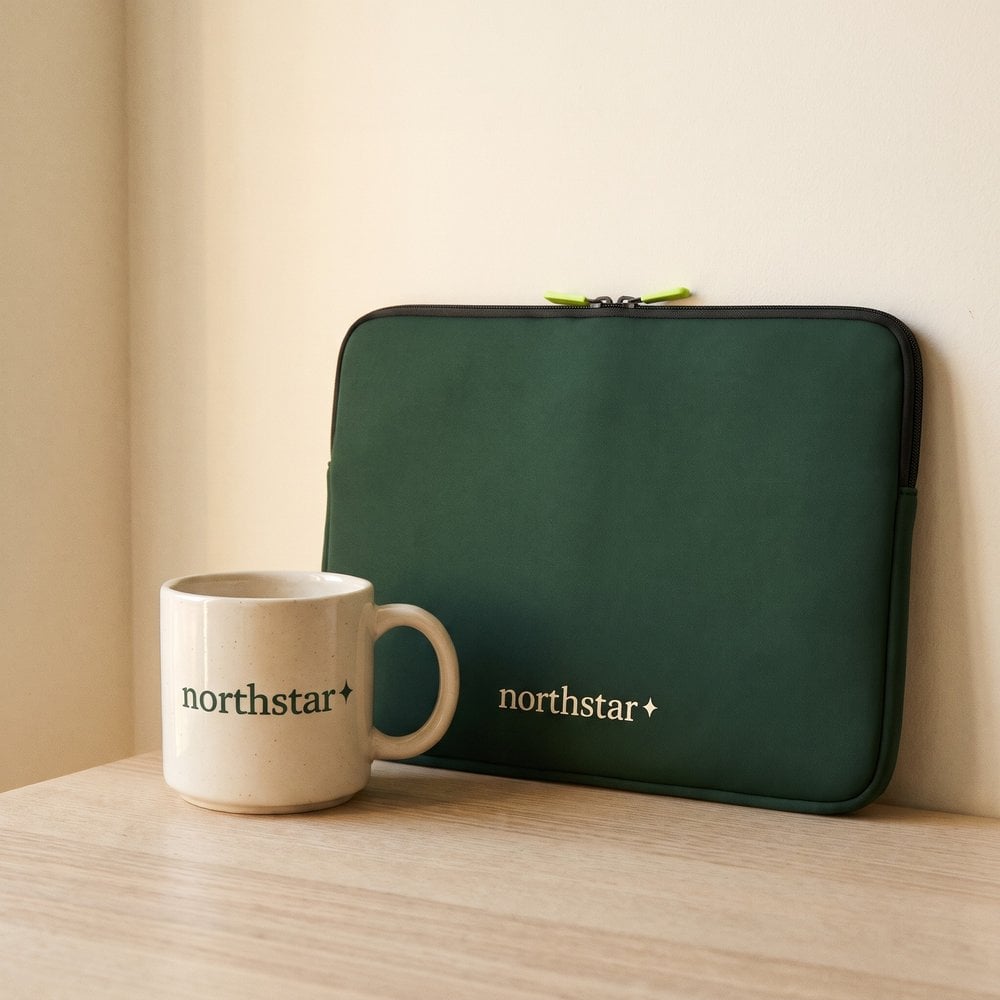
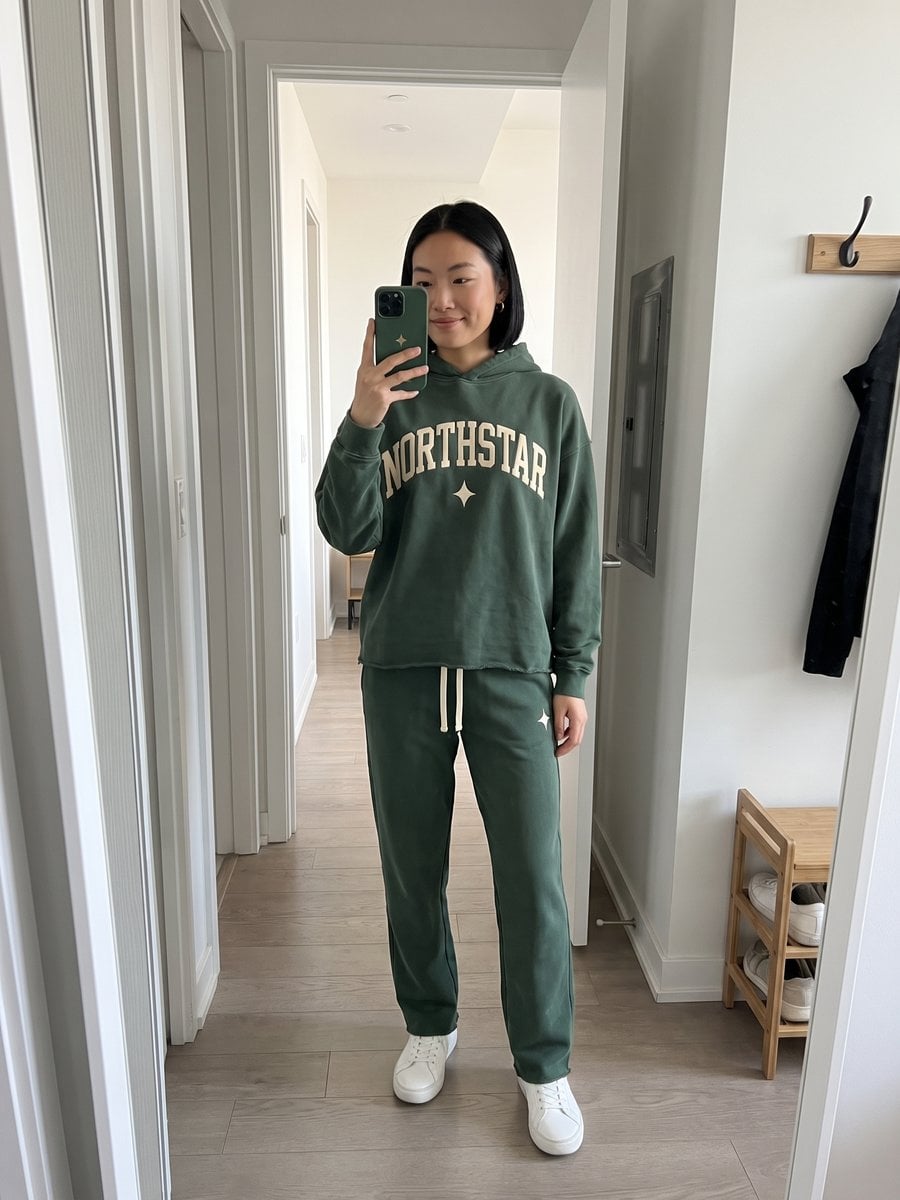
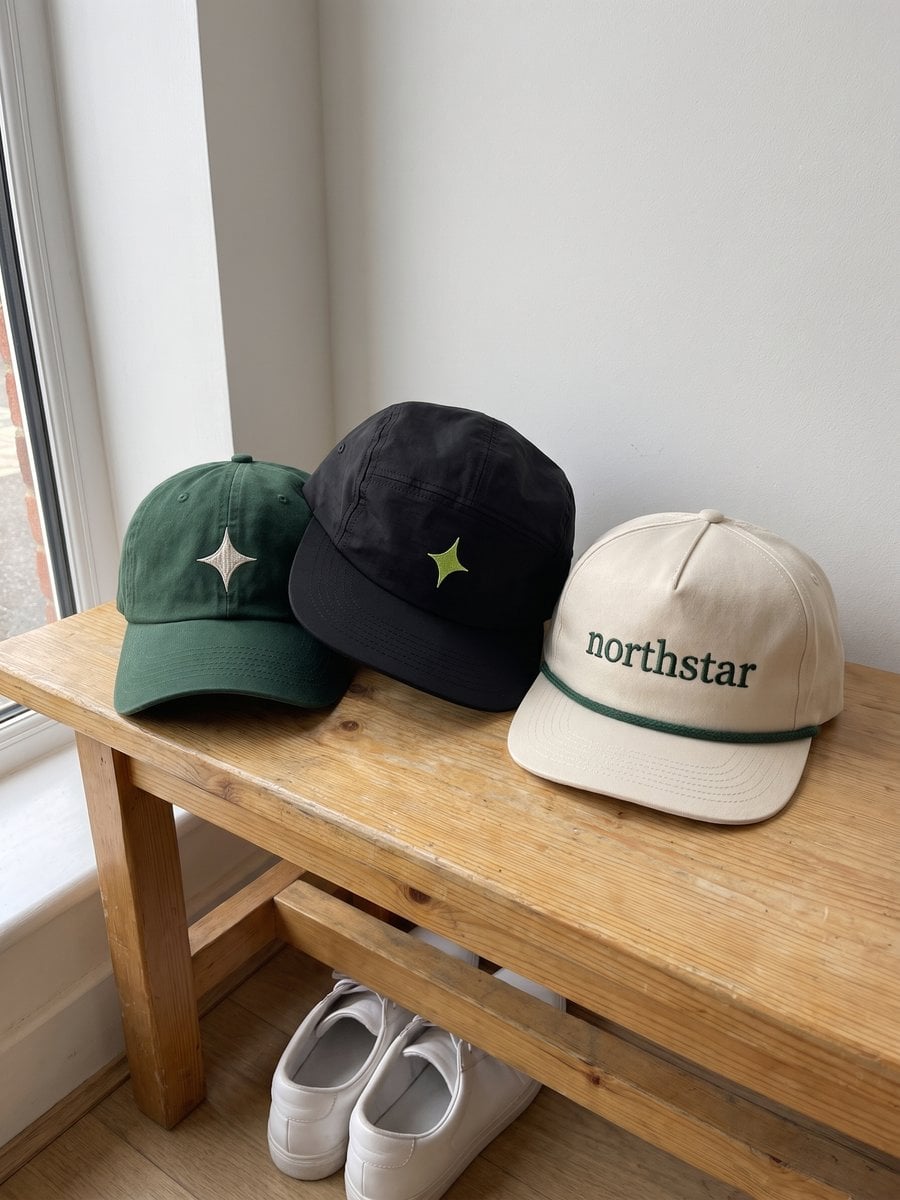
A compact collection might include a hoodie with an embroidered company mark, a tee and a notebook. Each should have a clear role, rather than existing to fill another category in the store.
Govern the collection, not just the artwork
A usable set of brand guidelines should address product applications, including approved color combinations, decoration placement, minimum legibility and exceptions for different materials. A logo file alone doesn't tell a supplier how to handle an embroidered cap or a debossed notebook.
Give an accountable owner authority to approve additions and remove weak products. Require a reason for adding a new SKU beyond its availability.
- Set product boundaries: Approve garments and accessories that fit the audience and program.
- Control recipient spending: Set allowances by employee, team or milestone rather than leaving orders open-ended.
- Review exceptions: Route unusual artwork or product requests through an approval process before production.
- Retire weak options: Remove items associated with poor feedback, repeated quality issues or little selection.
In our system, admins set brand rules, approved products and caps for the merch wallet. No off-brand merch ships from the store.
Catalog rule: Keep an item because it serves a recipient and a purpose, not because removing it makes the assortment look smaller.
Review each product's cost alongside selection, continued use and the relevant meaningful interaction. A shorter, better-supported catalog is the stronger default than a long assortment whose products nobody can justify.
Decide Whether Merch Should Carry Your Brand
Invest in merch when the organization needs a physical presence in recipients' daily lives and can explain why a particular product belongs there. Hold the order when the brand promise is unclear, the only objective is logo distribution or nobody owns the follow-up.
The decision isn't whether merchandise is good marketing. It's whether this product, for this audience, is an appropriate expression of the relationship.
Write a decision brief before a purchase order
Start with the identity the item should express. Replace broad adjectives with a practical design direction: restrained everyday clothing, expressive community artwork or useful equipment for a shared activity.
Then name the recipient precisely. A remote new hire, a conference visitor and an employee celebrating a milestone have different expectations, even when they receive products from the same organization.
Finally, select the evidence that will determine whether to continue. Choose an observable behavior and a method for collecting it before production begins.
- Proceed when the assignment is clear: You can describe the recipient, use setting and intended response without referring only to the logo.
- Pilot when product fit is uncertain: You understand the purpose but still need feedback on the garment, design or selection process.
- Pause when the rationale is distribution: You have a deadline and a budget, but no defensible answer to why someone would want the item.
Say a startup wants a store for a growing distributed team. Launching every available accessory creates more decisions without necessarily clarifying the offer; selecting a coherent anchor garment gives employees something concrete to evaluate.
Outsource execution without outsourcing judgment
A program manager can help choose the anchor SKUs that make a store feel real. That support is useful when an internal team understands its culture but doesn't want to manage garment selection and production decisions alone.
We create the merch collection and store, then handle production, delivery and support. The customer still needs to define the identity, audience and acceptable outcome; an operating service can't decide what belonging should mean inside the company.
Keep the initial test focused enough that feedback leads to a decision. If recipients reject the fit, change the blank; if they like the garment but avoid the artwork, revise the design; if they don't want apparel, reconsider the format.
Write down the identity, recipient and success criterion, then select the anchor item to test. Merch earns a place in the brand when people choose to make it part of their lives, not when the order leaves the warehouse.
FLYP LTD creates branded merch collections and stores, then handles production, delivery and support so your team can focus on purpose, selection and results. Visit FLYP LTD to discuss an onboarding, recognition or event program built around a focused collection and a clear definition of success.