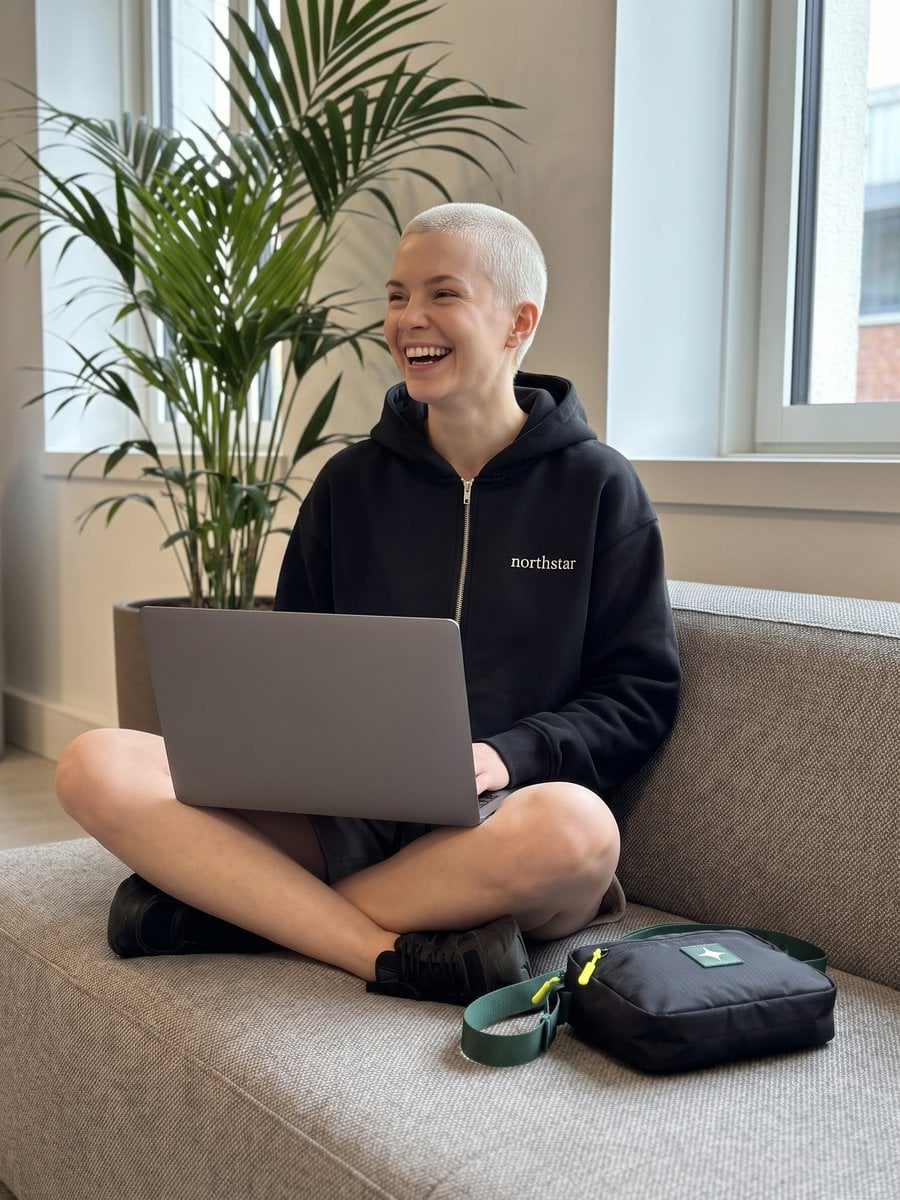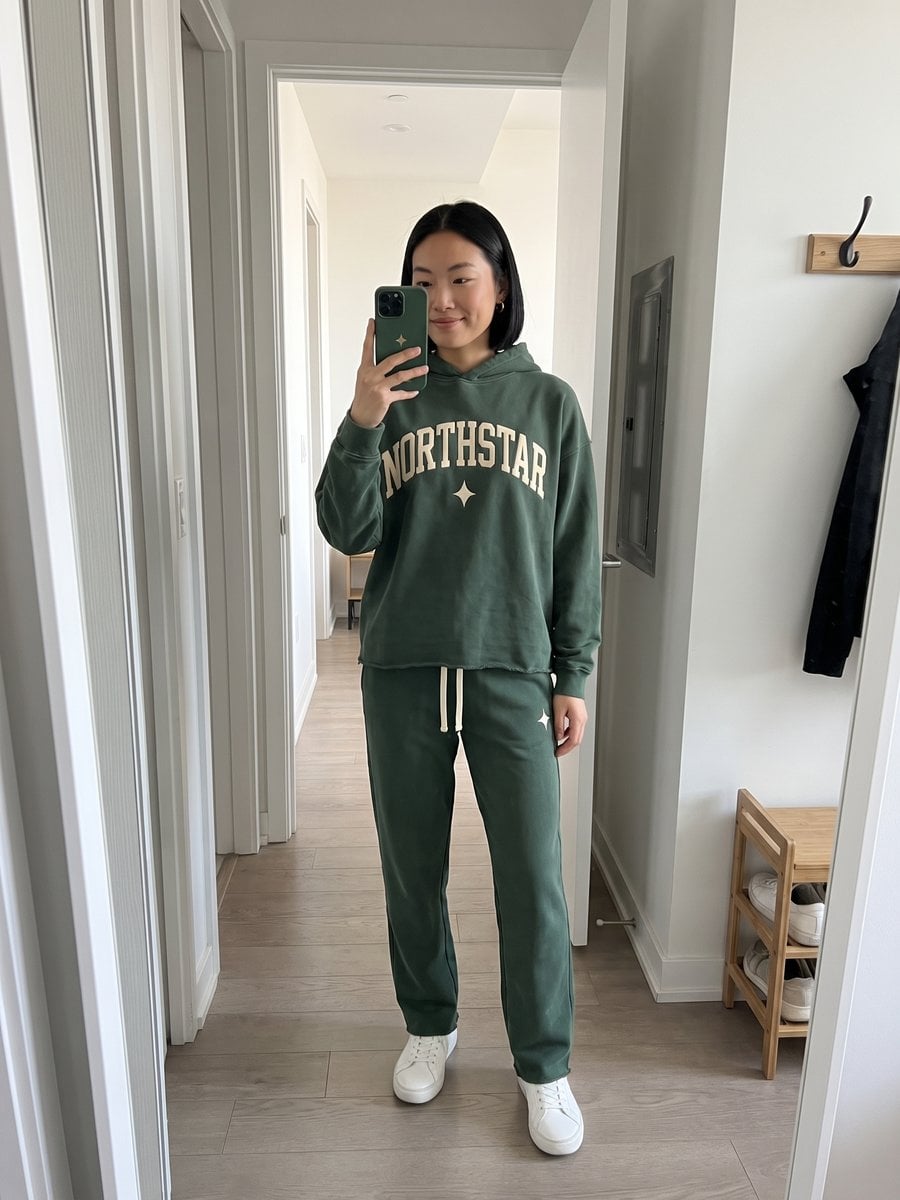
You're approving a company hoodie, and the mockup looks right. Then someone asks whether the chest logo will be readable across a room, whether the back graphic will sit beneath the hood, and whether employees will wear it outside work. None of those questions gets answered by a flat image.
The same problem shows up in creator drops and event merchandise. A detailed illustration can look sharp on screen but muddy on fleece. A raised print can feel great in a sample yet become uncomfortable when it covers the entire chest. A premium blank can still disappoint if recipients can't choose the right fit.
The hoodie everyone wears is the one built for its purpose. Start with the wearer and setting, then choose the decoration method and a compatible garment. Don't select an effect first and force the rest of the order around it.
A new-hire hoodie should feel easy to wear. An event-crew hoodie should help people identify the crew. Those are different design jobs.
These custom hoodie design ideas are ordered by their strongest practical uses, from dependable onboarding staples to more expressive campaign pieces. Each comes with a production trade-off worth resolving before you approve the bulk order.
Table of Contents
- 1. Chest Embroidered Logo Hoodie
- 2. Oversized Screen-Printed Back Graphic Hoodie
- 3. Full-Color Direct-to-Garment (DTG) Print Hoodie
- 4. All-Over Sublimation Print Hoodie
- 5. Puff Print Hoodie
- 6. Tonal or Blackout Embroidery Hoodie
- 7. Personalized Name and Number Hoodie
- 8. Color-Block and Varsity Sleeve Hoodie
- 9. Hidden Interior Print Hoodie
- 10. Sustainable Organic or Recycled Hoodie
- How the 10 custom hoodie design styles compare
- Match the Design to the Moment, Then Test Before You Scale
1. Chest Embroidered Logo Hoodie
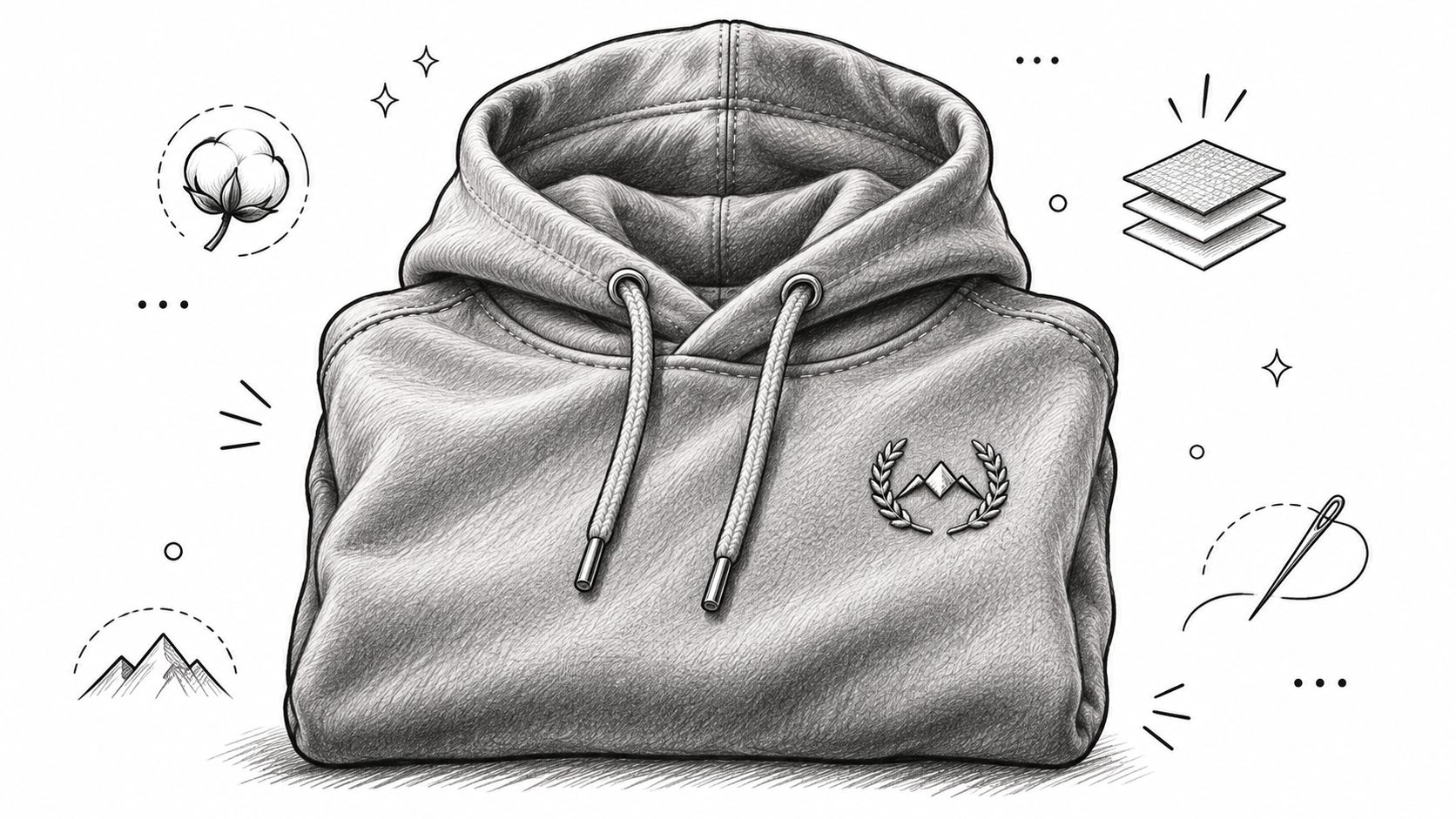
Best for new-hire kits, client-facing teams, and executive gifts. A compact embroidered chest mark gives the garment a clear identity without turning the wearer into a walking advertisement. Choose a simplified symbol or wordmark, rather than squeezing a complete brand lockup into a small space.
This sketch shows the right starting point: a recognizable mark, balanced placement, and room around the decoration.
Approve the stitching, not just the artwork
Embroidery changes artwork. Fine outlines can disappear, small letters can close up, and dense fills can make soft fleece stiff or puckered, a constraint discussed in California Cowboy's embroidery and screen-printing comparison.
For an onboarding hoodie, keep the main company mark and remove the tagline if it won't reproduce cleanly. Position it on a worn sample, not just a garment laid flat, because the chest panel changes shape on the body.
- Request a stitch-out: Approve the actual thread, backing, and digitized artwork on the intended fabric.
- Check the reverse: Rough backing shouldn't scratch through a lightweight shirt.
- Inspect after washing: Look for distortion around the border, loose threads, and changes in the fabric beneath the mark.
Use the embroidery-versus-print guide for company apparel when deciding whether the logo needs stitched texture or a flatter printed finish. A heavier garment can support embroidery, but weight alone won't fix poor digitization.
2. Oversized Screen-Printed Back Graphic Hoodie
A creator's illustrated emblem belongs on the back when the artwork, rather than the company logo, is the reason someone wants the hoodie. This style works best for creator drops, music merchandise, and culture-led events, with a quieter front mark to balance the larger graphic.
Build the composition around the garment's usable back panel. Keep essential lettering below the resting hood, and check whether the artwork still looks intentional on the smallest size in the order.
Large artwork needs breathing room
The common failure is treating the back like a poster. Long sponsor lists, intricate borders, and dense ink coverage can produce a rigid panel that feels unpleasant against the body. Open areas between graphic elements help the hoodie remain flexible.
For an event crew, make the role identifier readable before adding decorative copy. A community-performance organizer can use the ChoirBuy choir shirt design guide as an adjacent reference for group-apparel planning, while keeping the hoodie's hood and seams in mind.
- Simplify the palette: Every additional screen color adds setup and registration work.
- Approve ink feel: Compare a solid ink field with a more open illustration on the actual fleece.
- Check placement worn: Photograph the sample with the hood up and down.
The clothing logo design ideas guide can help separate the primary brand mark from the supporting illustration. Don't enlarge a small chest logo and assume it becomes a strong back graphic.
3. Full-Color Direct-to-Garment (DTG) Print Hoodie
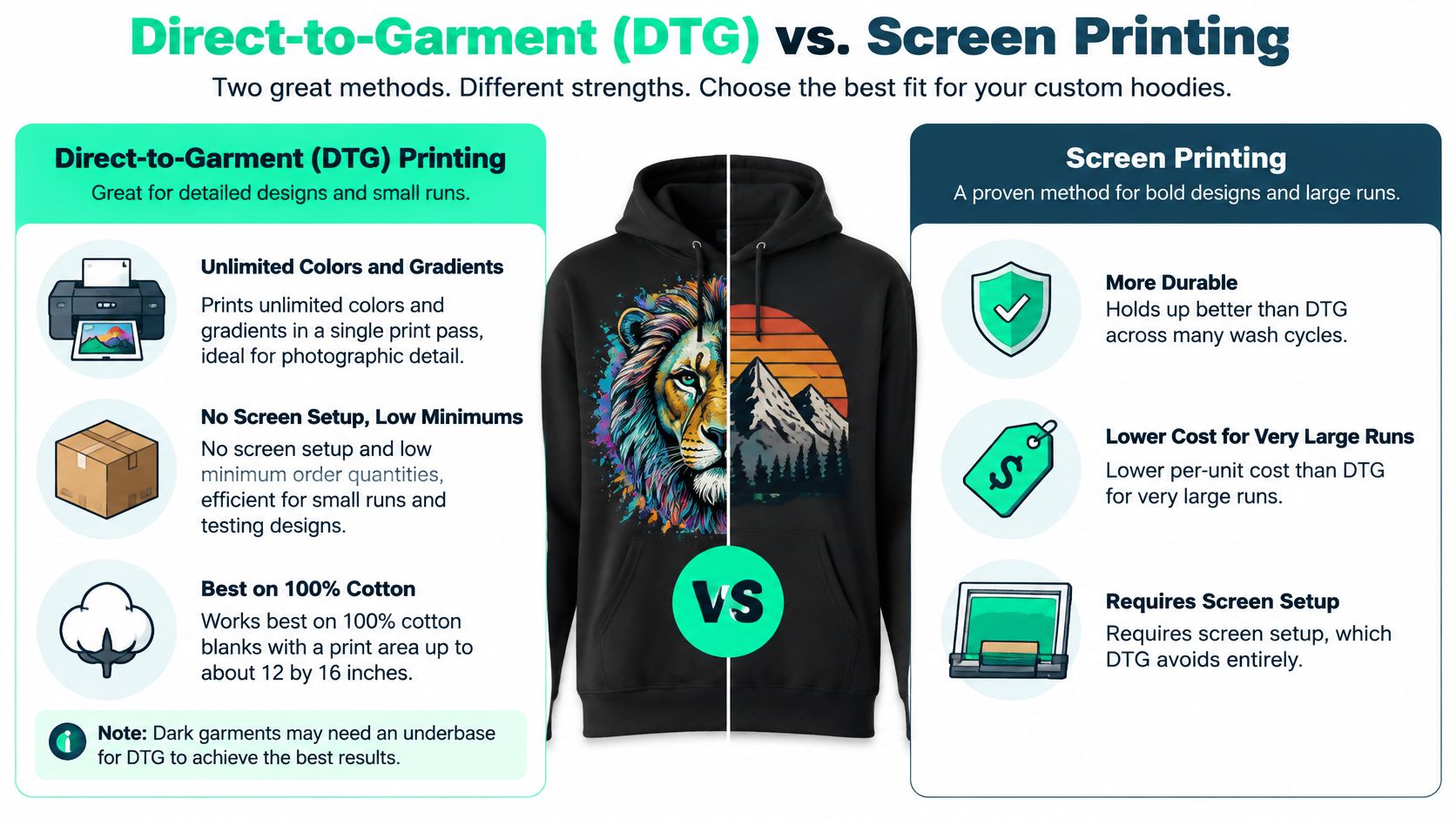
Choose DTG when the artwork needs gradients, photographic detail, or frequent design changes. Say a startup wants a launch hoodie featuring a colorful product illustration, but hasn't settled on the final creative direction. Digital printing lets the team evaluate the image without rebuilding a set of screens for each revision.
The trade-off is that fabric becomes part of the result. A smooth cotton-rich face generally gives fine detail a better surface than visibly textured fleece, while dark garments require particular attention to pretreatment and the white underbase.
This comparison is useful when deciding whether the artwork needs digital flexibility or screen-printed simplicity.
Judge detail at the finished size
Export the original artwork at its intended print dimensions. Enlarging a small image from a presentation won't restore missing detail, and sharpening filters won't turn a blurry logo into production-ready artwork.
Inspect pale gradients, shadow areas, and small reversed text on the sample. Those are the places where an attractive digital file can become an indistinct print.
Production rule: Approve the decorated garment after washing, not just immediately after it comes off the printer.
For a creator drop, test the actual garment color you'll sell. A print approved on cream doesn't establish how the same illustration will look on black, and a screen preview can't settle that difference.
4. All-Over Sublimation Print Hoodie
An event crew needs to be recognizable in a crowd, and a small chest mark may not do enough. All-over sublimation suits high-visibility team identities, gaming communities, and expressive campaign merchandise when the audience wants the entire garment to carry the design.
Sublimation dyes compatible polyester fibers rather than building a conventional ink layer on top. That makes it useful for continuous patterns, but it also determines the fabric direction. Don't promise a traditional cotton-fleece feel and then substitute a polyester garment to accommodate the artwork.
Design panels, not a seamless fantasy
Use a repeating pattern or abstract composition that tolerates small alignment differences. A geometric line that must connect perfectly across the side seam is a production risk; a scattered motif is more forgiving.
Ask whether the garment is printed as panels before assembly or decorated after construction. Seams, folds, and access limitations affect where uninterrupted artwork is realistic.
- Keep critical marks within panels: Don't place a face, wordmark, or key message across a seam.
- Inspect stretched fabric: Check whether pale areas become visible when the material moves.
- Approve the full garment: A fabric swatch won't reveal sleeve direction, hood alignment, or pocket placement.
For a festival operations team, use a recognizable background pattern with a clear role label on an uninterrupted panel. Visibility and readability aren't interchangeable. A hoodie can be easy to spot while still making it difficult to identify who's responsible for security, registration, or production.
5. Puff Print Hoodie
Puff print works when the raised texture is the main attraction. Bold initials, a short community name, or varsity-style lettering can give a creator hoodie a tactile focal point without requiring elaborate artwork.
The sketch below shows the kind of uncomplicated lettering that suits the technique.
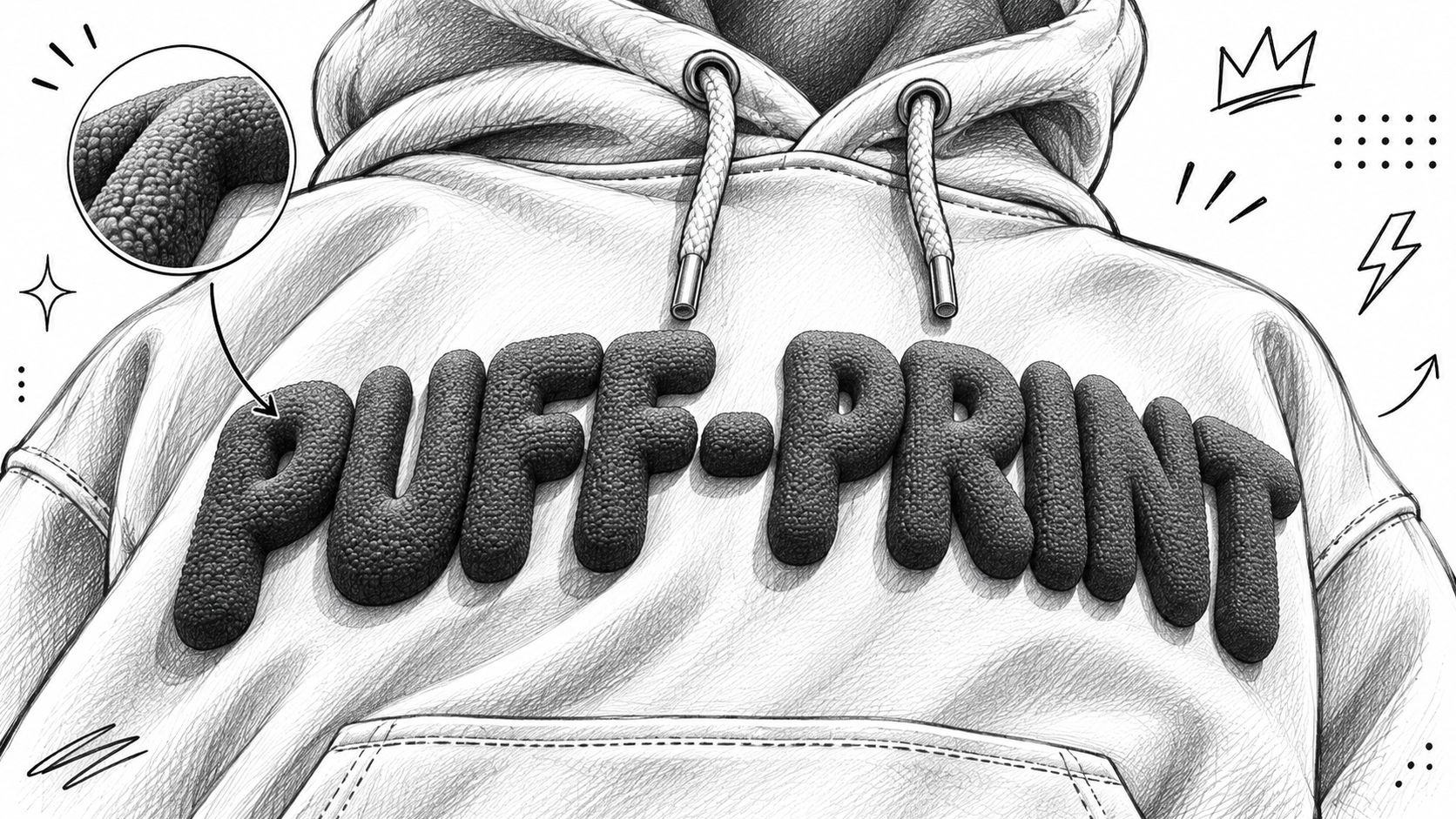
The ink expands during heating, so the final shape isn't identical to the flat artwork. Narrow gaps can close, sharp corners can soften, and tiny lettering can lose definition. Use puff for a deliberate focal element rather than applying it to every line and border.
Leave room for expansion
For a community launch, pair raised initials with a flat printed supporting line. That contrast makes the texture noticeable without covering the chest in a thick decorative layer.
Approve the puff height, edge quality, and hand feel on a physical sample. Check that repeated letters expand consistently, especially where the artwork changes from broad strokes to narrow joins.
This video provides a visual reference for the raised effect.
Don't specify maximum height as the quality target. A controlled, readable finish is more useful than an exaggerated rise that distorts the lettering. Supply care instructions suited to the finished decoration, and inspect the sample after laundering before approving the effect for a full drop.
6. Tonal or Blackout Embroidery Hoodie
Some recipients want company apparel that doesn't announce itself across the room. Tonal embroidery is a strong fit for executive gifts, understated onboarding kits, and everyday employee stores. The stitched texture supplies the detail while the color stays restrained.
That preference has direct support: in its 2024 employee survey, 4imprint found that 47% preferred subtle branding on company merchandise, while only 2% preferred a large company logo, according to 4imprint's company-swag guide.
Subtle shouldn't mean unreadable
Black thread on black fleece can look refined up close and almost invisible in photography. That's acceptable for a discreet gift, but it's a poor choice when conference attendees need to identify your staff.
A charcoal hoodie with a slightly lighter charcoal thread offers a useful middle ground. Keep the symbol simple so the viewer can recognize its silhouette even when the color contrast is low.
- Compare physical swatches: Thread sheen and fabric texture can make supposedly matching colors look different.
- Check ordinary lighting: Don't approve the combination only beneath bright studio lights.
- Test the outline: Fine internal details won't compensate for an indistinct overall shape.
For a leadership welcome gift, choose a compact tonal mark and let the garment's fit and construction provide the rest of the impression. Avoid adding a loud sleeve slogan afterward. It defeats the reason for choosing restrained branding in the first place.
7. Personalized Name and Number Hoodie
A recognition hoodie should identify the recipient correctly before it does anything else. Names, team numbers, and role details work for milestone gifts, sports programs, and event crews, but personalization introduces an operational risk that standard artwork doesn't have: every garment can contain a different error.
Accenture found that 84% of surveyed fashion consumers in Europe and North America were interested in purchasing personalized fashion products, according to its fashion-personalization report. Treat that as a reason to offer meaningful choice, not permission to put everyone's legal name across their back.
Make the recipient part of approval
For an employee anniversary, offer initials, a chosen name, or an unpersonalized version. Some people won't want identifying information displayed publicly, particularly on clothing they wear while commuting.
The Graduation Attire stole design tips offer an adjacent reference for planning personalized milestone apparel, though hoodie placement needs its own production proof.
- Collect structured information: Keep display name, size, garment color, and delivery details in separate fields.
- Approve exact spelling: Preserve accents, capitalization, and the recipient's preferred form.
- Plan long names: Set an acceptable layout before the longest entry forces an awkward last-minute reduction.
Keep individual records attached to the correct garment through packing. A perfectly printed hoodie sent to the wrong person is still a failed order, and it may expose personal information as well as create replacement work.
8. Color-Block and Varsity Sleeve Hoodie
Color blocking works when brand recognition should come from the garment itself. Contrasting sleeves, a different hood lining, or a pocket panel can establish a team palette without requiring a large printed logo.
The athletic reference isn't accidental. Champion's account identifies a 1934 University of Michigan request for a hooded sweatshirt for its sports teams, as described in Printful's hoodie-history guide. For a modern offsite or campus program, borrow that practical team identity rather than copying protected school crests or lettering.
Find the blank before finalizing the palette
Start with available color-block garments. Designing a precise combination before checking availability can push a straightforward merch order into custom manufacturing, with more sampling and construction decisions.
Say your company palette combines navy, cream, and a bright accent. A navy body with cream sleeves may provide enough identity; reserve the accent for a compact embroidered symbol instead of forcing it into every panel.
- Check matching components: Cuffs, drawcords, lining, and zipper tape may not match the body color exactly.
- Review the size range: Confirm that the same panel arrangement is available across the required sizes.
- Protect readability: Place the logo on a calm panel rather than over a color boundary.
Use color blocking instead of extra decoration, not underneath it. Large varsity text, contrasting sleeves, striped ribbing, and several patches can compete for attention. For an enterprise offsite, a clear palette and a restrained event mark usually make the stronger garment.
9. Hidden Interior Print Hoodie
A hidden message is useful when the recipient matters more than the audience. Interior decoration suits recognition gifts, community memberships, and understated creator merchandise, particularly when the exterior needs to remain wearable in everyday settings.
The illustration below captures that gift-led approach: a quiet garment with a personal detail inside.
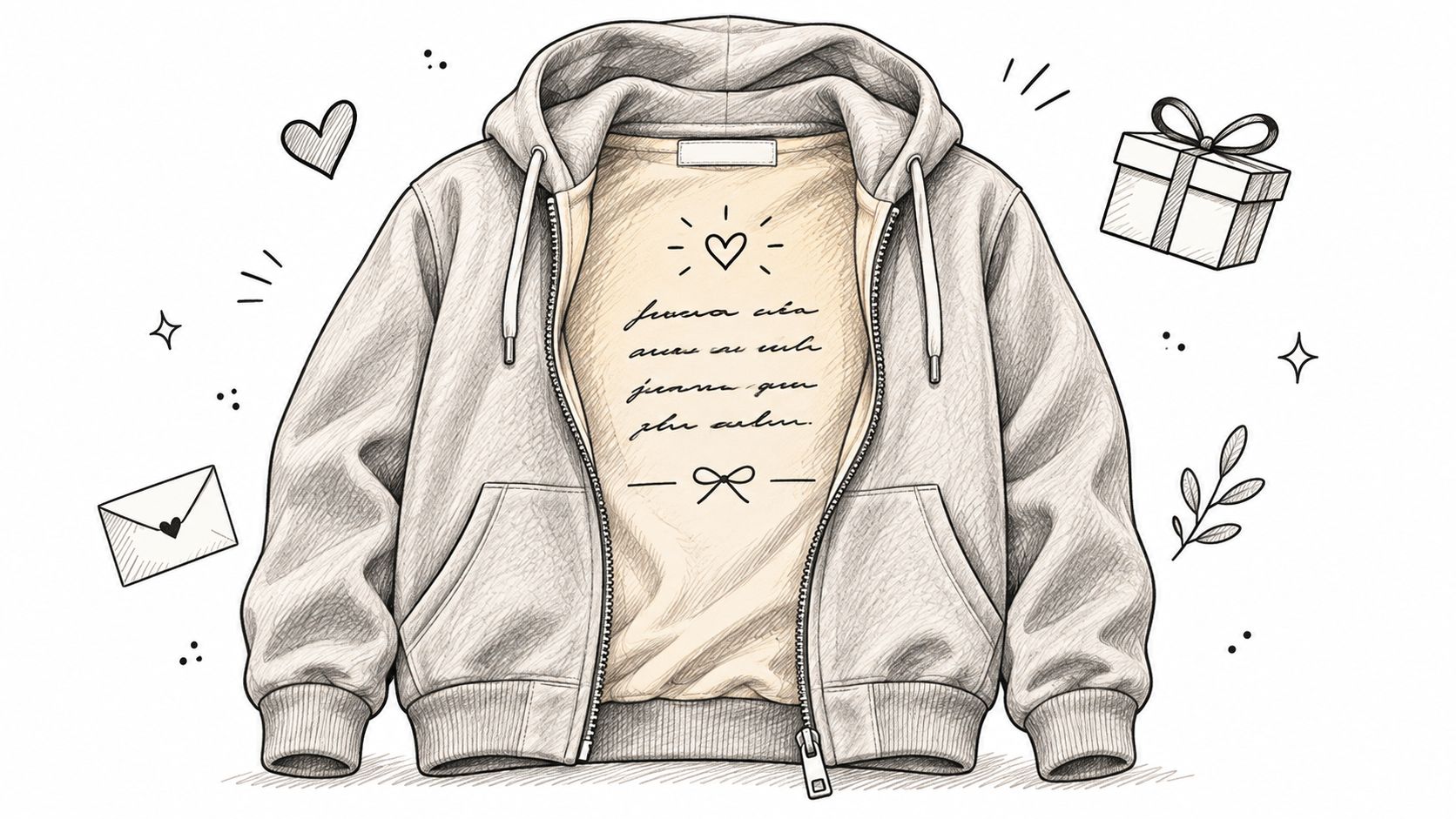
Choose a message that remains meaningful after the launch or event. A brief thank-you, community symbol, or location reference can preserve the connection without filling the outside with campaign copy. Gelato's custom-hoodie design guide provides broader context for customization-led merchandise.
Interior placement still needs production access
The inside of a finished hoodie isn't automatically an easy print surface. Brushed fleece can make small lettering rough, while seams and assembled hood panels can restrict access.
For a recognition gift, an inside upper-back message may be more reliable than text buried in a narrow hood lining. Check its orientation while the garment is worn and while it's hanging open.
The hidden detail should reward the wearer, not make the garment harder to wear.
Avoid thick decoration where it rests against the neck. Don't print over required care information, and don't assume an inside joke will translate across offices or cultures. Short, considerate copy is safer than a message that needs explaining.
10. Sustainable Organic or Recycled Hoodie
Material-led hoodies suit employee programs and creator collections that need specific, defensible sourcing claims. Start with the fiber specification, then select decoration that works with the fabric. Don't choose a generic blank and add environmental language afterward.
Organic cotton and recycled polyester describe different material choices. Neither tells you, by itself, how the hoodie fits, how the print performs, or whether recipients will keep wearing it.
Verify the claim and prevent avoidable replacements
Request current documentation for the product and the claim you intend to make. A supplier-level certificate doesn't automatically establish that every garment in its catalog carries the same certification, and chemical-safety certification isn't interchangeable with organic or recycled-content certification.
Fit deserves equal attention. European online clothing returns are reported at about 20%, with poor fit or style responsible for approximately 70% of those returns, according to the TexFash column on garment measurements and returns. Those figures concern online clothing broadly, but the practical lesson is relevant: don't distribute hoodies using size labels alone.
- Publish garment measurements: Include chest width, body length, and sleeve measurements using a clear measuring method.
- Describe the silhouette: Explain whether the cut is standard, relaxed, cropped, or oversized.
- Keep claims narrow: State documented materials and certifications without unsupported carbon or water savings.
For a global onboarding program, provide fit photographs and let recipients compare measurements with a hoodie they already own. The sustainable company swag guide can support the broader sourcing brief. A credible material choice still needs a wearable design and accurate sizing information.
How the 10 custom hoodie design styles compare
| Item | Best For | Decoration Method | Detail Level |
|---|---|---|---|
| Chest Embroidered Logo Hoodie | Enterprise onboarding kits, executive gifts, and professional brand merch | Stitched logo on the left chest | Simple logos; limited thread colors |
| Oversized Screen-Printed Back Graphic Hoodie | Creator drops, event merch, and youth-oriented campaigns | Screen-printed back graphic, often with a small front print | Bold, flat designs with a limited color palette |
| Full-Color Direct-to-Garment (DTG) Print Hoodie | Small-batch swag, testing designs, and detailed artwork | Direct-to-garment inkjet-style printing | High detail; supports photos, gradients, and many colors |
| All-Over Sublimation Print Hoodie | Event crews, sports teams, and bold campaign drops | Heat-transferred dye absorbed into polyester fibers | Full-coverage, edge-to-edge designs |
| Puff Print Hoodie | Varsity-style hoodies, team numbers, and streetwear lettering | Heat-expanded raised ink applied through a screen | Best for bold lettering and simple shapes |
| Tonal or Blackout Embroidery Hoodie | Executive gifts, minimalist brands, and client-facing apparel | Tone-on-tone embroidery | Subtle logos; simple shapes work best |
| Personalized Name and Number Hoodie | Employee recognition, anniversary gifts, and team programs | Names and numbers printed or embroidered | Individualized text and numbers |
| Color-Block and Varsity Sleeve Hoodie | Team identity, campus programs, and seasonal brand drops | Contrasting garment panels and trim, optionally with an embroidered patch | Visual detail comes from color and panel layout |
| Hidden Interior Print Hoodie | Recognition gifts, limited editions, and personal milestone messages | Print on the interior lining, hood, or inner panel | Short, concealed messages or patterns |
| Sustainable Organic or Recycled Hoodie | ESG-focused companies, sustainability-led brands, and reporting-driven programs | Certified organic or recycled materials, often with low-impact printing | Detail varies by print; emphasis is on certified materials |
Match the Design to the Moment, Then Test Before You Scale
Choose the wearer and setting first, decoration method second, and compatible blank third. A technique that suits the illustration may demand a fabric recipients won't wear, and a garment they love may not hold the placement you drew. Decide all three together.
For new hires, prioritize comfortable fit, restrained branding, and easy care; a welcome-kit default like an embroidered hoodie with a tonal chest mark on a 14oz heavyweight blank survives daily rotation. For event crews, prioritize identification and readable role information, such as an embroidered event mark with venue and year detail. For creator drops, give the audience a distinctive graphic or texture they'd choose even without the creator's name attached.
Turn the concept into an approval standard
A useful production brief specifies artwork, placement, garment color, decoration colors, size range, and acceptable substitutions. Include the smallest lettering and the most demanding design detail in the sample, rather than sampling an easier version and assuming the rest will work.
Request a physical sample and a wash test before any bulk order. Inspect the garment before laundering, follow its intended care instructions, and inspect it again afterward. Look for print lifting, unexpected fading, puckering, seam twisting, shrinkage, and rough backing.
- Check appearance: Does the mark remain readable with the hood down and the garment worn?
- Check comfort: Does the decoration make the chest, back, or neckline stiff or scratchy?
- Check fit: Can recipients choose using actual measurements rather than guessing from a familiar size label?
- Check packing: Will personalized garments reach the right people with the right care information?
For creator seeding, separate the garment decision from the distribution decision. A look at influencer gifting platforms can inform gifting logistics; it never substitutes for approving the hoodie itself.
Keep the approval process consistent
At FLYP, we have no minimum order and produce on demand, so a single hoodie or a 10,000-piece drop follows the same design-approval process. You can start with a brand URL, logo, style guide, or brief rather than a finished production file.
That flexibility is most useful when it supports careful decisions rather than skipped checks. Approve the artwork on the intended garment, resolve fit questions, and keep a record of the accepted sample before scaling.
The strongest custom hoodie design ideas combine a clear purpose, a compatible decoration method, and a garment people can comfortably wear long after the original occasion has passed.
FLYP LTD helps enterprise teams and creators turn brand inputs into custom hoodie designs, then manages production and fulfillment after approval. Visit FLYP LTD with your logo, brand URL, or brief to start a hoodie design for your next onboarding kit, recognition gift, or creator drop.