Only about one in three U.S. workers strongly agreed they'd received recognition or praise for good work during the previous seven days, according to Gallup's 2016 analysis of employee recognition. A promotion is an opportunity to make that acknowledgment specific: not just congratulations, but an explanation of the responsibility someone has earned.
The best promotion gifts for employees make that transition tangible. They don't replace a salary adjustment, a clear job description, or proper support. They mark the occasion, with enough personal relevance and operational consistency that employees understand the company values their contribution, not merely its own merchandise.
Table of Contents
- Promotion Gift Types Compared at a Glance
- Why Employee Choice Beats a Standard Gift
- Matching the Gift to the Promotion Level
- How to Set Up a Promotion Gift Workflow
- Keeping Promotion Gifts Fair and Private
- Shipping and Sizing Across Global Teams
- Choose Your Promotion Gift Model Before the Next Cycle
Promotion Gift Types Compared at a Glance
In 2024, 91% of working Americans said they wanted their company to recognize employee contributions with tokens of appreciation such as gifts or company shoutouts, according to Snappy's Workforce Study. The purchasing decision is therefore only part of the job. People Ops also needs to decide what the gift acknowledges.
A promotion gift is a visible marker of expanded responsibility. Start with that signal, then assess the object.
Promotion gift types by signal and trade-off
| Gift type | Signal to the employee | Main trade-off |
|---|---|---|
| Branded apparel or accessories | Visible identity and pride in the team | Logos can feel like advertising; sizes vary |
| Digital gift card | Choice without shipping | Feels impersonal when sent alone |
| Learning or development budget | Investment in growth into the new role | Needs approval and tracking |
| Paid time off | Trust and recovery | Hard to schedule across teams |
| Experience or event | A shared moment of recognition | Hard to scale; costs differ by location |
| Cash bonus | Money the employee can use freely | Ranked sixth for association with job satisfaction and motivation in Incentive Research Foundation findings |
| Curated premium item with personal note | Symbolic and useful at once | Needs careful curation to avoid generic picks |
The cash finding isn't an argument against paying people properly. Compensation and recognition serve different purposes. Keep promotion-related pay decisions separate from the gift so nobody has to interpret a merchandise allowance as a substitute for salary.
For physical gifts, favor an upgrade someone would enjoy over equipment they need to perform the role. A required headset belongs in the equipment budget. An optional premium travel accessory can be a gift.
Food needs additional care. If an employee actively chooses a hamper, Rip Van's guide on how to build sugar free hampers is a useful planning resource, but sugar-free doesn't automatically mean suitable for every dietary requirement.
Practical rule: Shortlist a small set of gift types that fit the transition, then let the employee choose. Don't buy the easiest item to bulk-order and invent its meaning afterward.
Why Employee Choice Beats a Standard Gift
What employees say they prefer and what supports motivation aren't interchangeable. A cash preference may reflect household priorities; an experience or carefully chosen item may carry a different kind of emotional significance. Offer flexibility without assuming that a favorite reward category tells you everything about the recipient.
In a 2023 survey of 688 full- and part-time employees in Germany and the United Kingdom, 61% selected gift cards as their preferred employer-provided reward, according to Runa's State of Employee Recognition and Rewards report. That supports offering choice, not declaring one universal winner.

Personalization starts with the decision
In a 2025 survey, 52% preferred selecting from multiple options, compared with 31% who preferred receiving the same gift as everyone else, according to Snappy's holiday gifting survey announcement. Printing someone's name on the default item doesn't give them that control.
Build a compact menu with different uses:
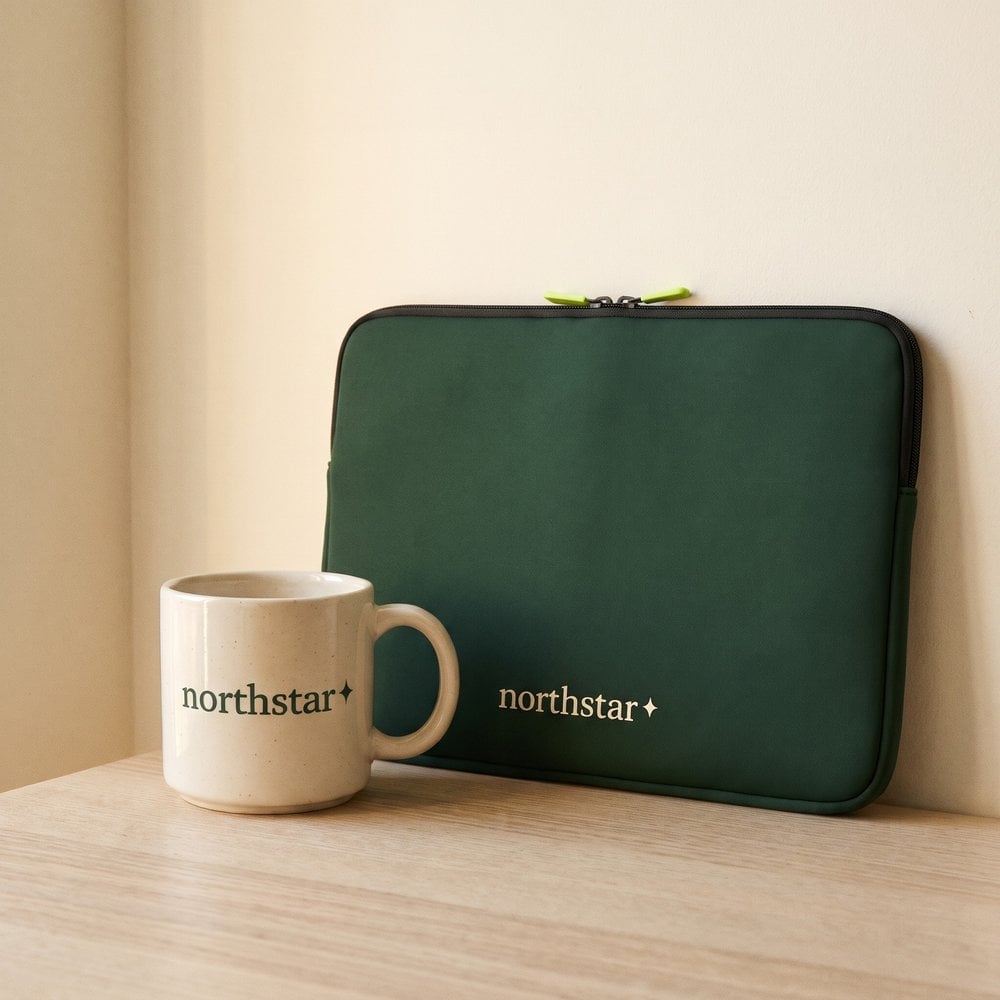
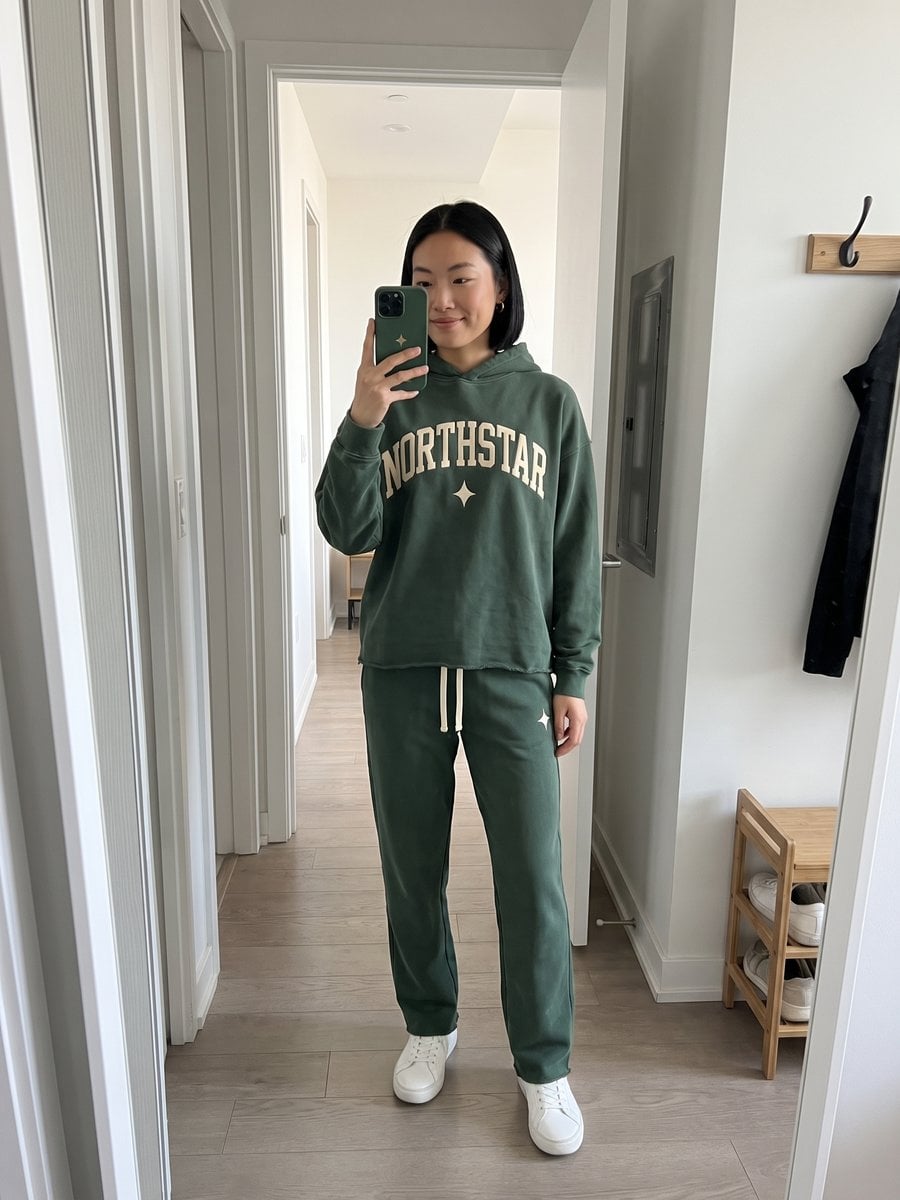
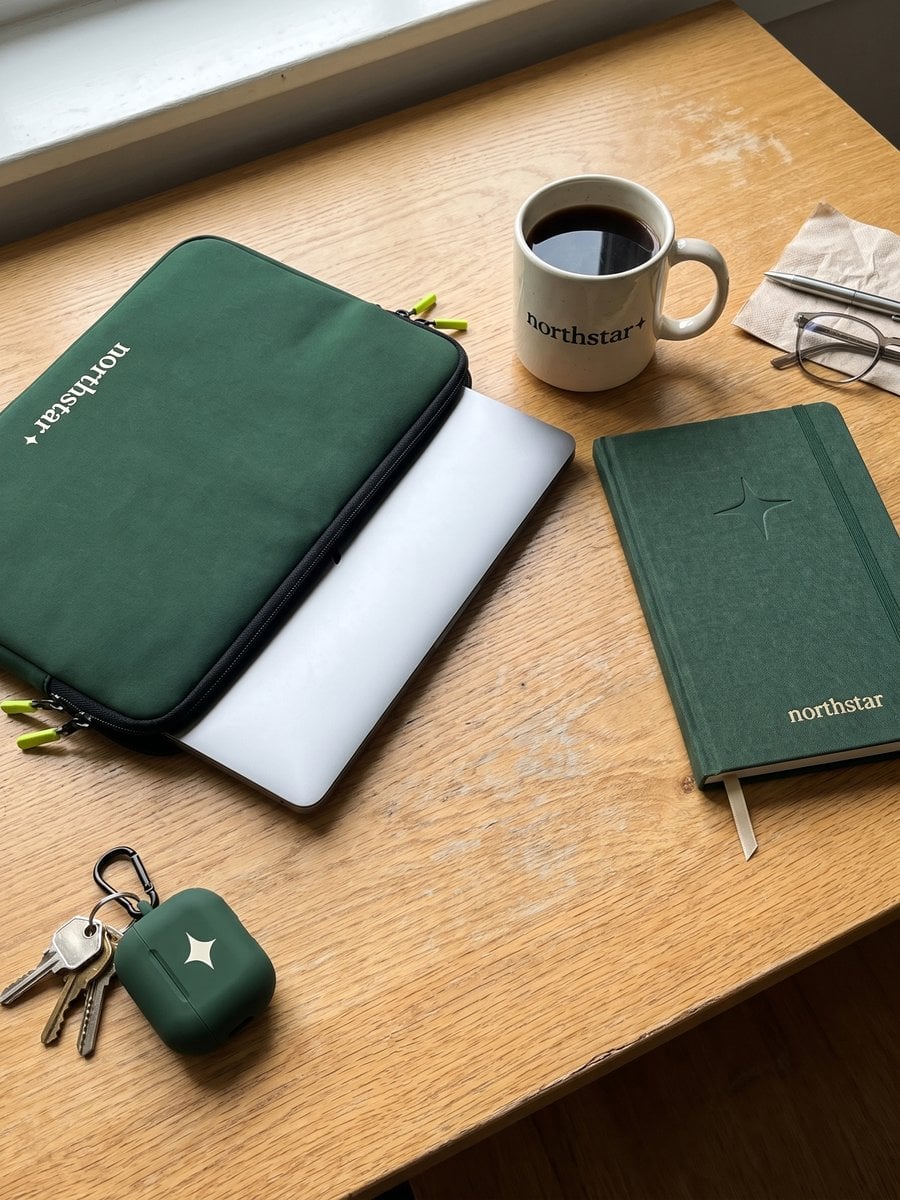
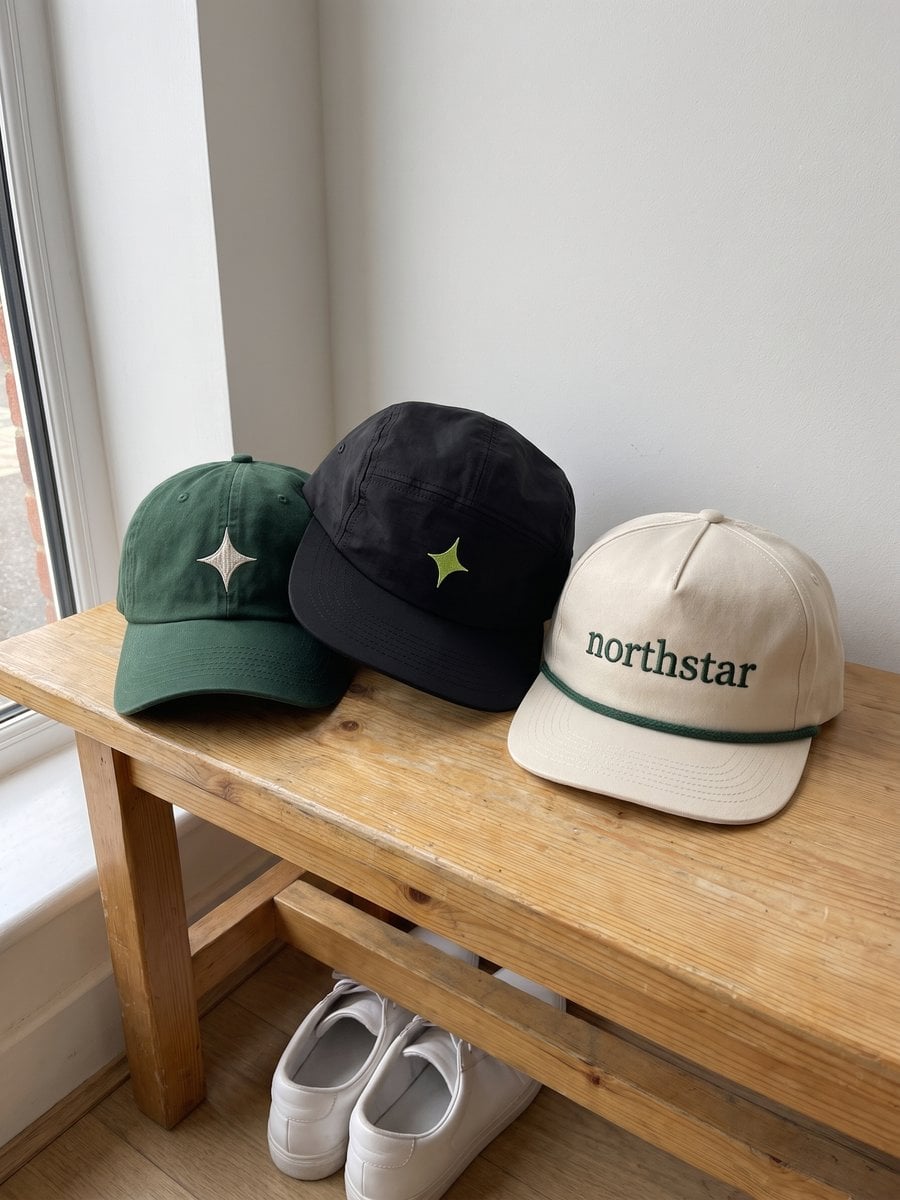
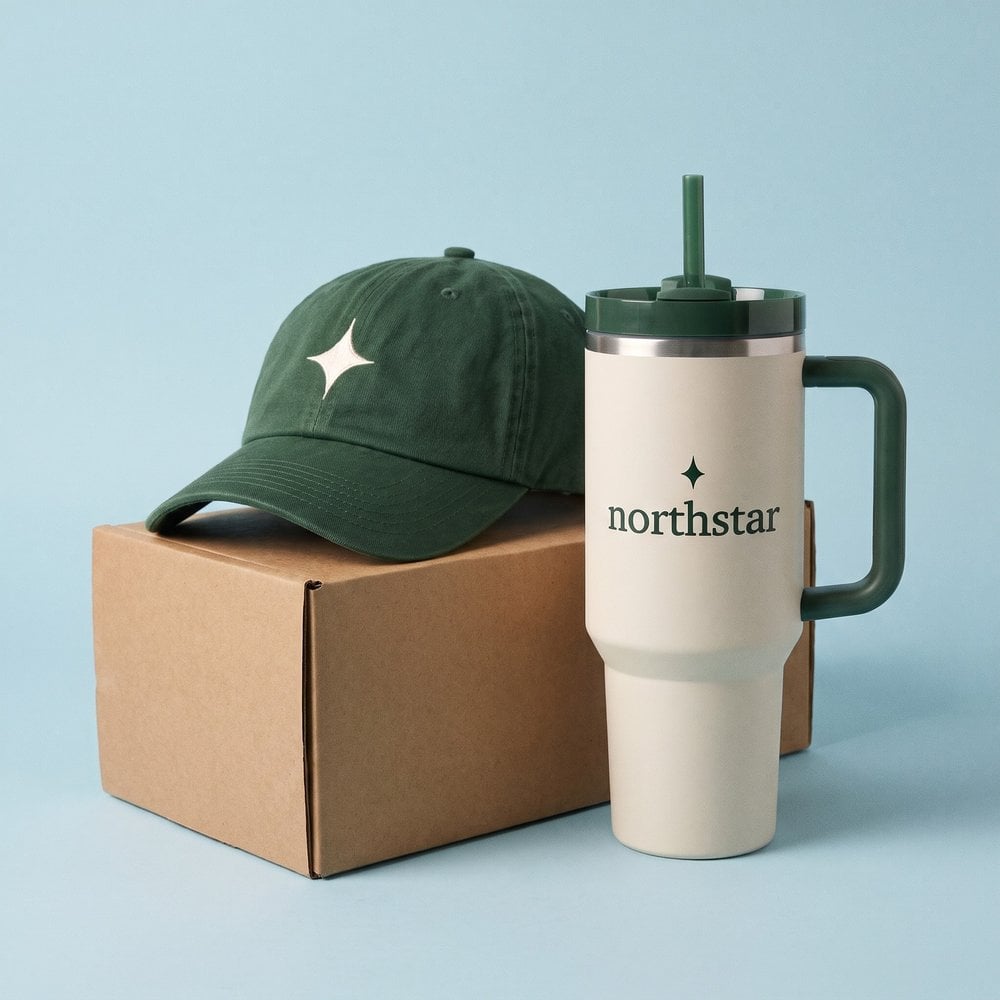
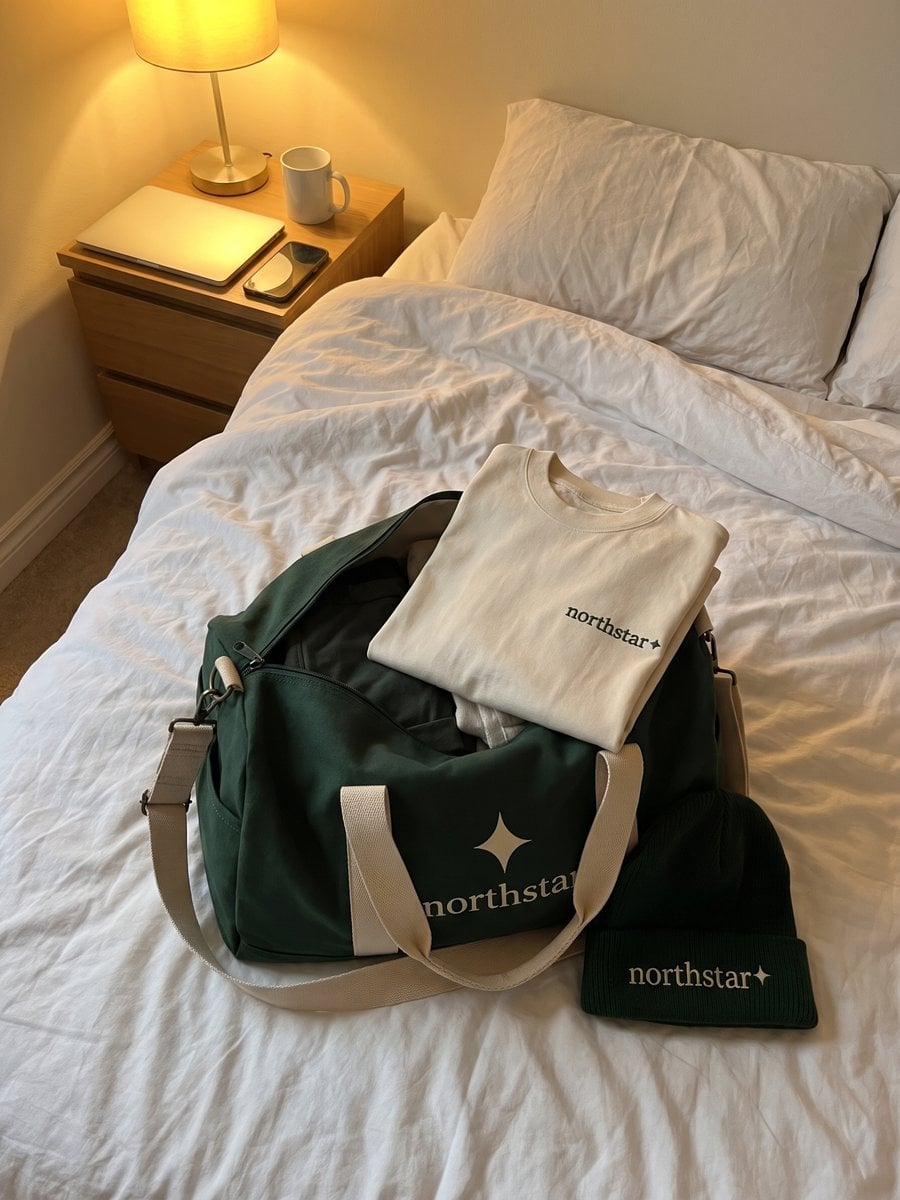
- Wear or carry: A premium sweatshirt, understated bag, or size-free accessory.
- Home or workspace: A desk lamp, insulated bottle, or optional audio upgrade.
- Learn or experience: A development credit or locally redeemable activity.
For a seasonal home option, Rockdale Wreaths' fresh balsam wreaths for staff can help with sourcing. Keep it optional rather than treating seasonal decor as universally welcome.
Say a newly promoted sales manager selects a noise-cancelling headset instead of a branded mug. Provided the headset isn't required equipment, that choice lets them connect the celebration to their own working life.
Set an allowance and an explicit redemption deadline, with reminders and an extension route for leave. Test the menu with recently promoted employees, remove options nobody wants, and connect the program to broader employee engagement ideas rather than treating redemption as the entire employee experience.
Matching the Gift to the Promotion Level
Match the gift to the scope of the role, not the prestige of the title. A senior specialist may influence decisions across the organization without managing anyone. A first-time manager may have a smaller operational remit but need substantial support with a new kind of accountability.
Use role architecture to establish the recognition approach. Then let the manager explain the particular contribution that earned the advancement.
Gift approach and message focus by promotion level
| Promotion level | Gift approach | Manager message focus |
|---|---|---|
| Individual contributor to senior | Curated item or small credit | Specific skill and new mentoring scope |
| Team lead or first-time manager | Choice menu with a learning option | Leadership expectations and team impact |
| Director and above | Premium choice with an experience option | Strategic responsibility and visibility |
| Executive appointment | Personalized premium item with leader letter | Organizational scope and trust in the role |
Consider a specialist moving into a senior role. A curated technology accessory and optional learning voucher can acknowledge deeper expertise, while the note names their new mentoring contribution. Don't imply that management is the only advancement worth celebrating.
For a new team lead, include a learning option that the employee can direct. Required manager training should remain an employer-funded obligation, not consume the celebratory allowance.
A director might receive premium choice with an experience option, accompanied by a message about cross-functional decisions and strategic ownership. An executive appointment can justify a more ceremonial presentation, such as a personalized item and a CEO-signed letter naming the organizational remit.
Set bands without creating a status contest
Agree a regional base band, then express each promotion-level allowance as an approved multiple of that base. Finance should approve those relationships before managers select gifts, including what the allowance covers and how exceptions are recorded.
Don't force different products at every level merely to display hierarchy. If identical packages are the default, however, check whether the messages and allowances meaningfully acknowledge different responsibilities.
Write a sentence for each promotion level describing the responsibility being recognized. If you can't explain how a proposed gift fits that sentence, reconsider the selection.
The aim isn't to make junior employees feel less valued. It's to recognize different transitions through defensible rules, with a specific message for every recipient.
How to Set Up a Promotion Gift Workflow
In 2025, 59% of employees identified promotions as a meaningful milestone to celebrate with a corporate gift, according to VistaPrint's corporate-gifting survey. Treat that milestone as a defined People Ops process, not an errand someone remembers after the announcement.
The operational outline below separates policy, ownership, and confirmation.
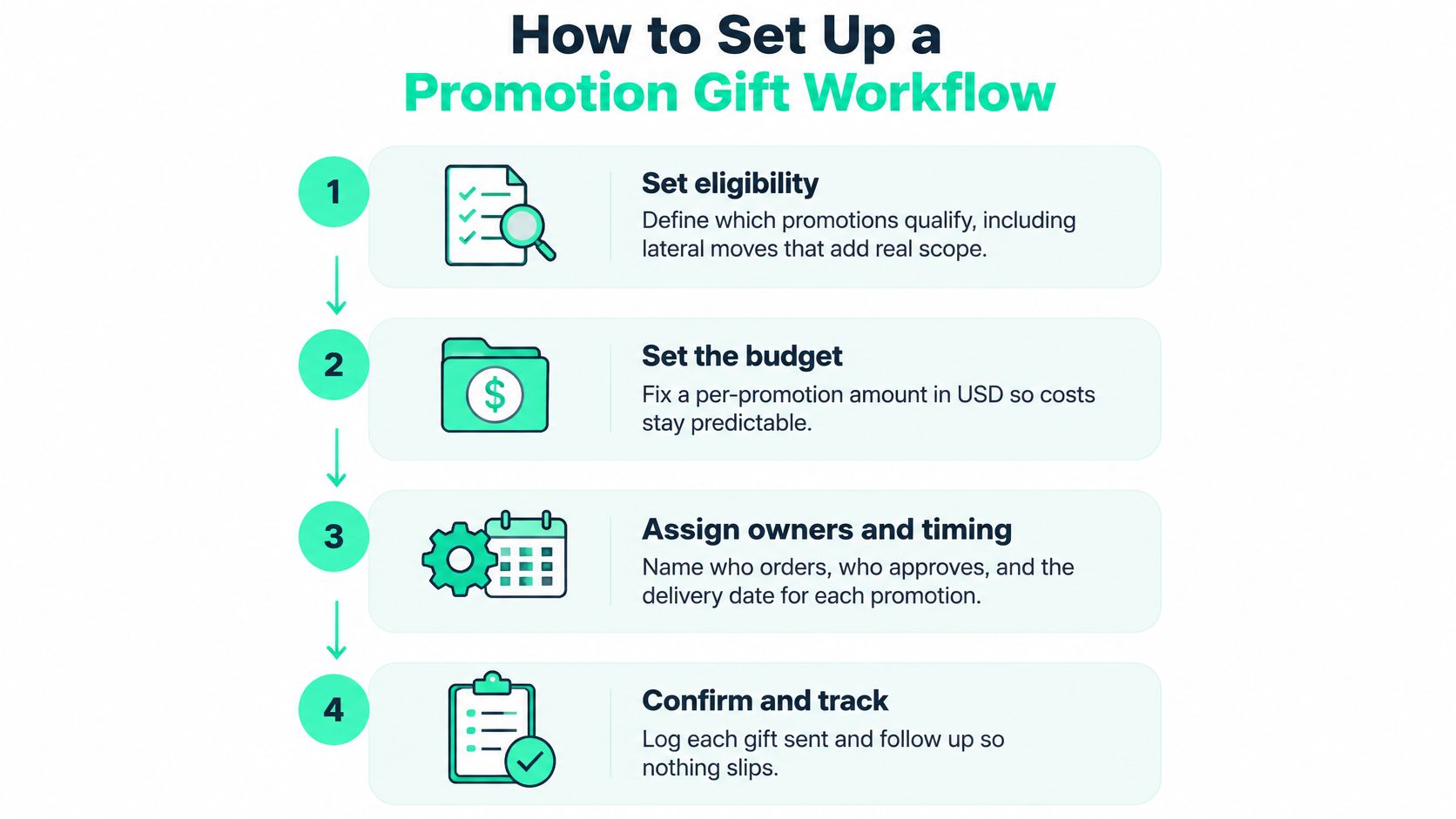
Build the operational sequence
Define eligibility. Specify qualifying grade changes, acting appointments, and lateral moves that add meaningful scope, with a documented route for unusual cases. The common mistake is relying on the word promotion while different departments use it differently.
Approve the budget bands. Assign an allowance by promotion level and region, and separate item value from shipping, duties, and administration. Otherwise, a remote employee's gift selection can shrink because delivery costs more.
Build the curated menu. Include distinct categories, confirm availability, and approve substitutes before launch. A long catalogue isn't useful if most items are unavailable in the recipient's market or require extra personal spending.
Trigger from the HRIS record. Use the approved promotion event rather than an informal message, with a named owner checking failed or duplicate triggers. Test the distinction between the record's approval date and the employee's announcement date so automation doesn't disclose confidential news.
Request the manager's note. Name the new role, a concrete contribution, and the responsibility the employee is taking on. Return generic congratulations for revision rather than sending a polished message that could apply to anyone.
Coordinate delivery with the announcement. Aim to send the acknowledgment and choice invitation alongside the news, with physical fulfillment following promptly. Don't delay the personal message while waiting for a parcel, and don't promise an arrival date before checking inventory and destination.
Track the full outcome. Record invitation delivery, redemption, fulfillment, satisfaction, and perceived fairness by region and job level. An unredeemed credit needs investigation, not an automatic conclusion that the employee didn't appreciate the gesture.
Make exceptions visible
Use a shared exception log for stock substitutions, delivery failures, extended deadlines, and declined gifts. Record the reason and resolution without including unnecessary personal details.
Keep this workflow distinct from general corporate gifts for employees: a promotion requires coordination with a confidential employment event and a specific change in responsibility. Marketing's campaign calendar shouldn't determine when that recognition happens.
A working system has a clear handoff. The employee receives the announcement and a relevant note, gets a usable choice invitation, and understands when and how to redeem it. People Ops can confirm completion without chasing several inboxes.
Keeping Promotion Gifts Fair and Private
A more expensive gift doesn't automatically make someone feel more valued. A conspicuous logo, a surprise presentation, or an unwanted photograph can make a generous purchase uncomfortable. Budget approval isn't the same as permission to publicize someone's career news.
In 2024, 54% of employees said they were more likely to stay with a company that consistently showed appreciation through gestures such as holiday gifts, according to Snappy's Holiday Gifting Report, based on a survey of 1,500 U.S. adults. That's a reported attitude about appreciation, not proof that promotion gifts cause retention.
Apply these checks before approval
- Permission: Ask whether the employee wants recognition in a team meeting, a wider announcement, or a private conversation. Distinguish necessary organizational communication about their role from optional celebration, photography, and social posts.
- Parity: Check that equivalent advancement receives comparable gift value under the same written rules. A manager's enthusiasm, department budget, or relationship with procurement shouldn't determine the recipient's allowance.
- Comfort: Ask whether the item reads as appreciation or compulsory promotion of the employer. Offer a non-apparel and non-physical alternative, such as an approved learning credit or usable time off.
Capture preferences privately. Don't ask employees to explain in front of colleagues why they don't want a public celebration, an alcoholic gift, or a branded garment.
Separate consistency from uniformity
Fairness doesn't mean everyone must receive the same object. It means employees can understand why their options and allowances were assigned, and can choose something suitable without negotiating a personal exception.
Keep a record of approvals so People Ops can inspect differences across departments. If one manager routinely upgrades gifts while another follows the standard band, fix the policy or enforce it. Don't leave employees to infer what the discrepancy says about their value.
Approval test: Would you be comfortable explaining this gift decision to another employee receiving equivalent advancement?
I'd favor a modest, employee-selected item with a thoughtful acknowledgment over the costliest branded package. The important distinction is whether the recipient feels recognized on their terms, not whether the unboxing photographs well.
Shipping and Sizing Across Global Teams
A single global catalogue is convenient for procurement, but it can leave employees choosing among unsuitable or undeliverable items. Review each market before opening redemption, including the experience of someone working from home rather than near a regional office.
Global constraints and practical fixes for promotion gifts
| Constraint | Where it bites | Practical fix |
|---|---|---|
| Apparel sizing | Remote and multi-country teams | Offer size selection at redemption or size-free items |
| Climate | Very hot or very cold regions | Add seasonal alternatives to the menu |
| Customs and duties | Cross-border shipments | Use local fulfillment or a digital credit |
| Dietary restrictions | Food and drink items | Exclude consumables or label allergens clearly |
| Accessibility | Digital redemption and online stores | Test with screen readers and offer a non-digital option |
| Cultural norms | Symbols, colors, and alcohol | Keep a review list of excluded items |
Comparable value needs a currency policy. State allowances in local currency and document the conversion rule, including who reviews exchange-rate changes and local purchasing conditions. Schedule a regular review rather than reducing someone's options when costs move.
Remote delivery also requires a careful handoff. Let employees enter their own address through an approved channel, restrict access to fulfillment staff, and tell recipients how to correct an error. Don't circulate home addresses in the promotion tracker.
Coordinate deadlines across time zones
- Name the time zone: Put it beside the redemption deadline, not only in the reminder email.
- Check announcement scheduling: Choose a workable overlap where possible and provide an asynchronous message when offices can't reasonably attend together.
- Prepare the fallback: Use a regional replacement or digital option when a physical item can't arrive, without making the employee manage customs paperwork.
A documented corporate gift delivery process should identify who resolves missing parcels and incorrect sizes. Employees shouldn't have to negotiate between People Ops, a supplier, and a courier.
Build regional menus around a shared core wherever practical, with local alternatives for the remaining choices. Preserve the same quality standard and recognition message even when identical inventory isn't feasible.
Choose Your Promotion Gift Model Before the Next Cycle
The operating choices are direct-send gifts, an employee-choice store, and a hybrid. Direct-send means arranging a gift for each promotion. A store lets promoted staff redeem an allowance, while a hybrid reserves more ceremonial direct-send packages for selected milestones and uses self-service choice for routine fulfillment.
I'd recommend the hybrid for organizations that promote frequently. It preserves room for a significant appointment without requiring People Ops to manually source every item.
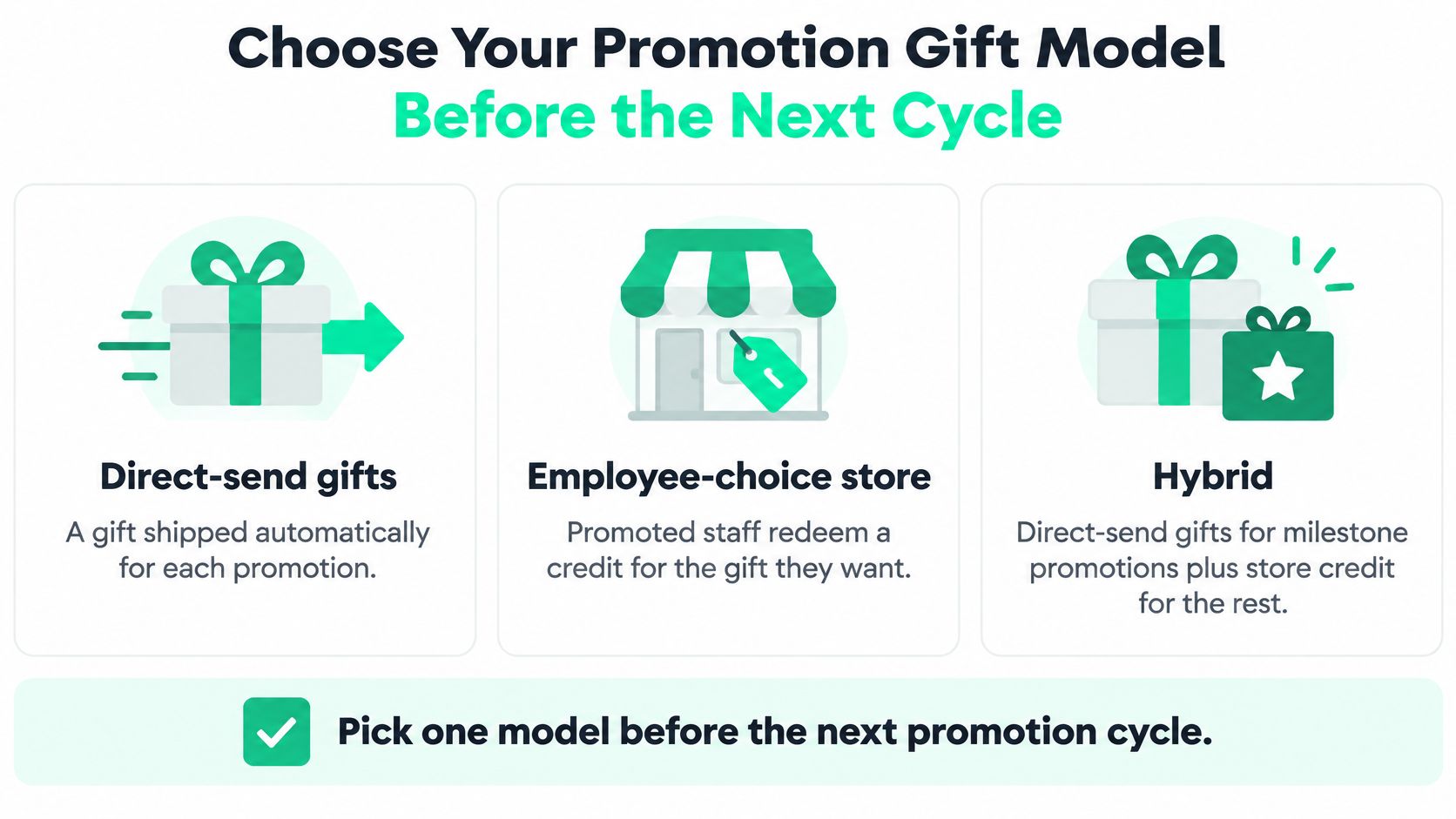
Choose for workload, not appearance
A smaller team with occasional promotions can run direct-send gifting through a controlled tracker. A store becomes useful when requests are steady enough that selection, address collection, and fulfillment follow-up consume recurring administrative time.
For local sourcing, Loyaltie's resources for local makers can inform conversations with potential suppliers. Include those makers only after checking production capacity, replacement arrangements, and the ability to support your regional requirements.
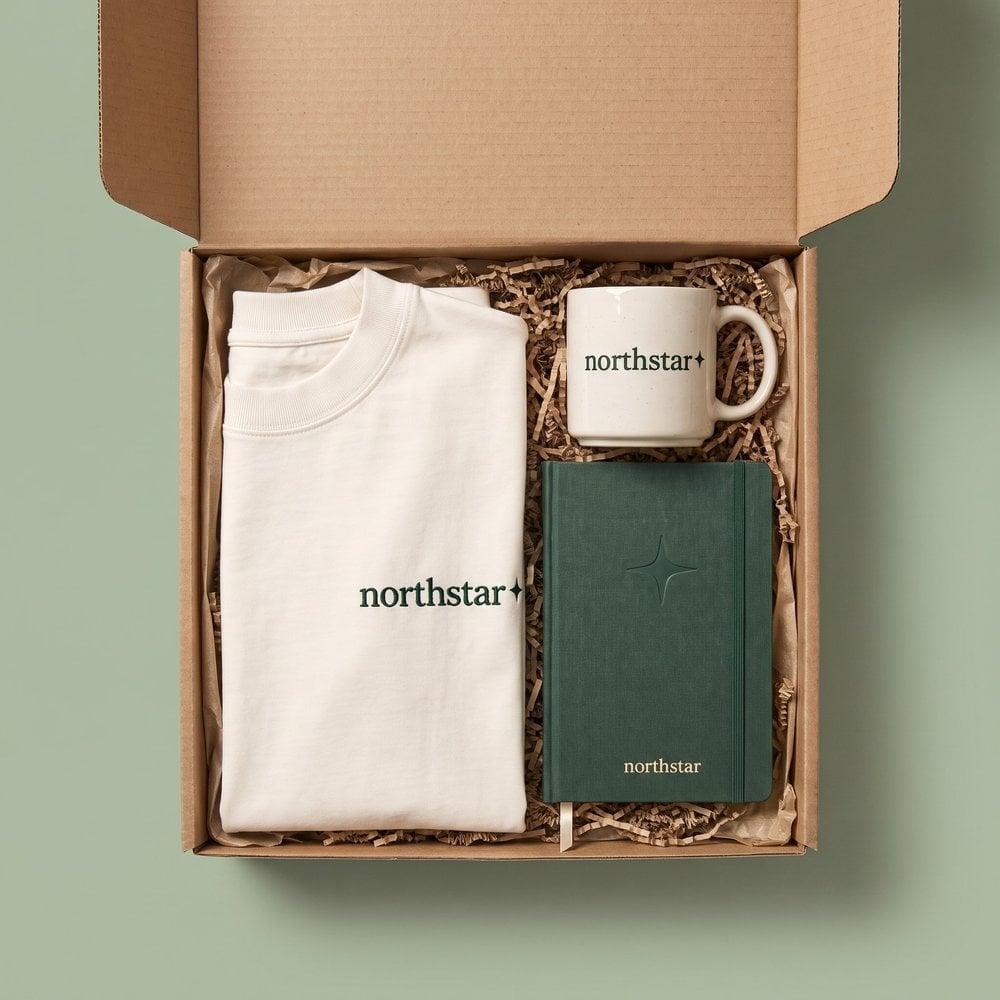
At FLYP, we power employee-choice stores where staff redeem credits against a curated, brand-safe catalogue. Credits can recur monthly, quarterly, or annually, or be issued once for onboarding, anniversary, or bonus occasions; promotion milestones can also trigger credits from HRIS data. Our employee-wide gifting costs $30–$60 per employee for a heavyweight tee plus accessory, a commercial reference for that package rather than a universal promotion-gift budget.
Assign the decisions before launch
Use the promotion-level bands to control spending, regardless of operating model. Before the next cycle, complete a short ownership checklist:
- Policy and funding: Assign eligibility, budget approval, and exception authority.
- Selection and messaging: Name the catalogue owner and the manager responsible for the note.
- Privacy and timing: Identify who holds celebration preferences and authorizes release.
- Fulfillment and review: Allocate delivery follow-up, reporting, and corrective action.
Choose a model you can operate reliably, not the most elaborate one available. Run it through the next promotion cycle and review redemption, employee feedback, and fairness across comparable roles before changing the menu.
FLYP LTD offers managed employee recognition gifting and employee-choice stores, with curation, logistics, budgeting, and reporting handled end-to-end. Visit FLYP LTD to discuss a promotion-gift program built around your role levels, regional requirements, and employees' ability to choose.